
Home Industry Nanotechnology Breakthrough in Catalysis, Pt-...
CIO Bulletin
,
22 May, 2024
Author:
CIO Bulletin Team
Innovative Nanofiber Design by International Team Promises More Efficient and Sustainable Catalytic Processes
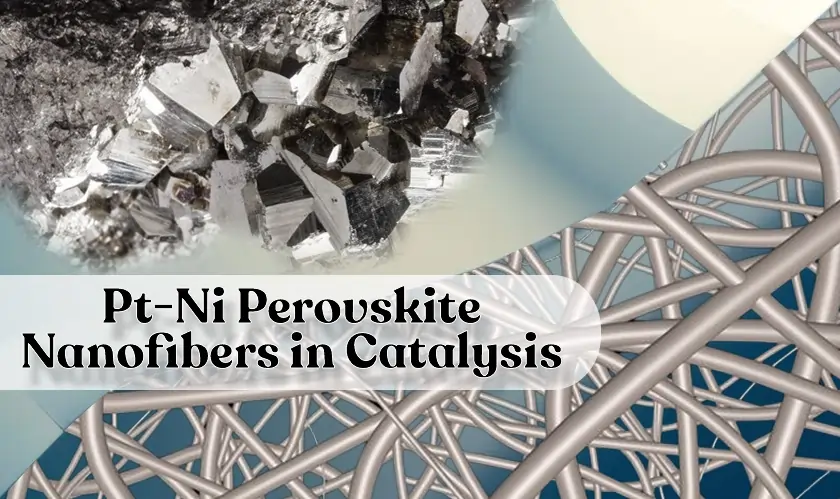
In a remarkable advancement in the field of heterogeneous catalysis, researchers from Korea and the UK have developed a new catalyst that significantly improves CO oxidation reactions. Published in Nature Communications, the study showcases the creation of nickel (Ni) decorated platinum (Pt) nanoparticles on perovskite nanofibers, utilizing a novel interaction-driven in-situ approach.
Heterogeneous catalysis is integral to various industrial applications, providing pathways for chemical reactions while minimizing energy consumption and waste. Platinum is renowned for its exceptional catalytic properties but is hindered by high cost and limited availability. Combining Pt with more abundant metals like Ni has emerged as a promising strategy to enhance catalytic efficiency while reducing reliance on precious metals.
The research team focused on exploiting the synergistic effects of these bimetallic nanoparticles to optimize catalytic performance. The synthesis process involved creating a non-stoichiometric Ni-doped perovskite, using electrospinning. These nanofibers, characterized by a high aspect ratio and nanometer-scale diameter, served as the base for the catalyst.
The catalytic performance of the Pt-Ni perovskite nanofibers was assessed through CO oxidation tests. Results showed significant improvements in light-off temperatures and turnover frequency values compared to traditional catalysts. The finely dispersed Ni-decorated Pt nanoparticles on the perovskite surface exhibited superior reactivity and stability, making them highly effective for CO oxidation.
The study not only highlights the potential of bimetallic nanoparticle architectures but also contributes to the broader efforts to develop high-performance catalysts for various industrial processes.




















































 consultants ltd.jpg)


