
Home Industry Politics Can Flávio Bolsonaro Maintain...
CIO Bulletin
,
05 October, 2026
Author:
Sambhrant Das
Examining the shifting political dynamics governance hurdles and economic crossroads facing Latin Americas largest democracy following the unexpected first round election results between Flávio Bolsonaro and President Lula
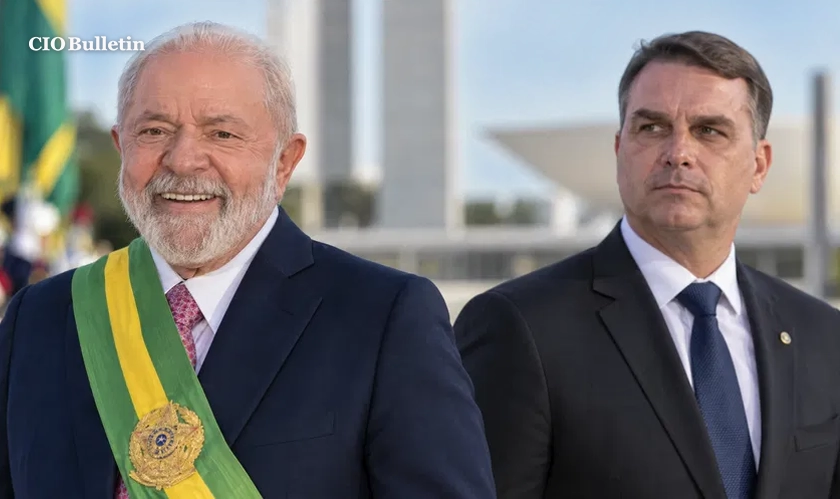
In the round of the Brazilian presidential election the conservative candidate Flávio Bolsonaro surprised everyone by taking a lead over the incumbent president Luiz Inácio Lula da Silva. The result was very close. By the time the electoral authorities had counted than 97 percent of the votes Flávio Bolsonaro had 47.45 percent of the valid votes while Luiz Inácio Lula da Silva had 44.66 percent. This means a decisive second‑round runoff will happen in October. The unexpected outcome of Flávio Bolsonaro, a right‑wing senator, was at odds with pre‑election polls that had predicted that the experienced left‑wing leader Luiz Inácio Lula da Silva would have a slight advantage.
Addressing supporters after early returns indicated a second-round mandate, institutional leaders acknowledged the changing political climate across key voting sectors:
Reflecting on the competitive first-round tallies, President Lula publicly conceded that the preliminary outcome proved unanticipated, stating, "I admit I was convinced I would win in the first round. The game is about to start."
Concern about the economy is still at the heart of voting behavior since issues such as inflation, public spending and regulatory policies take centre stage in the campaigns. Financial markets responded swiftly to the outcome of the first round, expecting possible changes in trade policy, fiscal discipline and corporate governance. On the right, supporters keep on stressing the need for market deregulation and reforms to public safety, while on the left the groups are in favor of widening social safety nets and promoting state-supported development schemes.
Both political camps face immediate pressure to build broader coalitions across neutral congressional factions and regional governors:
The result of the forthcoming runoff will have a significant effect on Latin America's economic position, its alignment in foreign trade, and the stability of regional investment. It has been noted that political volatility has a direct impact on business confidence, the financing of infrastructure projects, and compliance with cross-border regulations. CIO Bulletin sees this as a vital moment for developing regional economic strategy, governance standards, and the resilience of democratic institutions.
Everything you need to know about this news
Flávio Bolsonaro received 47.45% of the vote, beating the incumbent president, Lula da Silva, who got 44.66%.
Since neither of the candidates obtained the 50 per cent majority vote needed to win by themselves in the first round.
The official runoff election between the two leading candidates will take place on October 25.
What voters are most concerned about is the cost of living, public security, the allegations of corruption, and the manner in which economic policy is going to be directed.
While the pre-election polls predicted that Lula would have the upper hand, the outcome of the election revealed that Bolsonaro had actually done better than expected, leaving him as the winner.




















































 consultants ltd.jpg)


Comments