
Home Industry Renewable energy Will New Policy Shifts Disrupt...
CIO Bulletin
,
27 July, 2026
Author:
Ravathi Sunil
Renewable industry leaders voice urgent concerns over proposed green policy changes.
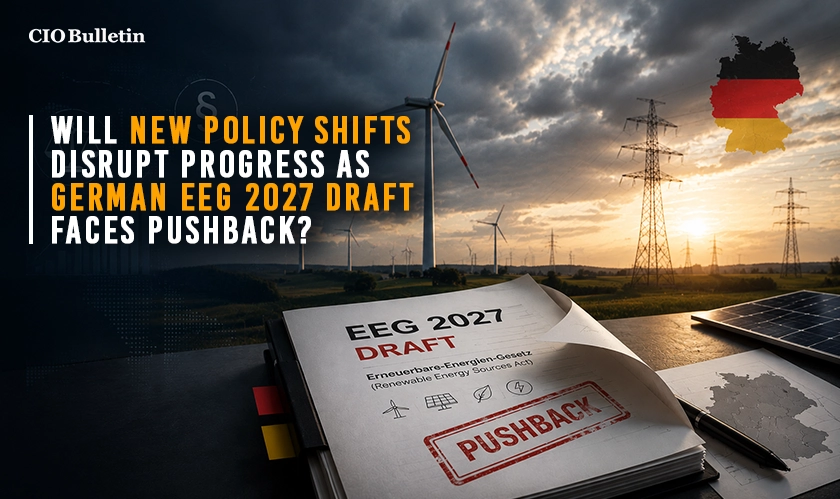
Germany's clean energy transition faces crucial regulatory shifts as industry leaders push back against proposed legal updates. Financial analysts from CIO Bulletin report that the draft German EEG 2027 introduces strict market-oriented rules, ending feed-in tariffs for small rooftop systems while lowering direct marketing thresholds.
The first major reform of the kind is called the German EEG 2027 and seeks to bring the renewable energy sector in line with electricity grid capacity through utility tenders and market selling obligations. Nevertheless, industry heavyweights such as the German Renewable Energy Federation and BSW-Solar believe that this framework complicates things for no reason.
Can green energy developers successfully adapt to strict grid restrictions without losing financial stability? Major concerns center on uncompensated power limits in congested areas and rising connection costs. "In an industry with around 436,000 employees, investment decisions in the tens of billions of euros are already pending for 2027 and 2028 alone, and these are now at considerable risk," warns the German Renewable Energy Federation.
Will lawmakers revise these proposed rules before final parliamentary approval? Primary industry concerns include:
Elimination of guaranteed feed-in tariffs for new solar systems up to 25 kilowatts.
Lower thresholds for mandatory direct marketing under 100 kilowatts after transition periods.
Increased risk of uncompensated power cutbacks by grid operators during network congestion.
Introduction of two-way Contracts for Difference for major new renewable installations.
Energy specialists at CIO Bulletin emphasize that finding a balance between market integration and investor confidence remains critical as European nations modernize their national power grids. The regulatory reforms seek to make the system more market-oriented, but market actors warn that a change in policies may hamper important eco-friendly investments throughout the country. Small generators have concerns regarding the possibility that heavy operating costs could deter individuals and small firms from making further investments in rooftop solar power. In the midst of parliamentary discussions, renewable energy supporters have called on the government to modify its structural arrangements.
Everything you need to know about this news
The framework aims to make clean energy expansion more market-oriented, cost-efficient, and aligned with national power grid capacities.
Small systems may lose guaranteed feed-in tariffs, forcing operators to sell power directly on wholesale electricity markets.
Trade groups warn that financial uncertainty could jeopardize billions in planned investments and thousands of existing clean energy jobs.
Grid operators may receive authority to limit renewable power output without financial compensation during periods of network congestion.
The proposed policy prioritizes large ground-mounted solar projects by significantly increasing annual auction capacity allocations.




















































 consultants ltd.jpg)


Comments