
Home Industry Politics Does Historic German State Ele...
CIO Bulletin
,
21 September, 2026
Author:
Ravathi Sunil
Political shockwaves reverberate as the ruling party suffers a historic regional setback while populist movements surge dramatically across ballot boxes.
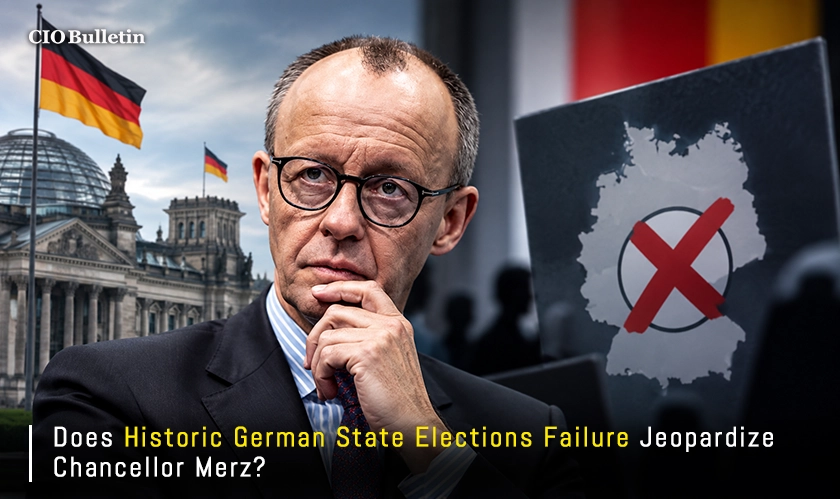
CIO Bulletin highlights how the outcome of the recent German state elections has triggered an unprecedented political emergency across the national government. German chancellor Friedrich Merz has expressed his regret regarding this terrible defeat, saying that this was a “disaster” for his Christian Democratic Union (CDU). This center-right political party performed worst in its entire history since World War II in Mecklenburg-Western Pomerania and could not cross the five percent quota, which is essential for remaining in the parliament. At the same time, opposition groups have achieved great successes in Berlin and eastern regions.
Is this historic shift signaling a permanent change in European political dynamics? Disillusionment with economic stagnation, surging energy costs, and contentious social reforms heavily influenced voter sentiment at local polls.
Addressing the nation shortly after exit polls were released, Chancellor Friedrich Merz candidly stated:
"Trust in our country's institutions is waning and being actively undermined by radical parties on both the left and the right."
Chancellor Merz quickly canceled all international diplomatic visits to deal with domestic ramifications of these German state elections. Increased costs of living and internal political tensions are placing further pressure on the ability of people to trust mainstream political leaders. As opposing parties grow stronger, forming governing coalitions without fringe groups is more challenging. Looking ahead, national leaders must address core economic anxieties to restore public confidence across key electorates.
Conservative leadership faces severe pressure following unprecedented local parliamentary exclusions.
Economic discontent and rising living expenses heavily drove voter shifts at regional polling sites.
Mainstream political groups struggle to maintain legislative majorities without non-traditional partners.
According to industry strategic assessments made by the CIO Bulletin, the stability of the European economic environment in the future lies in political harmony, implementation of reforms, and trust among the key electorates. In the future, the success of the national governance systems will depend on how the current parties deal with coalition shifts and provide the necessary assistance amidst the problems of rising inflation rates and high utility costs. The new trends of regional voting patterns will force European policymakers to adjust their domestic policies accordingly.
Everything you need to know about this news
The ruling CDU party failed to secure the five percent voter threshold in a regional parliament for the first time in postwar history.
Chancellor Merz publicly labeled the results a disaster and canceled international travel to address growing domestic political pressure.
Soaring energy bills, rising housing costs, and frustration over economic reforms heavily influenced electorate decisions across regional districts.
While leadership pressure is mounting, replacing the chancellor remains constitutionally complex, and senior party officials are currently resisting immediate resignation calls.
The surge of populist parties creates significant uncertainty regarding future coalition building and economic policy across the European Union.

















































 consultants ltd.jpg)


Comments