
Home Industry Retail How a Retail Training Platform...
CIO Bulletin
,
23 July, 2026
Author:
Guest
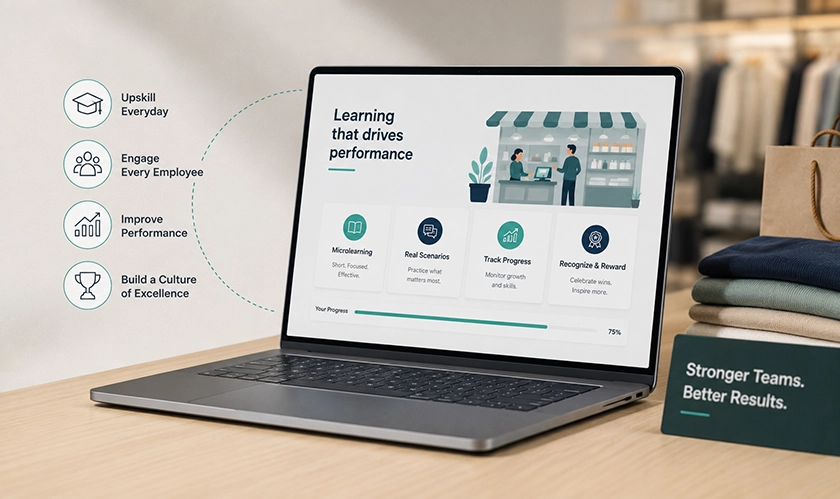
Store teams work under constant pressure. Product lines shift, promotions change, and customer expectations stay high in every location. Training often loses momentum because schedules are tight and supervisors need proof that learning changes floor behavior. A well-run program closes that gap. It provides associates with practical instruction, helps managers identify weaknesses early, and turns daily routines into stronger service habits across the business.
Many retail operators review records of time-to-proficiency, task accuracy, and completion before selecting a retail training platform. That approach reflects store reality. New hires need brief lessons, quick access during shifts, and clear confirmation that required topics were covered. When learning fits the rhythm of floor work, employees gain confidence sooner, and experienced staff refreshes core procedures without losing valuable selling hours.
Customers notice uneven service right away. One branch may explain promotions clearly, while another leaves out key details that shape purchase decisions. A shared learning system gives each store the same product facts, service language, and return steps. Managers can assign updates by role, location, or season. That structure reduces confusion and helps shoppers have a more consistent experience wherever they engage.
Long courses rarely fit the sales floor. Brief modules focused on a single task, policy, or product question are easier to complete between customer interactions. Staff can review pricing rules, loyalty steps, or feature comparisons in minutes. That format supports recall because attention stays on a single point. Small lessons respect store conditions and keep disruption low during busy trading periods.
First weeks shape confidence, retention, and day-to-day accuracy. New associates need direction that feels ordered, practical, and easy to follow under pressure. A training system can break onboarding into daily checkpoints, short knowledge checks, and supervisor sign-offs. Leaders see who has completed safety items, who still needs to practice registering, and who can work alone. Clear sequencing lowers avoidable mistakes during early shifts.
Impactful coaching depends on timing and detail. Dashboards can show quiz results, missed subjects, overdue certifications, and repeated trouble spots across tasks. A supervisor may see that weak attachment sales reflect a shallow understanding of the product, rather than a poor attitude. That visibility changes coaching into focused support. Employees receive help at the point of friction, which makes guidance easier to apply on the floor.
Retail businesses face strict requirements on safety, data handling, harassment prevention, and age-restricted sales. Paper records and scattered files create audit risk because evidence is harder to confirm quickly. A central system stores completions, reminders, and renewal dates in one place. Managers spend less time chasing signatures. Head office keeps a cleaner record trail, which reduces exposure and supports stronger operational discipline.
Frontline employees rarely sit at desks for long. Learning needs to reach them in aisles, stockrooms, and break areas where tasks actually happen. Mobile access lets staff review a process right before performing it. That timing improves confidence and reduces preventable errors. For multi-store groups, phone-based delivery also helps part-time workers stay aligned, even when weekly schedules shift without much notice.
Retail campaigns move quickly, and launch days expose weak preparation fast. When a new line, menu item, or service offer arrives, every associate needs the same core message before customer questions begin. A learning platform can release content to the exact teams and confirm completion ahead of the promotion day. Stores avoid patchy readiness. Staff speak more accurately, which supports upselling and reduces hesitation.
Employees stay longer when expectations are clear, and progress is visible. Training platforms support this need by linking skills with roles, badges, or promotion paths that staff can actually track. Associates see development over time, rather than treating learning as a box to tick once. Managers also spot strong performers earlier. That mix supports internal promotion and eases pressure on constant external hiring.
Training should be connected to operating results rather than to course counts alone. Retail leaders can compare learning activity with sales conversion, average basket size, shrink patterns, and customer feedback across locations. Those links help decision-makers refine content and direct attention to where returns look strongest. Over time, the platform serves as more than a lesson library. It becomes a practical tool for better execution.
A retail training platform helps frontline teams perform with greater clarity, consistency, and confidence. It supports quicker onboarding, stronger compliance, sharper coaching, and better preparation for store priorities that change week by week. Just as important, leaders gain evidence they can act on, rather than assumptions they hope are true. When training matches the demands of retail work, stores run better, and customers feel the difference.
















































 consultants ltd.jpg)


Comments