
Home Technology Security Can Campus Safety Reforms Prot...
Security
CIO Bulletin,
22 June, 2026
Author:
Sambhrant Das
Security forces establish robust administrative checkpoints and perimeter monitoring tools across regional high schools to isolate external threat vectors
A sudden outbreak of armed violence inside an educational facility has renewed intense national debates regarding the vulnerability of public campuses to external security threats. Local law enforcement authorities confirmed that a targeted attack occurred at approximately nine in the morning within the administrative boundaries of San Jose National High School in Tacloban City. The devastating crisis in the central Philippines led to three immediate fatalities and also left five other people with severe bullet wounds. Emergency medical response teams arrived quickly, and they moved the remaining victims to nearby provincial clinical networks for urgent care.
First responders moved rapidly to manage the immediate fallout from the school shooting in Philippines, while also carrying out containment protocols to isolate the active threat matrix.
Suspect Apprehension Details: Tactical officers arrested an initial minor suspect, a grade nine student, on-site before a second shooter later surrendered to local investigators.
Ballistic Evidence Classification: Forensic recovery teams retrieved a point thirty-eight caliber revolver, along with a common nine-millimeter semi-automatic handgun, from the targeted premises.
Having visible tactical units on the ground is crucial for handling public anxiety and for preventing additional localized disturbances across municipal districts. Providing direct security updates to affected community groups helps restore a sense of safety while background processing networks analyze the underlying trigger events.
“The suspects used a .38-caliber and 9mm firearm in the shooting as active tracking operations began.” - Noelito Getigan, Tacloban Police Chief.
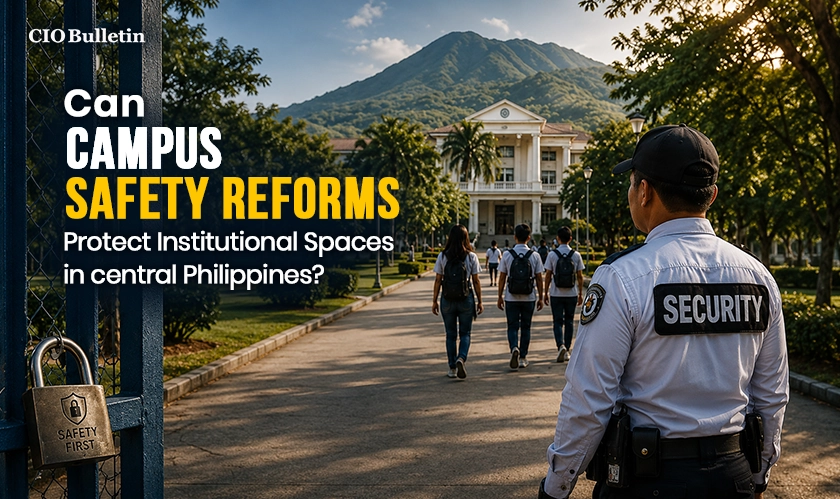
Transitioning from standard open campus policies toward tightly controlled security perimeters serves as an essential defensive line for regional learning environments. These strict protocols enable on-site administrative staff to monitor active foot traffic continuously.
Heavy physical checkpoints restrict unscheduled entry, allowing security guards to intercept hidden weapons before they reach classroom areas.
Advanced monitoring systems track all internal infrastructure spaces, eliminating unmonitored blind spots within large school buildings.
Because modern institutional environments depend entirely on comprehensive surveillance assets to preserve physical safety during unexpected societal shifts, regional protective frameworks require updating. Shifting from reactive emergency management toward predictive behavioral screening methods is turning into a critical necessity for public academic administrators. Restructuring basic surveillance models ensures that regional schools maintain stable operational conditions while protecting internal populations from unpredictable weapons violence. CIO Bulletin views this development as a stark warning that will likely force public administrators to completely overhaul campus security systems.






















 consultants ltd.jpg)


Comments