
Home Technology Security BRICS Foreign Ministers Meet i...
Security
CIO Bulletin,
14 May, 2026
Author:
Sambhrant Das
Navigating Global Volatility and Internal Divergence as New Delhi Hosts Critical Diplomatic Talks on Regional Stability and Economic Cooperation
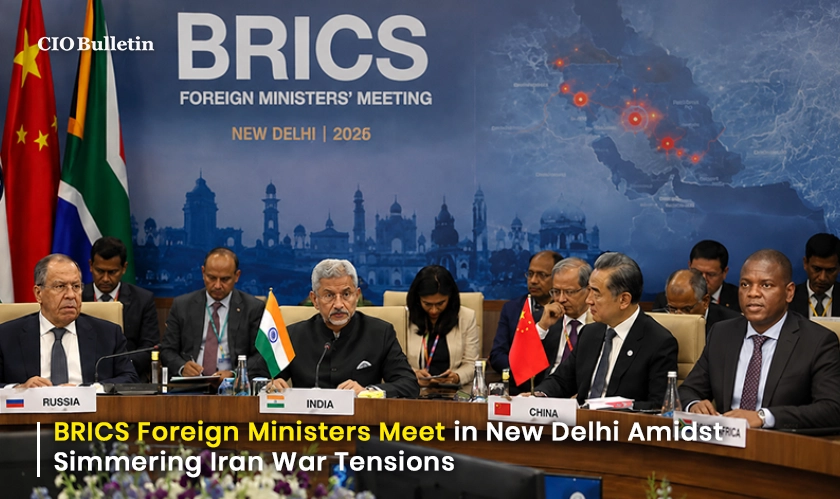
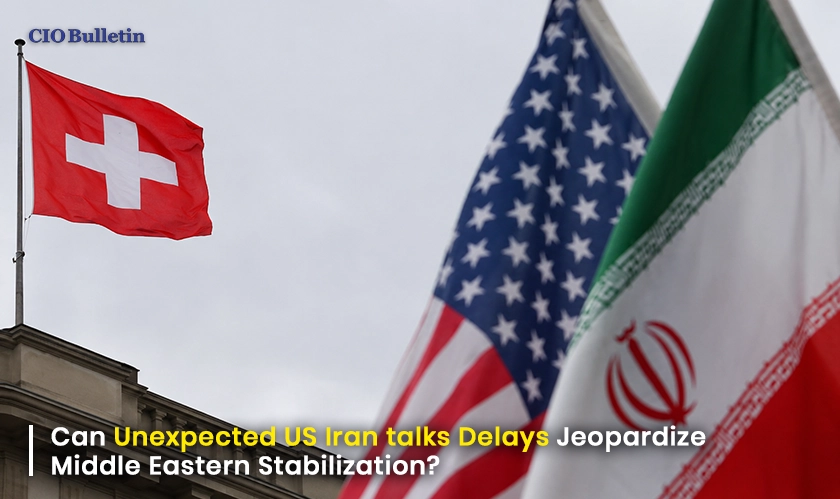
On May 14, the BRICS foreign ministers’ meet commenced in New Delhi amidst the bloc being divided over the war in Iran, rising energy prices, and growing global economic uncertainty. Diplomats from Brazil, Russia, India, China, and South Africa are attending the meeting along with their counterparts from newer member countries, including Iranian Foreign Minister Abbas Araghchi and Russian Foreign Minister Sergey Lavrov. The meeting becomes crucial following global energy supplies being disrupted by the Iran war and oil prices rising as a result. Interestingly, the BRICS meeting coincides with US President Donald Trump’s visit to China to meet Chinese President Xi Jinping.
Furthermore, the agenda for the talks was set by Indian Foreign Minister Subrahmanyam Jaishankar, who noted that its primary agenda included discussions on global and regional challenges, along with exploring strategies to deepen cooperation among member nations. In his opening remarks, Jaishankar highlighted the BRICS role in helping developing countries to respond more effectively to health and financing challenges, apart from stabilizing the current high prices for energy, food, and fertilizer. The Indian Foreign Minister emphasized that the meeting is being convened at a time of considerable flux in international relations, while calling for the bloc to live up to the expectations of emerging and developing countries by playing a “constructive and stabilizing role.”
Moreover, Iranian Foreign Minister Araghchi used the meeting platform to urge the BRICS nations to condemn the US and Israel’s “unlawful aggression” against Tehran. In his appeal, Araghchi also called for bloc members and other countries to end, in his words, impunity for violations of the US charter and thwart all warmongering efforts. Members were also urged to halt the “politicization of international institutions.” Iran expressed gratefulness for the BRICS countries’ support but called for renewed, stronger action in the times to come. In his words, “It is necessary for all of us to intensify our efforts to end this sense of superiority and impunity on the part of the United States — a notion that has no place in today’s world.”
However, an expanding BRICS has made arriving at a consensus on key issues an arduous task, with conflicting regional interests making it difficult to present a unified position on policy matters. In this context, Iranian Deputy Foreign Minister Kazem Gharibaldi had, in a veiled reference to the UAE, earlier remarked that “one member country” had complicated consensus-building efforts in the grouping by pushing for language condemning Iran. CIO Bulletin views the outcome of the BRICS meeting as strategically important in the larger sphere of geopolitics. A unified bloc can advocate for its interests better vis-à-vis a divided house that prioritizes individual over collective interest.















 consultants ltd.jpg)


