
Home Technology Security Turning License Plates Into Tr...
CIO Bulletin
,
24 October, 2026
Author:
Guest
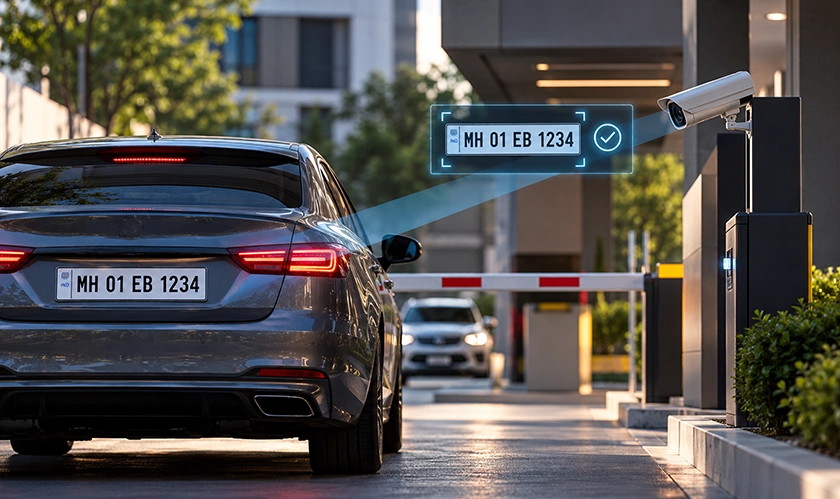
For many organizations, the front gate is where security, operations, and user experience collide. Distribution centers need throughput, campuses need convenience, and high-risk sites need control. License plate recognition (LPR), also called automatic number plate recognition (ANPR), helps by turning a vehicle plate into a digital credential.
Instead of relying on intercoms, badges, or manual checks, gates and barriers can respond automatically based on predefined rules. That reduces friction for legitimate users while improving consistency and auditability.
Several forces are pushing LPR higher on the priority list for leaders responsible for risk, cost, and continuity:
- Higher security expectations without adding headcount
- Pressure on throughput at gates, yards, and parking entrances
- More dynamic access policies due to hybrid work and flexible permits
- Greater audit needs for investigations, compliance, and dispute resolution
The result is a shift from optional automation to a practical control layer at the perimeter.
LPR delivers the most value when it replaces repetitive decisions with consistent automation.
Logistics gates and industrial sites benefit from faster entry for authorized carriers and employees, fewer bottlenecks during peak arrival windows, and better lane discipline that reduces tailgating risk.
Campuses and healthcare facilities can enable touchless access for staff and approved contractors, visitor workflows that link a plate to a booking or permit, and more consistent enforcement of parking rules.
High-security environments can use alerts for watchlisted or out-of-policy vehicles, exceptions based on time, zone, or permit status, and reliable logs that support incident response.
Most deployments follow a simple workflow:
Capture a plate image as a vehicle approaches.
Recognize the characters and normalize the plate format.
Validate against a whitelist, blacklist, or permit database.
Act by opening a barrier, denying entry, or notifying security.
Under the hood, performance is shaped by both optics and software. Many systems use infrared illumination to reduce headlight glare and improve nighttime capture. Recognition engines often output a confidence score, which can be used to route low-confidence reads to a secondary check, such as a second camera angle or a manual review queue.
Architecturally, some deployments process recognition at the edge to reduce latency and keep gates responsive even if connectivity is degraded. Others centralize processing to simplify updates and analytics across multiple sites. The right choice depends on risk tolerance, network design, and how quickly a decision must be made at the barrier.
Reliability still depends on real-world conditions. Decision-makers should ask how performance holds up in low light, rain, glare, different approach angles, and with international plate formats.
LPR is most effective when it fits into existing systems rather than becoming a standalone tool. Many organizations connect LPR
When evaluating options, look for clear integration paths such as APIs, event messaging, and configurable rules so the solution can scale across entrances and sites.
Because license plates can be personal data in many jurisdictions, privacy-by-design should be part of the business case. Practical safeguards include role-based access to plate lists and logs, encryption in transit and at rest, retention periods aligned with purpose and policy, and governance for who can add, change, or export data.
For teams assessing a professional-grade approach, a modern license plate recognition system can provide a foundation for automated vehicle identification and access control.





















































 consultants ltd.jpg)


Comments