
Home Services & Solutions Smart infrastructure Will AI-Driven Smart logistics...
CIO Bulletin
,
23 July, 2026
Author:
Sambhrant Das
Container Corporation of India joins forces with IIT Roorkee to build an intelligent decision support platform aimed at streamlining freight planning and multimodal transit.
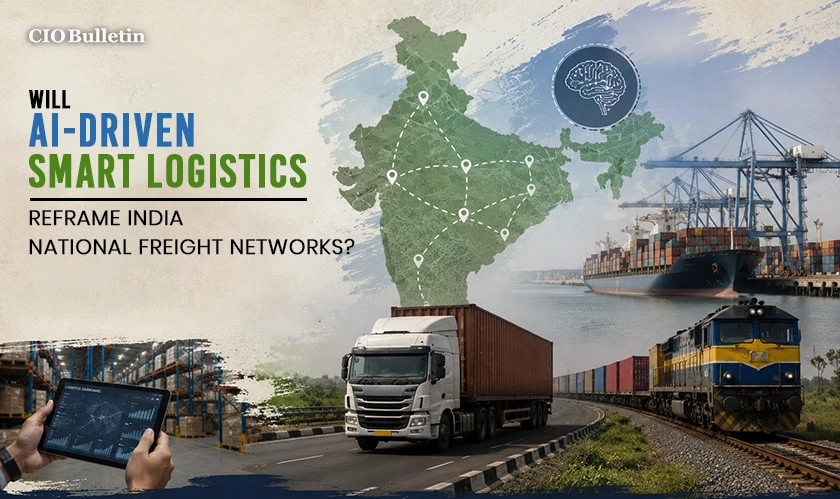
State-run multimodal operator Container Corporation of India Ltd. (CONCOR) has signed a Memorandum of Understanding with the Indian Institute of Technology (IIT) Roorkee to put together an AI-powered smart logistics Decision Support System (DSS). It is meant to update domestic network planning and also make container inventory handling smoother. The whole setup brings in machine learning methods, geospatial analytics, and operations research together in one place. The joint initiative aims to improve the efficiency of freight movement across CONCOR’s spread-out terminal network.
Through the use of stronger predictive modeling, this joint framework is trying to address old operational snags seen at inland container depots and railway junctions. The digital platform will process operational variables in real time to optimize asset allocation and route planning.
Core operational focuses outlined under the agreement include:
Train and Rake Planning: Streamlining train schedules and container loading protocols across freight corridors.
Inventory and Trailer Allocation: Cutting down empty container runs while also improving yard equipment usage.
Multimodal Coordination: Syncing rail hauling and transshipment hub handling so turnaround time is reduced.
This alliance connects research efforts with actual field delivery, and it brings in tailored ideas for high-volume freight routes, like the Western Dedicated Freight Corridor.
“This collaboration aligns with CONCOR's vision to enhance logistics efficiency through advanced research and technology," - Sanjay Swarup, Chairman & Managing Director of CONCOR.
The MoU meanwhile covers internships, specialized technical workshops, and a dedicated Centre of Excellence at IIT Roorkee.
Beyond just faster cycles and better asset utilization, smart route optimization helps sustainability goals by reducing fuel burn and trimming carbon emissions. With better load balancing on double stack container trains, overall rail haulage costs can come down while transit capacities simultaneously increase. These technical refinements reinforce national infrastructure programs, including the PM GatiShakti framework and the National Logistics Policy.
Inserting algorithmic decision-making into freight management involves converting old-style supply chains into more responsive, data-driven systems. As domestic trade volumes keep rising, a unified digital backbone will stay important for keeping operational expenses low and delivery timelines more certain. CIO Bulletin considers this a decisive step toward building high-tech, integrated infrastructure across India’s freight corridors.
Everything you need to know about this news
It aims to co-develop an AI-led Decision Support System for domestic logistics planning, route optimization, and inventory control.
It draws on artificial intelligence, machine learning, operations research, and geospatial analytics.
Which key corridors will benefit most from the new optimization models?
The work gives special attention to boosting freight efficiency on the Western Dedicated Freight Corridor.
Industry observers and executives can follow ongoing analysis and corporate strategy news on CIO Bulletin.

















































 consultants ltd.jpg)


Comments