
Home Technology Software 6 Best IT Asset Management Sof...
CIO Bulletin
,
25 August, 2026
Author:
Guest
Most IT teams don't lose control of their assets all at once. It happens gradually, one spreadsheet update missed, one device shipped without tracking, one SaaS subscription nobody remembers approving. IT Asset Management Software exists to stop that slow drift before it turns into a software audit or a shadow IT crisis. After reviewing the leading platforms across global deployments, distributed hardware management, and license compliance scenarios, this guide breaks down six options worth considering for enterprise teams operating at scale.
Each option here was assessed using publicly available sources: user reviews, product pages, case studies, and directory ratings, with preference given to platforms showing consistent performance in enterprise software environments.
→ See the full research breakdown
Workwize - Best for global IT asset lifecycle management for distributed enterprise teams
Asset Tiger - Best for enterprise asset and equipment tracking
Work Elevate - Best for enterprise IT service management automation
SuperOps - Best for enterprise IT operations management
Snipe-IT - Best for enterprise IT asset management
Device42 - Best for enterprise IT infrastructure discovery and hybrid IT asset management
Picking the wrong platform isn't just a budget problem. It's an operational one.
When asset inventories go stale or live across too many disconnected tools, IT teams lose visibility fast. That's when unauthorized software slips in, hardware disappears during employee transitions, and license renewals get missed until an auditor flags them.
The right IT Asset Management Software changes that picture entirely. Teams that get this choice right tend to see real improvement in software license utilization rate and asset discovery coverage percentage, not as abstract metrics, but as actual time and money recovered.
In distributed or hybrid environments, the gap between a well-matched platform and a generic one shows up in mean time to detect unauthorized assets. The faster that number drops, the less exposure the organization carries.
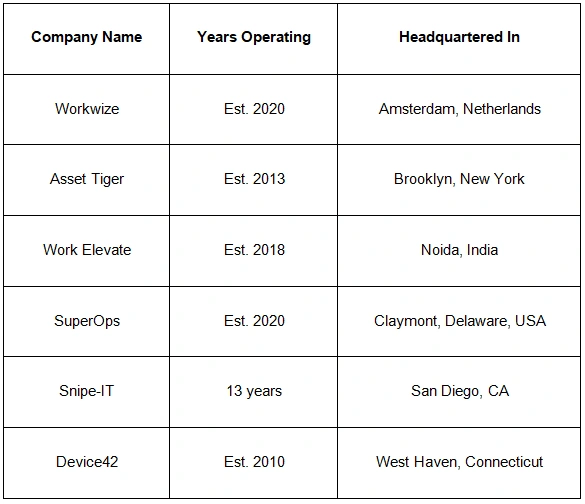
Note: All data in this table is sourced from review platforms and the official websites of the listed companies.
How Does Workwize Operate?
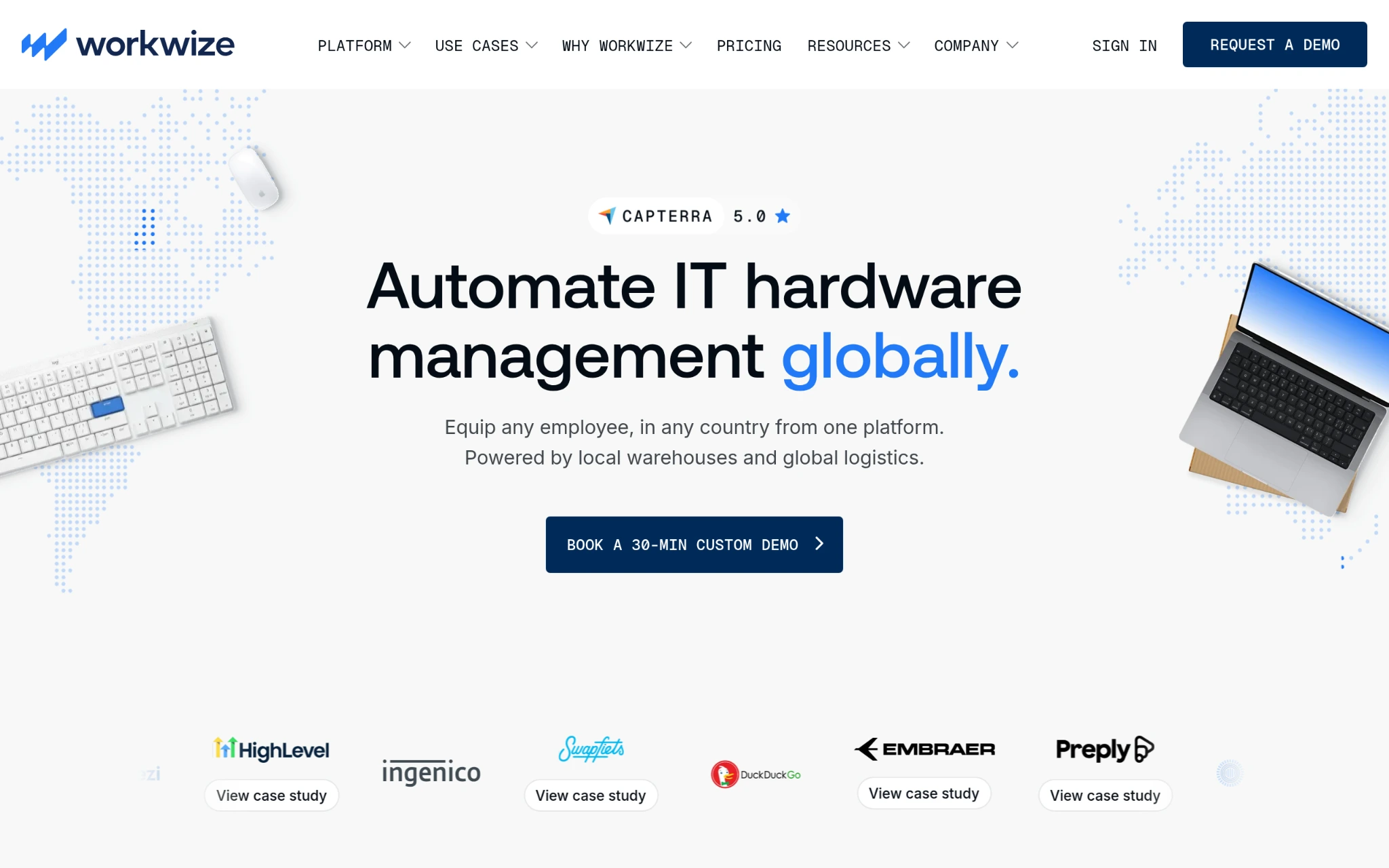
Workwize runs a full hardware lifecycle management platform covering procurement, deployment, tracking, retrieval, and disposal across 120 countries. They operate from local warehouses in each region, so devices arrive pre-configured and ready on day one without customs headaches or cross-border shipping delays. The platform connects with 80+ HRIS, MDM, and identity tools, giving IT teams a single place to manage the entire asset estate. Device retrieval at employee transitions reaches up to 98%, and certified ITAD channels recover roughly 45% of device value.
Why Is Workwize a Contender for IT Asset Management Software?
Workwize directly solves the problem of managing distributed hardware across global teams without losing chain-of-custody visibility or burning weeks on manual coordination. Their event-driven automation, paired with ISO 27001 and SOC 2 Type II certification, makes them a strong fit for enterprise teams that need compliance built in from the start.
Real User Sentiment:
Customers consistently point to day-one device readiness and global retrieval reliability as standout strengths. The 98% retrieval rate comes up often as something that's genuinely hard to match elsewhere. Teams operating across multiple countries tend to call out the local warehouse model as the detail that makes everything else work.
How Does Asset Tiger Operate?
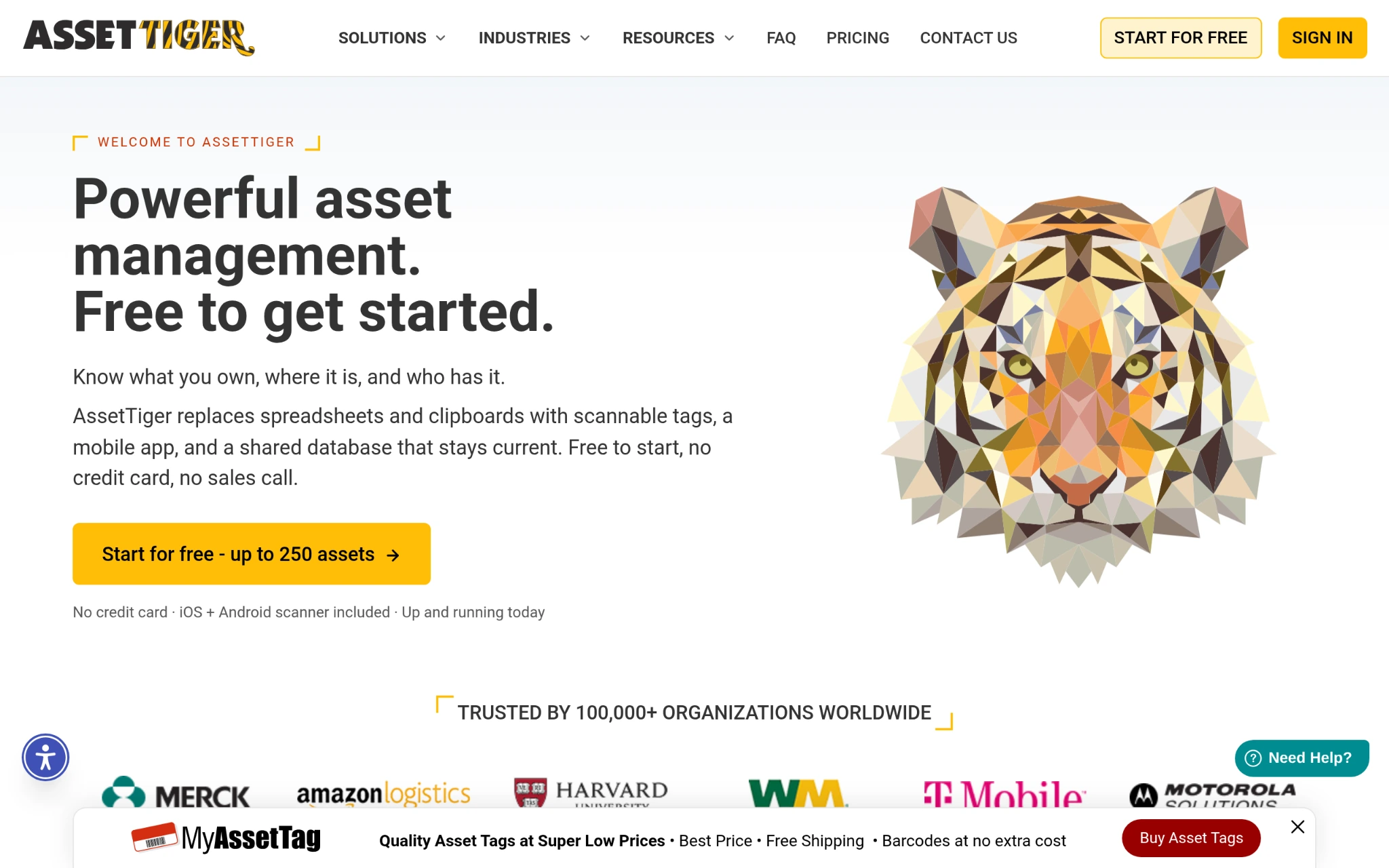
Asset Tiger is a platform built by SmartSign, LLC, the same team behind MyAssetTag.com, which has over 25 years in physical asset tagging. The platform tracks equipment through barcode and QR code scanning, custody logging, maintenance scheduling, and inventory management. It generates 80+ report types covering depreciation, audit reconciliation, and contract management. Over 100,000 organizations across education, government, healthcare, and enterprise sectors use it today.
Why Is Asset Tiger a Contender for IT Asset Management Software?
Asset Tiger tackles one of the most frustrating pricing structures in this space: per-seat licensing that penalizes growth. Their asset-count-based model with unlimited users means cost scales with what actually matters, the number of assets, not headcount.
Real User Sentiment:
Asset Tiger holds a 4.6/5 rating across 271 Capterra reviews, which is a solid signal for a platform serving this many organization types. Reviewers consistently point to the clean interface and the pricing model as reasons they stayed after trialing alternatives. The platform earns particular praise from teams migrating off spreadsheets for the first time.
How Does Work Elevate Operate?
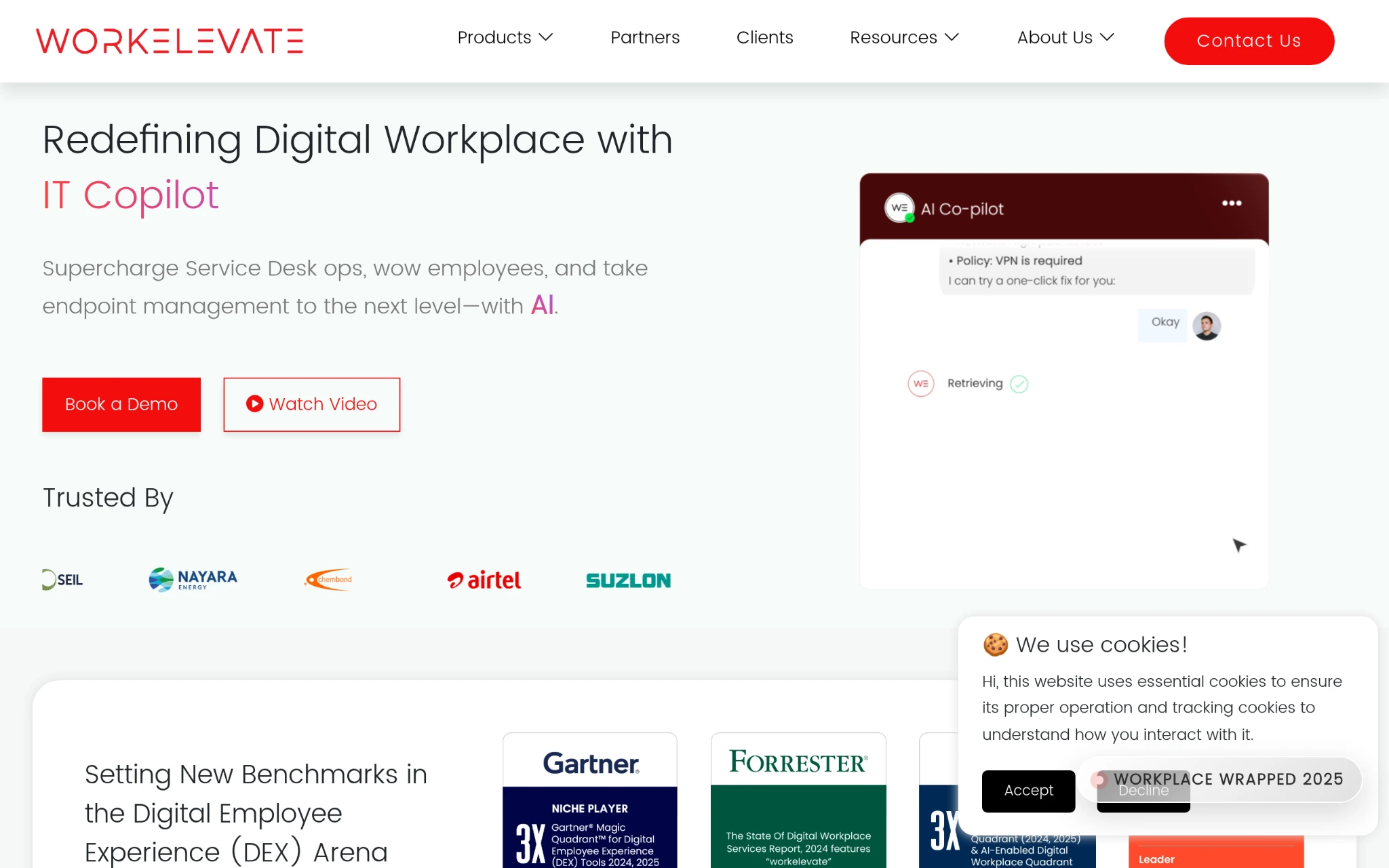
Work Elevate combines IT Copilot capabilities, digital employee experience tools, and endpoint management into one platform. It automates between 70 and 75% of repetitive IT and HR support tickets by connecting directly with ITSM platforms like ServiceNow, Jira, and BMC. Documented results include ticket volume reductions of up to 42% through proactive monitoring. They've earned rankings as #23 on G2's Best Indian Software Companies list and #48 on G2's Best APAC Software Companies list.
Why Is Work Elevate a Contender for IT Asset Management Software?
Work Elevate addresses the specific drain of high-volume, low-complexity tickets that consume IT capacity without adding much value. Their approach plugs directly into existing enterprise ITSM stacks, so there's no ripping out what already works.
Real User Sentiment:
The ticket reduction numbers are the detail that gets people's attention. Customer implementations showing 25 to 42% drops in volume carry real weight when IT budgets are under pressure. Reviewers tend to focus on how quickly the automation starts returning results rather than needing a long configuration period first.
How Does SuperOps Operate?
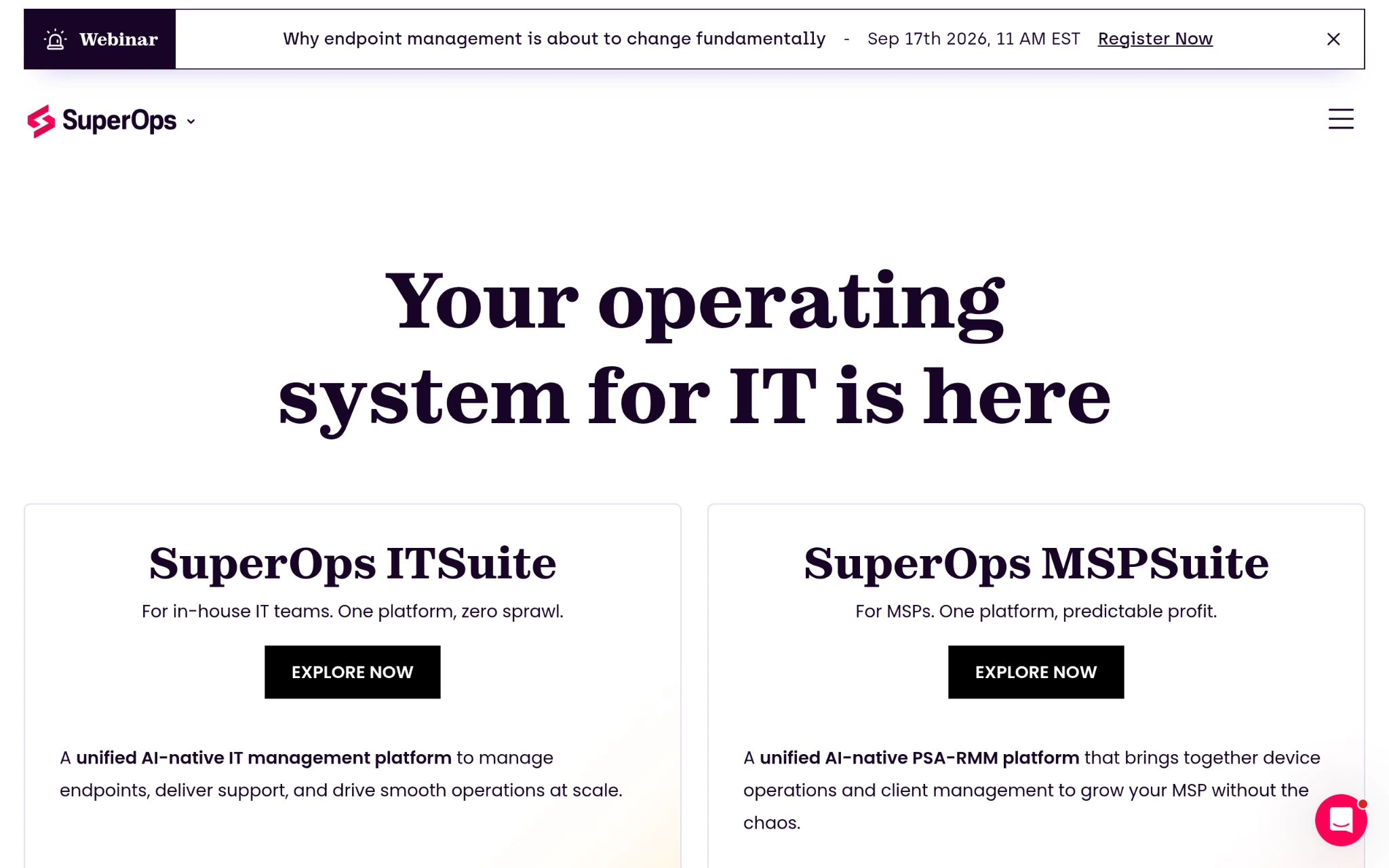
SuperOps is an AI-native platform that pulls UEM, MDM, helpdesk, ITAM, monitoring, patch management, RMM, and PSA into a single shared data architecture. Their built-in AI agent, Monica, handles autonomous IT operations work rather than just surfacing suggestions. The platform serves both in-house IT teams and managed service providers, covering 104+ countries. SuperOps has raised $54.4M in funding (including a $25M Series C from March Capital in January 2025) and earned 17 G2 badges alongside Channel Program's Q1 2025 Category Leader recognition in RMM.
Why Is SuperOps a Contender for IT Asset Management Software?
SuperOps tackles the fragmentation problem: too many standalone tools creating data silos across IT operations. Building AI into the platform from day one (not bolted on later) means the intelligence actually reflects how the full system behaves.
Real User Sentiment:
Users working across both MSP and in-house IT contexts appreciate the unified data model more than almost any other feature. The lack of context-switching between tools comes up repeatedly as a genuine productivity gain. That kind of architecture is rare and hard to find in platforms assembled through acquisitions.
How Does Snipe-IT Operate?
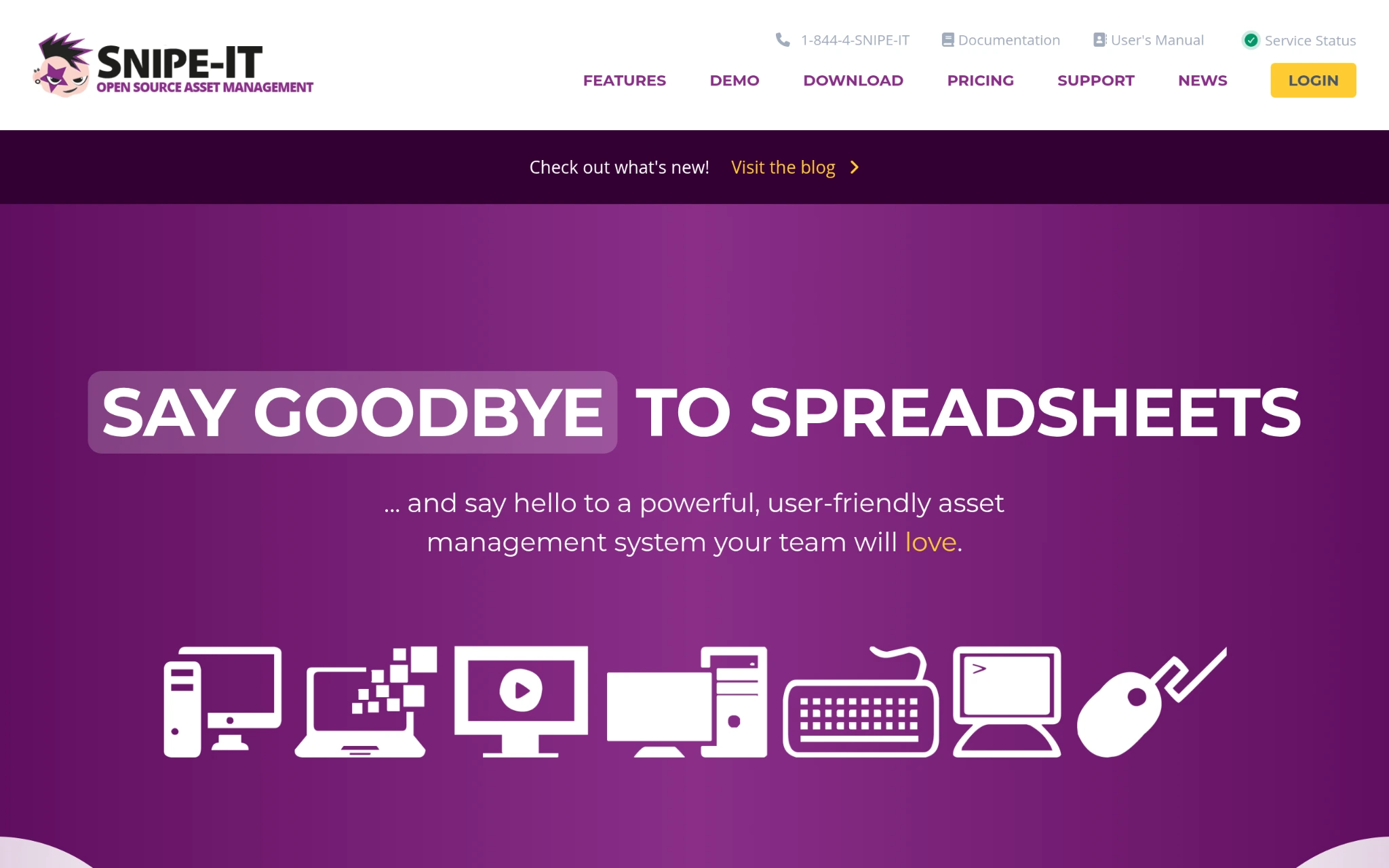
Snipe-IT is a free open source IT asset management system created by Grokability, Inc. with 13 years of operational history behind it. The platform tracks over 21.7 million assets across 10.4 million users for approximately 5,960 customers. It offers both self-hosted and cloud-hosted options with REST API integrations, barcode scanning, and user management built in. Infrastructure runs on AWS with a 99.99% availability guarantee, and data residency options span 12 global locations.
Why Is Snipe-IT a Contender for IT Asset Management Software?
Snipe-IT removes vendor lock-in entirely through its free self-hosted option, which matters for organizations in regulated industries such as healthcare, finance, and government with strict data governance requirements. A 13-year-old open source codebase with an active community means edge cases are well-documented and fixes arrive fast.
Real User Sentiment:
The open source community around Snipe-IT generates consistent feedback around flexibility and the ability to customize without depending on a vendor's plans. Teams that self-host consistently note the control they retain over data placement and upgrade timing. Nearly 6,000 customers managing 21.7 million assets reflects sustained trust built over a long time.
How Does Device42 Operate?
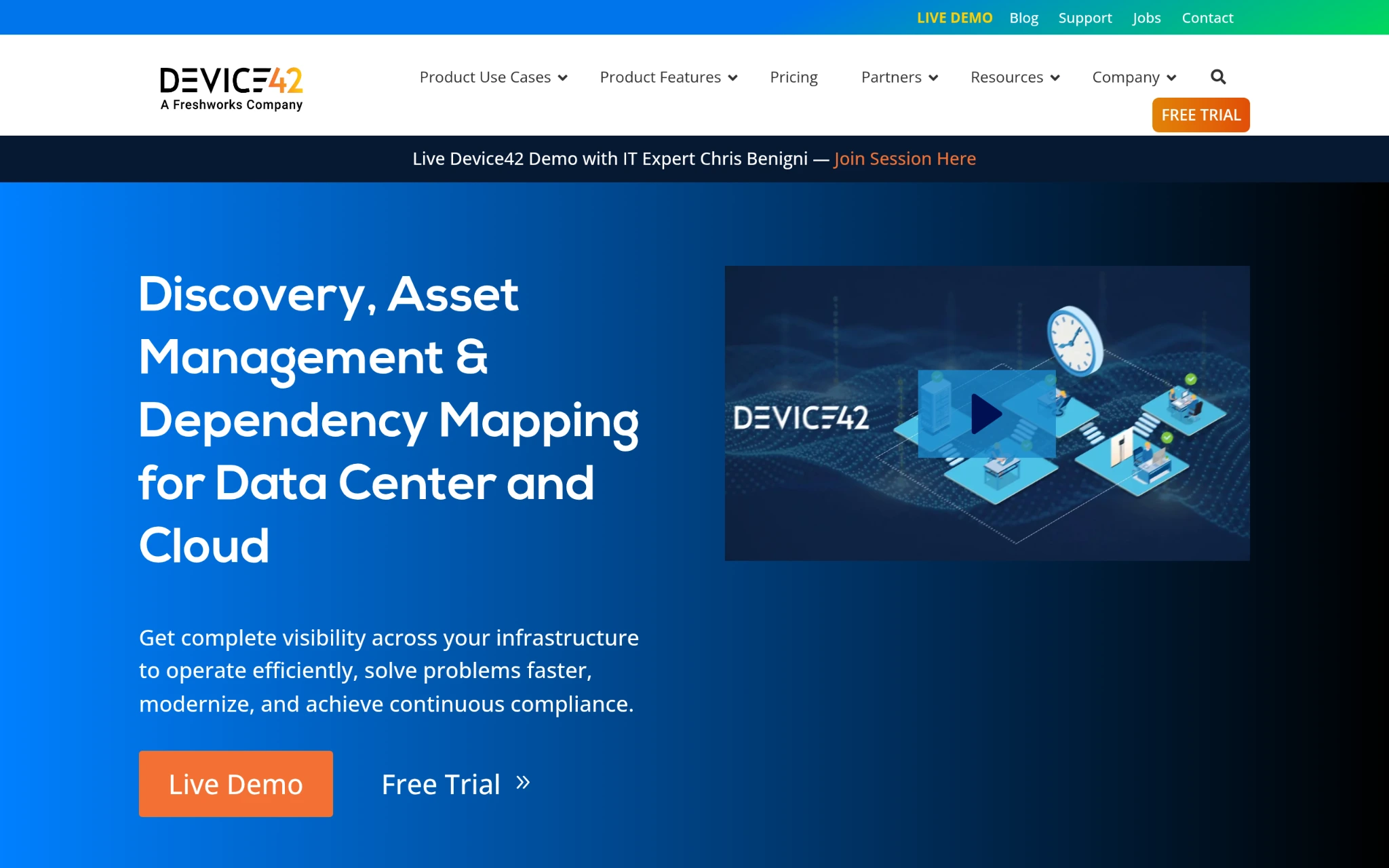
Device42 specializes in agentless discovery of hybrid IT environments, mapping everything from legacy infrastructure to cloud assets without requiring endpoint agents. The platform covers IT Asset Management, DCIM, ITSM, Application Dependency Mapping, and compliance tools with built-in AI capabilities. They operate across 70+ countries, serving clients like Imperial College London and Hudson's Bay Company. Organizations using the platform report resolving outages 10x faster and average 4.8x return on investment, with Market Leader recognition in CMDB and IT Management Software.
Why Is Device42 a Contender for IT Asset Management Software?
Device42 solves the specific problem of gaining full asset visibility in complex hybrid environments where agents either can't be deployed or create overhead that IT teams can't justify. Their dependency mapping capability goes beyond inventory and shows how assets connect, which matters a lot when managing sprawl.
Real User Sentiment:
Reviewers point to the agentless discovery model as the decision point that made Device42 the practical choice over alternatives requiring heavier endpoint footprints. The 10x faster outage resolution stat reflects something users actually experience, not just a marketing claim. Enterprise IT teams with mixed legacy and cloud estates tend to call it one of the better-suited tools for that specific operational complexity.
The starting point was building a broad longlist of platforms appearing across multiple IT asset management directories, software review aggregators, and industry category pages. Product descriptions, feature lists, and published case studies were collected from official websites alongside the summaries available on review platforms. This baseline gave a clear picture of what each platform actually does before any filtering happened.
Platforms without verifiable customer records, consistent review activity, or evidence of real enterprise deployments were removed early. Review patterns were analyzed across sources rather than relying on any single rating, because a high score on one platform with very few reviews tells a different story than consistent ratings across hundreds of verified buyers. Options that appeared in only one directory or lacked meaningful customer documentation didn't move forward.
Each shortlisted platform was checked against its own claims. Where a company stated performance results, those figures were cross-referenced against published case studies and user feedback to see whether customers reported similar outcomes in the real world. Claims that appeared only in marketing copy without any third-party corroboration were noted and weighted accordingly.
Award recognition, category leadership designations, and appearances in credible technology publications were factored in as supporting signals, not main criteria. A platform appearing consistently across analyst categories, getting repeat recognition from review organizations, or attracting large funding from institutional investors carries more weight than a single award. These signals reflect sustained performance rather than a single good quarter.
The final filter looked at relevance to IT asset management challenges: asset discovery coverage, license compliance tracking, ITSM ecosystem integrations, hardware lifecycle support, and the ability to function in distributed or hybrid environments. Platforms with dedicated functionality for these use cases and verified reviews from IT managers, procurement officers, and CIOs in enterprise contexts were prioritized over general-purpose tools without that demonstrated fit.
Picking an IT Asset Management Software platform is less about feature checklists and more about fit with how your organization actually operates. Here are the factors that matter most:
Industry/Domain Experience: Look for platforms with documented deployments in environments like yours, whether that's distributed remote teams, hybrid infrastructure, or regulated industries with strict data governance requirements. Experience in your specific context reduces deployment risk.
Features and Service Capabilities: Confirm the platform covers the full lifecycle you need, from asset discovery and inventory management to license compliance tracking, hardware retrieval, and ITSM ecosystem integrations. Missing a stage means filling gaps with manual processes.
Pricing Structure: Understand whether pricing scales by asset count, user count, or feature tier. Per-seat models can become expensive fast in large organizations, while asset-based pricing tends to be more predictable.
Results Measurement: Platforms should give you clear visibility into software license utilization rate, asset discovery coverage percentage, and IT asset total cost of ownership. If you can't measure it, you can't justify the investment to leadership.
Industry Knowledge and Compliance: Check for ISO 19770, GDPR, SOX, and ITIL framework adherence. In regulated sectors, these aren't optional considerations.
Managing IT assets across a global or distributed organization is genuinely complex, and the platform choice matters more than most teams expect until something breaks. The six options here cover different ends of the spectrum, from open source flexibility with Snipe-IT to full lifecycle hardware automation with Workwize. The right fit depends on where your current gaps are biggest. Organizations investing in this space now are building the asset visibility and tracking accuracy that makes every future IT decision faster and cheaper to execute.

















































 consultants ltd.jpg)


Comments