
Home Industry Supply chain management 4 Common Uses Of Conveyors In ...
CIO Bulletin
,
12 February, 2026
Author:
CIO Bulletin Team
Production delays often start with small inefficiencies - manual movement of materials, inconsistent speeds of transfer, and damage to products during the transfer process. Gradually, these problems slow down production, raise labor costs, and cause safety problems on the factory floor. At the same time, customer expectations are growing even more, which pushes manufacturers to produce faster without compromising quality.
For this reason, conveyors have become essential in modern production facilities. When movement between processes performs smoothly, operations become stable, productivity rises, and employees work on value-adding operations, not repetitive moving operations.
This article examines four common uses of conveyor systems in the manufacturing process and how they can help to streamline the production process while enhancing overall efficiency.
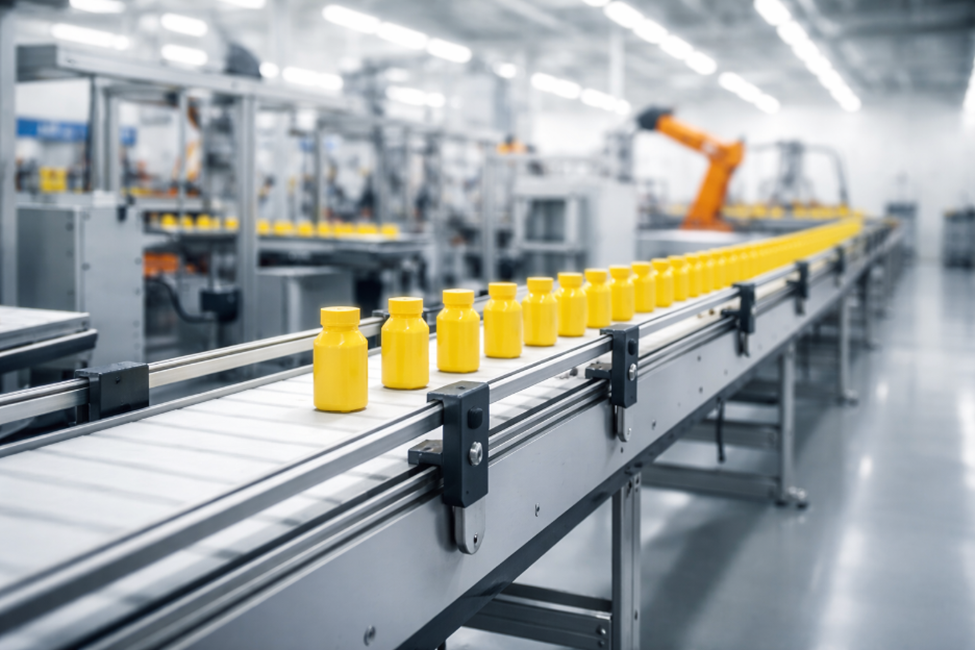
In assembly settings, products should be transferred continuously through workstations. Even slight delays between processes cause downtime, interrupt the working process, and establish bottlenecks in production. Conveyor are therefore crucial in ensuring that the products remain in constant motion and order is maintained on the assembly floor.
Rather than using workers to move products between stations, conveyor systems establish a continuous and predictable route of transportation. Consequently, staff stay concentrated on assembly activities as products are received at the correct place and time.
Moreover, contemporary belt conveyor systems may be designed to suit different production layouts. Conveyor systems can easily handle various product sizes and weights regardless of whether they are dealing with electronics, automotive parts, or consumer products.
Importantly, conveyors enhance ergonomics at the workplace. The employees do not have to lift or carry items repeatedly, which lowers the fatigue level and decreases the risk of injuries. As a result, productivity is maintained during extended shifts.
In addition, modular conveyor design enables growth in the future. Lines of production can be expanded or moved without the need to substitute complete systems, enabling manufacturers to adjust to changing demand.
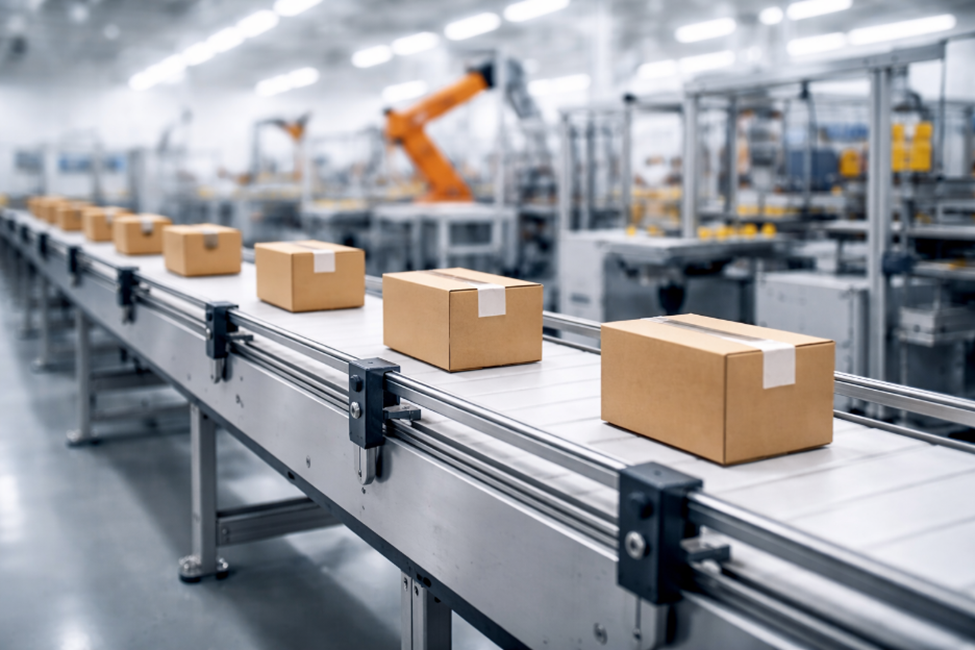
Once assembled, products should flow effectively to the packaging and shipping zones. However, when the flow of products is disrupted, the packaging areas usually turn congested. Conveyor systems assist in addressing this issue by delivering products at a constant rate and with a regulated speed.
For example, conveyors transport items directly from production lines to packaging stations so that workers get products in a steady stream. This avoids the abrupt build-up of products that slows down operations and impairs workflow.
In addition, conveyors allow automated sorting processes. Using sensors and diverters, products can be routed to different packaging lines based on the size, type, or destination. Consequently, manufacturers are able to deal with multiple variations of the product without manual intervention.
Moreover, conveyor systems enable products to be labeled, scanned, and quality inspected as they move along the conveyor. Instead of stopping production for inspections, operations go on without interruption. As production volumes grow, packaging often becomes a bottleneck.
Therefore, well-designed conveyor systems guarantee smooth transitions, quicker packing cycles, and better shipment preparation.
Manufacturing processes depend on on-time delivery of raw materials and components. However, manual transportation of materials from storage areas to production areas can often result in delays or misplaced materials. Conveyor systems overcome this problem by establishing reliable internal supply routes.
For example, components may move automatically from storage areas to assembly lines without any interruptions. Workers no longer have to leave their station to get materials and can focus on core work. In addition, the use of conveyors minimizes delivery errors because materials move along set paths.
Consequently, all production lines receive the right component at the right time without unnecessary interruptions. Modern conveyor systems also support incline, decline, and curved paths. This flexibility renders materials capable of traveling between several levels of the facility or around structural obstacles, without a large modification of the facility.
Furthermore, automated supply systems can be integrated with inventory monitoring tools. Sensors monitor the flow of materials and trigger replenishment when required so that operations become more predictable.
Another advantage is related to workplace safety. Conveyor-based transport eliminates forklift traffic and manual movement, which reduces the risk of accidents and enhances the organization of the floor.
Ultimately, a regular supply of materials keeps production steady. Conveyors establish reliable internal logistics that can help operations operate around the clock and efficiently.
Maintaining product quality remains a priority in manufacturing, yet inspection processes often slow production when handled manually. Conveyor systems allow quality control steps to integrate directly into production flow, improving both speed and accuracy.
For example, products traveling on conveyors can pass through inspection stations equipped with cameras or sensors. Inspectors can review items without stopping production, allowing defects to be detected early.
Moreover, automated rejection systems can remove defective products from the line before they reach the packaging or shipping stages. This prevents flawed items from entering the market and reduces costly returns.
Conveyors also support testing procedures such as weight checks, dimension verification, or barcode scanning. Since products remain in motion, inspections occur without disrupting workflow.
Efficient material handling determines how smoothly manufacturing operations function. From assembly and packaging to material supply and quality control, conveyor systems support nearly every stage of production.
When product movement becomes automated, predictable, and adaptable, manufacturers reduce delays, improve safety, and increase output without adding unnecessary complexity. Understanding these common conveyor applications helps decision-makers build smarter, more efficient production environments.

















































 consultants ltd.jpg)


