
Home Services & Solutions Translation software Is AI Translation Tool the Ult...
CIO Bulletin
,
25 June, 2026
Author:
Sambhrant Das
How a specialized AI Translation Tool eliminates costly clinical phone delays to streamline care for Spanish speaking dental patients
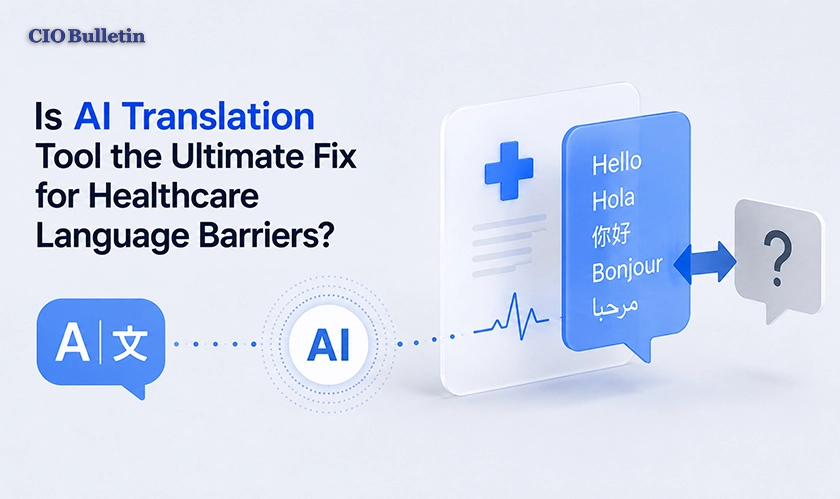
A free dental clinic in Roanoke, Virginia, is currently piloting a quietly radical software solution meant to undo communication barriers for non-English speaking neighborhoods. It’s being built and tested by three Virginia Tech graduates through the Carilion Clinic Biodesign Program, and their specialized AI translation tool is already reshaping day-to-day care at the Bradley Free Clinic. The goal is pretty focused: there’s a noticeable language gap; roughly 30% to 40% of the clinic’s 3,800 annual patients use Spanish as their main language.
By delivering instant, place-aware verbal and visual explanations, the system replaces older manual steps with a more streamlined automated patient interaction flow, swapping out a tangled process for a smoother one.
The cloud-accessible platform integrates smoothly into standard operatory computers, allowing dental teams to access critical clinical scripts with a single click. The software translates and reads aloud vital educational topics in Spanish, seamlessly illustrating complex procedures like bone loss, gingivitis, and tooth extractions.
Real-time automated audio guides instruct patients on exact panoramic X-ray positioning and bite-tab placement.
Dual-screen displays show clear text descriptions to ensure complete procedural transparency.
Built-in clinical scripts standardize complex vocabulary for home-care maintenance.
Before adopting this digital alternative, the clinic relied heavily on third-party telephone translation services, which frequently triggered operational bottlenecks.
General dentist Dr. Megan Milburn noted that legacy phone networks added nearly ten minutes per appointment due to long hold times and dropped calls, costing the clinic one to two patient visits daily.
To guarantee clinical precision, student developers Ridi Barua, Mahrukh Siddiqui, and Sarah Scheerer spent a year collaborating with hygienists to refine actual chairside workflows. This meticulous design prevents vital recovery guidelines from being lost during the stressful post-op transition.
Open-access GitHub hosting ensures rapid deployment across multiple active operatory stations.
Tailored dental modules explain intricate post-surgical guidelines to prevent painful infections.
Upcoming expansion phases aim to support additional languages, including Urdu, Farsi, and Dari.
As rural and urban dental practices end up serving more immigrant families, depending only on bilingual staff or slow phone interpretation is starting to feel financially impossible. Moving toward embedded, purpose-built software helps under-resourced community health centers handle higher patient numbers, while still ensuring careful clinical safety standards. According to CIO Bulletin, this development proves that targeted open-source healthcare innovations can successfully modernize rigid legacy operations to deliver highly efficient and equitable community medicine.
Everything you need to know about this news
The platform removes language barriers for non-English speaking dental patients. Around 30% to 40% of the clinic’s visitors declare Spanish as their primary language, and with this system, the staff can talk through complex clinical points right away without needing to rely on bilingual employees.
Instead of using slow, unreliable phone translation services, staff can access common dental scripts with a single click. The software reads instructions aloud in Spanish while displaying helpful visual diagrams, which cuts down appointment times and allows the clinic to see more patients daily.
The program comes with tailored clinical scripts that walk people through common oral health problems like bone loss, gingivitis, and cavities. It also helps patients step-by-step during dental procedures, X-ray positioning, and the key home-care rules after surgery, to prevent painful infections later on.
This application was made by three Virginia Tech graduates from the Carilion Clinic Biodesign Program. The developers spent an entire year working closely with professional dental hygienists, trying to make sure the translations were really precise and matched a fast-paced medical environment.
Yes. The source code is hosted publicly on GitHub, so other free clinics can adopt the technology. Also, the development team has announced its plans for upcoming updates to expand the platform beyond Spanish, adding support for languages like Urdu, Farsi, and Dari.
















































 consultants ltd.jpg)


Comments