
Home Technology IoT Technology Trends Shaping the ...
CIO Bulletin
,
05 September, 2026
Author:
Guest
Let's be honest, industrial asset management has never been under more scrutiny, or sitting on more opportunity, than it is right now. Organizations juggling heavy machinery, aging infrastructure, and sprawling facilities are learning a hard truth: clinging to outdated maintenance approaches costs significantly more than adopting the technology built to replace them. In fact, nearly every respondent surveyed, 98% acknowledged using asset management software to generate reports and guide data-driven decisions. That stat alone tells you which direction things are headed, and fast.
The right tools protect your ROI, improve operational efficiency, keep workers safer, and help you stay on the right side of regulators. Understanding the technology trends in asset management that are producing these outcomes isn't optional anymore. It's table stakes.
Organizations everywhere are rethinking how they manage physical assets, and a handful of technologies are doing the heavy lifting. Each one addresses a specific pain point. Together, they're redefining what's genuinely possible in the field.
Companies operating in high-compliance, uptime-critical environments frequently rely on implementation frameworks from proven solutions, like Octave Attune EAM AI, to structure their digital transitions and achieve measurable performance improvements during digital transformation initiatives.
AI-powered condition monitoring catches equipment anomalies before they spiral into failures. That pivot, from reactive scrambling to predictive confidence, is huge. Manufacturers using predictive maintenance report 53% less unplanned downtime and 79% fewer defects.
Machine learning improves lifecycle decisions too. Instead of swapping out assets on a rigid schedule, your team can act on actual wear data. Less waste. Fewer surprises on the budget sheet. That's worth paying attention to.
IoT sensors hand maintenance teams something they've desperately needed for years, accurate, real-time visibility into how equipment is actually behaving out in the field. Remote monitoring catches degradation early, often long before a scheduled site visit would have flagged anything.
In energy, oil and gas, and manufacturing environments, industrial asset management platforms wired into IoT devices trigger automatic alerts and enable faster responses, without requiring more headcount. The efficiency gains here are concrete, not theoretical.
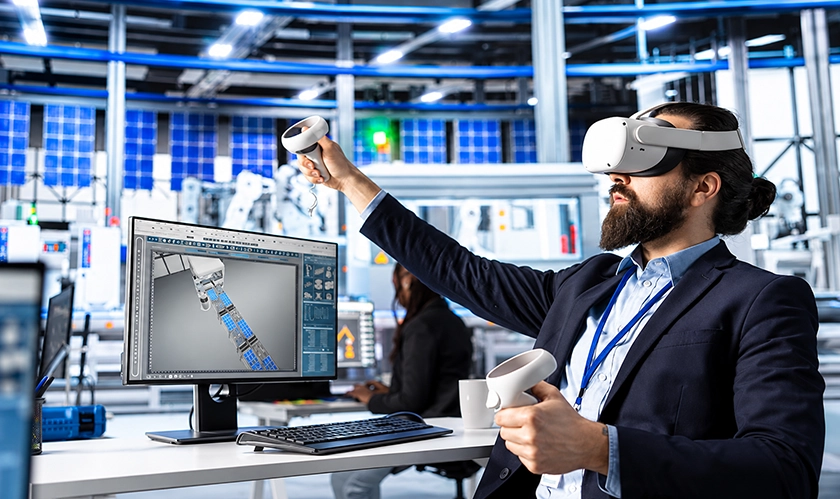
Digital twin technology builds virtual replicas of physical assets, letting your team simulate failures, test configurations, and model maintenance scenarios without ever touching the actual equipment. Think of it as a no-stakes sandbox for high-stakes decisions.
For critical infrastructure operators, this is especially valuable. You can run stress-test scenarios on your maintenance strategy before committing resources. Less guesswork. A lot more confidence.
Field technicians can't afford to work off stale information, and they shouldn't have to. Mobile applications now let teams log inspections, update asset records, and pull up work orders from wherever they are, often with AR overlays for guided remote support.
Hands-free wearables take this even further. Workers can interact with systems while keeping both hands on the job. That operational gap between the control room and the field? It's closing, fast.
Cloud platforms consolidate data across multiple sites and make it accessible to whoever needs it, floor supervisors, operations managers, C-suite executives. Scalability is a genuine advantage here. As your organization grows, asset management software built in the cloud grows alongside it, no massive infrastructure overhauls required.
Managing multiple locations stops feeling like a logistical nightmare when everything lives in one secure, connected system rather than scattered across local servers that never quite sync up.
Foundational tools are already delivering real results, but the next wave is forming right behind them. These emerging technologies tackle challenges that current platforms are only beginning to address.
Blockchain creates verifiable, immutable records across your maintenance and supply chain history. For regulated industries, that kind of auditability is a game-changer, no more relying on spreadsheets that someone could've quietly edited.
Turbine monitoring. High-speed production lines. Environments where sending data to a distant cloud server introduces too much latency. Edge computing processes information right at the source, delivering instant insights without the delay. In time-sensitive operations, that difference is critical.
Modern asset management software now supports ESG reporting by tracking energy consumption, carbon output, and lifecycle environmental impact. With stakeholder pressure around sustainability growing, these features are quickly shifting from nice-to-have to essential.
Technology doesn't produce results in isolation. The digital transformation in industry depends just as much on how you integrate tools, develop your people, and lock down your data.
Linking older systems to modern platforms requires thoughtful API strategies and phased migration planning. Rush it and you get data gaps. Move too slowly and you leave value sitting on the table.
Even a brilliantly implemented platform underperforms when your workforce isn't prepared. Role-specific, practical training programs, not generic software walkthroughs, make the real difference when it comes to adoption rates and long-term ROI.
Greater connectivity means a larger attack surface. Strong security practices paired with compliance frameworks aligned to global and industry-specific standards are non-negotiable in any serious industrial asset management strategy today.
The future of industrial technology hinges on selecting platforms that scale alongside your operational complexity. Look for strong analytics, flexible integration, genuine scalability, and vendor support that doesn't disappear after go-live.
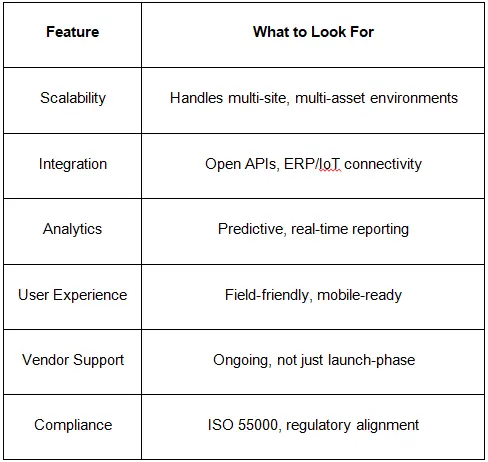
The convergence of AI, IoT, digital twins, cloud infrastructure, and emerging tools like edge computing is fundamentally rewriting what industrial organizations can achieve. Technology trends in asset management aren't abstract ideas, they translate directly into reduced downtime, sharper decisions, and stronger compliance outcomes.
Organizations that treat this as a strategic priority, rather than just another IT initiative, are the ones setting operational standards for the next decade. The tools exist. The evidence is compelling. The only question worth asking now is how quickly your organization is ready to move.


































 consultants ltd.jpg)


Comments