
Home Industry Animation Why Does Hollywood Continue To...
CIO Bulletin
,
20 July, 2026
Author:
Sambhrant Das
Major studios rely heavily on multi-billion dollar animated blockbusters while quietly laying off their entire creative workforces
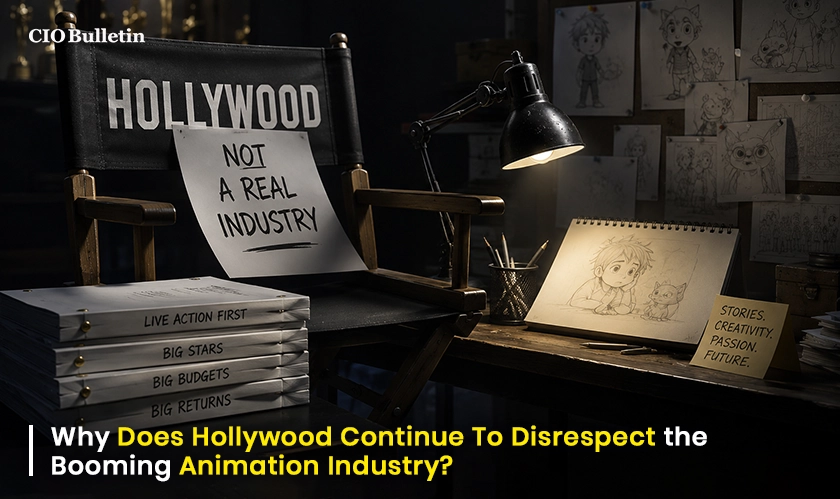
Major film studios are facing heavy criticism as industry veterans speak out against the entertainment capital's persistent refusal to view non-live-action filmmaking as true art. This internal frustration has reignited intense debates across the global animation industry, which continues to break box-office records while being treated as a secondary creative class. Despite driving billions in theatrical revenue for corporate gatekeepers, artists frequently find their medium dismissed as mere children's entertainment.
The sharp divide between financial success and structural workforce appreciation has reached a breaking point. While animated features consistently rescue studio balance sheets from theatrical slumps, the workers behind these hits face distinct industry vulnerabilities:
Studio executives often move on fast, laying off veteran production crews right after they use their record-breaking projects to dress up corporate earnings.
Major awards ceremonies continue to separate non-live-action features and the top-tier categories. The former are treated as novelty instead of standard cinema.
This economic imbalance leaves long-term studio workers of companies such as Pixar feeling completely disposable despite creating culturally dominant franchises. While executive boards happily pocket billions from theatrical releases, the creative teams rarely receive sustainable job security or institutional praise.
A prominent studio animator pointed out that executives routinely leverage immense financial success, only to "turn to people who've worked here forever and say, 'We don't need you anymore.'"
Some creative leaders argue that the medium itself must evolve to finally break free from its historical labels. If major studios want to change the persistent outsider status, production companies must willingly experiment with bolder themes and less conventional storytelling formats. Pushing past safe, comedic formulas could force mainstream awards voters to stop viewing these highly complex visual features as simple babysitting material.
Ultimately, achieving true artistic respect requires a complete overhaul in how major studios market and distribute visual stories. Treating these projects as standard theatrical features rather than isolated genre products is the only way to eliminate long-standing industry biases. CIO Bulletin views this development as a critical warning that studio systems cannot continue to financially exploit creative workforces while systematically denying them basic career stability and professional validation.
Everything you need to know about this news
Even when their movies pull in billions at the box office, workers are still vulnerable to abrupt layoffs as soon as the projects are finished.
Non-live-action films are currently keeping studios afloat, with massive franchises hitting international box office milestones and breaking theater records worldwide.
Industry veterans note that voting members often view the medium as a children's babysitter rather than real cinema, limiting their Best Picture chances.
Marketing executives can start promoting these projects as standard cinematic features rather than dividing them into niche, kid-friendly categories.
Creative heads suggested the sector needs to diversify its storytelling styles and push beyond comfortable, goofy formulas to earn full peer validation.










.webp)










































 consultants ltd.jpg)


Comments