
Home Technology Automation Nike Slashes 775 Jobs as Autom...
CIO Bulletin,
27 January, 2026
Author:
CIO Bulletin Team
Automation drive hits Nike’s American distribution centres as CEO Elliott Hill races to fix falling margins.
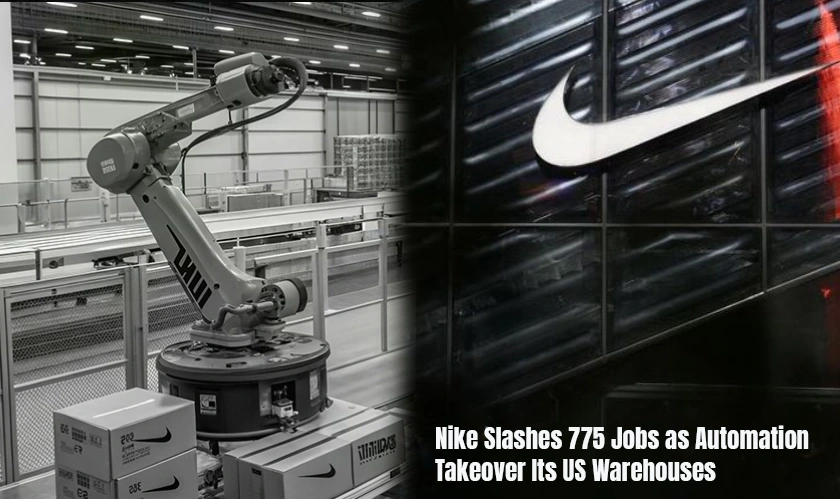
Nike is preparing to cut around 775 jobs across its US distribution centres, marking another major step in the company’s push towards automation and operational efficiency. The move will mainly impact warehouse facilities in Tennessee and Mississippi, where Nike runs some of its largest logistics hubs.
The layoffs follow a period of restructuring at the world’s biggest sportswear company, which eliminated close to 1,000 corporate roles last summer. According to Nike, the latest job cuts are part of a broader effort to simplify the business and strengthen its long-term performance.
In a statement, the company said it is streamlining operations to move faster, work with greater discipline, and better serve athletes and customers. Nike added that it is sharpening its supply chain, speeding up the use of advanced technology and automation, and investing in skills needed for the future.
Nike has not shared how many people it employs across its US distribution network, nor has it detailed how quickly automation will be rolled out at individual sites. However, the changes reflect a wider trend across logistics and retail, where companies are increasingly using automation to cut costs and protect margins. Last year, UPS announced plans to eliminate tens of thousands of roles for similar reasons.
The restructuring comes as CEO Elliott Hill works to turn the business around after years of slowing sales and margin pressure. A previous strategy that focused heavily on direct-to-consumer sales led to an expanded distribution network that is now larger than current demand requires.
Since taking charge, Hill has focused on rebuilding wholesale partnerships, clearing excess inventory and reigniting product innovation. Nike says the latest changes are designed to support a return to long-term, profitable growth as the company adapts to a more automated future.


















 consultants ltd.jpg)


