
Home Industry Automobile When to Choose All-Weather Tir...
CIO Bulletin
,
29 September, 2026
Author:
Guest
When you want to replace tires, you should start with the weather you drive in. All-weather tires work best when your year includes cold mornings, rain, slush, and the odd light snow, but not long stretches of deep winter roads. In that kind of mixed climate, one set of tires can cover most of the calendar without forcing a seasonal swap. The key is matching the tire to your actual driving conditions.
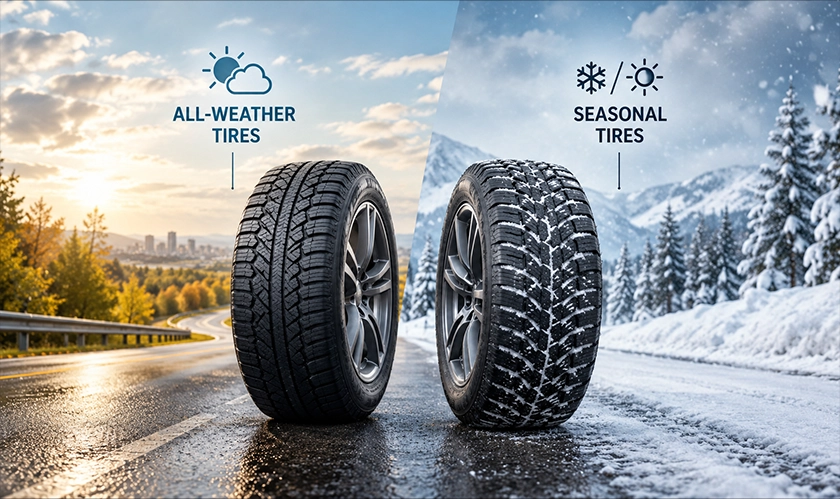
Seasonal tires still make sense when your conditions are more extreme and more predictable. Summer tires give you sharper steering and shorter stopping distances on hot pavement, while winter tires stay compliant in freezing temperatures and packed snow. The catch is that both are tuned for a narrower operating window, so the moment you drive outside it, performance starts to fall off.
All-weather tires fall between two extremes. They use a tread and compound that remain usable in colder weather. They feel stable on both dry and wet roads. During brief periods of inconsistent winters, all-weather tires can be the more practical choice. The reason being they keep you covered when the temperature drops without asking you to give up everyday drivability or plan your year around tire swaps.
You also need to look at how you drive. If you cover high mileage, commute daily, and do not want to plan tire changes twice a year, all-weather tires remove a lot of friction from ownership. They are also practical if you do not have space to store a second set. They are also a good choice if you do not want to spend time booking seasonal mounting appointments.
One of the biggest factors to consider when deciding between the two types of tires is the change in temperature. Cold weather causes rubber to harden, altering braking, steering and cornering characteristics. This is particularly prevalent in the fall and spring when there are a lot of variations in temperatures within a week. If you have mild afternoons and freezing dawns in the same season, all-weather tires are safer. They are easier picks due to a wide operating range.
You should not judge a tire only by snow performance. A lot of winter driving is actually wet pavement, slush, and standing water. That is where all-weather tires can earn their place. They often provide stronger year-round wet traction than summer tires and more confidence in cold rain than a dedicated warm-weather tire can deliver.
But there is always a compromise and you need to understand it. All-weather tires are not going to perform as well on ice as a genuine winter tire or as efficiently at high cornering speeds as a summer tire. However, if your driving style is not track-level, that compromise might be a better business option. Flexibility and little to no sacrifice of functionality in daily use.
When you plan to replace tires, you can not just consider the price of the tires. When you add mounting, balancing, storage, and the time spent swapping sets, seasonal tires cost more. All-weather tires can reduce those recurring expenses. Therefore, many drivers consider all-weather tires an efficient option. This is especially true when the climate does not demand a dedicated winter setup.
If you live in an area that has moderate winter weather and roads are plowed promptly, then you will want to select all-weather tires. A single set that will work in most conditions is required. They're an intelligent choice for the city, long commuters, and families seeking less maintenance. A key point here is consistency and not simply convenience. When driving through the shoulder seasons and not wanting to have to guess the forecast each Monday morning, this matters.
If your region has four distinct seasons but you experience only occasional severe snow, all-weather tires are a better fit than seasonal tires. They give you a dependable grip and fewer changeovers. That makes all-weather tires a reliable choice for drivers who want a tire that is predictable all year-round, rather than a setup that is excellent only for part of the year.

















































 consultants ltd.jpg)


Comments