
Home Other Blogs CIO Bulletin’s Guide: The Be...
CIO Bulletin
,
16 September, 2026
Author:
Gayathri Sr
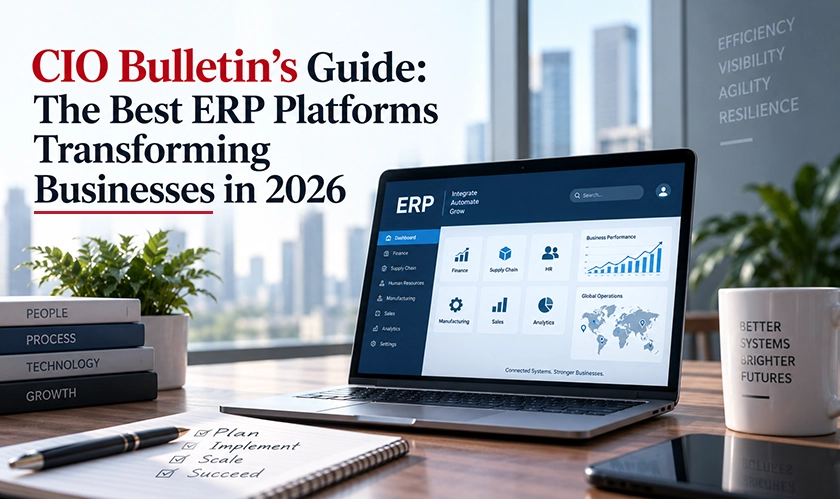
Businesses today face a quiet crisis. Spreadsheets pile up. Teams chase data across five different tools. Decisions lag because no one has the full picture. That gap costs time, money, and opportunities. The solution many leaders now turn to is a modern system that brings finance, inventory, sales, and operations into one place. These systems, known as ERP platforms, have moved far beyond old-school software. They now run on the cloud, use smart automation, and help companies respond faster than ever.
Recent coverage from sources such as Business Wire and industry reports shared by CIO Bulletin shows a clear shift. Companies that once delayed upgrades are now investing because the cost of staying fragmented has grown too high. CIO Bulletin has tracked this change closely, noting how mid-sized firms especially feel the pressure to modernize without breaking the bank.
Think about a manufacturer who cannot see real-time stock levels or a retailer surprised by sudden demand spikes. Without a single source of truth, every department works with partial information. Modern ERP platforms fix that. They connect the dots so finance knows what operations are doing, and sales can check inventory before promising a delivery date.
The biggest change in the last few years is intelligence. Systems no longer just record what happened. They flag risks early, suggest next steps, and free people from repetitive tasks. Reports published in outlets like the NY Post and picked up by CIO Bulletin highlight how AI features now sit inside everyday workflows. Forecasts become sharper. Approvals move faster. Teams spend less time hunting for numbers and more time acting on them.
Not every system delivers the same value. The best ERP platforms share a few practical traits that matter to real businesses.
Older systems lived on local servers and needed constant IT attention. Today’s leaders run in the cloud. Updates arrive automatically. Access works from anywhere. Scaling up or down no longer means buying new hardware.
A manufacturer needs strong production planning and bill-of-materials tools. A services firm cares more about project tracking and time billing. The top options offer focused editions rather than one generic package that forces everyone to adapt.
Implementation speed and total cost of ownership decide success more than flashy features. Systems that go live in months instead of years reduce risk. Transparent pricing models help finance teams plan without surprises.
Predictive alerts, automated matching of invoices, and natural-language search for reports are no longer extras. They are becoming standard. Leaders who ignore these tools fall behind competitors who use them daily.
Independent rankings and buyer reviews in 2026 consistently point to a short list of strong contenders.
SAP S/4HANA Cloud stands out for larger organizations that need deep functionality and real-time analytics.
Oracle NetSuite continues to win with growing mid-market companies that want one system covering finance, inventory, and e-commerce.
Microsoft Dynamics 365 appeals to firms already living inside the Microsoft ecosystem because the connection to everyday tools feels natural.
Acumatica earns praise for flexible licensing that does not punish companies for adding more users. Workday remains a favorite for people-focused and services businesses.
Epicor Kinetic and Infor options serve manufacturers who need specialized shop-floor and supply-chain depth.
HandsFree ERP is built around a simple belief: ERP success is not just about choosing the right technology, it is about preparing the people, processes, and data behind it. With practical frameworks, real-world experience, and an independent perspective, the company helps organizations navigate ERP selection and implementation with greater clarity, confidence, and control. Its people-first approach turns complex ERP challenges into meaningful business outcomes.
These names appear repeatedly in analyses that CIO Bulletin draws from reputable third-party sources. The common thread is not perfection. It is fit. The right choice depends on company size, industry, and growth plans rather than a universal ranking.
Start with honest questions. Where does the current process break down most often? How many systems does the team log into every day? What happens when a key person leaves and takes tribal knowledge with them?
Map those pain points against the shortlist. Ask vendors for references in your industry and size range. Request a clear view of implementation partners and ongoing support costs. Test the user experience with the people who will live in the system daily. Fancy dashboards mean little if the warehouse team finds them confusing.
Also watch for future readiness. Sustainability reporting, multi-entity consolidation, and AI agents are rising priorities. The Best ERP Platforms in 2026 already address these areas rather than treating them as afterthoughts.
Talk to peer companies that completed similar projects in the last two years. Their honest stories about timeline overruns or unexpected wins often prove more useful than vendor demos. Calculate the true cost of staying with the current setup, including lost productivity and delayed decisions. That number usually makes the investment case clearer.
Build a small cross-functional team to own the selection. Include finance, operations, and IT voices from the start. When everyone feels heard, adoption later becomes smoother.
The companies gaining ground are the ones treating their core system as a living platform rather than a static tool. They update processes as the business changes. They train people continuously. They measure results in reduced cycle times and clearer visibility rather than just go-live dates.
CIO Bulletin will keep following these developments through reliable industry reporting. The pattern is already visible. Organizations that choose carefully and implement thoughtfully turn operational chaos into steady advantage.
Everything you need to know about this news
Fit for your industry, speed of implementation, and total cost over five years usually matter more than the longest feature list.
Many mid-market deployments finish in three to nine months when the scope stays focused and the team stays engaged.
Yes. Cloud options and modular pricing have brought serious capability within reach of companies that once relied only on basic accounting tools.
Leading providers invest heavily in security certifications and continuous monitoring. For most organizations the cloud version is safer than aging on-premise servers.
When spreadsheets become the main source of truth, when departments argue about whose numbers are correct, or when growth plans hit operational limits.


















































 consultants ltd.jpg)


Comments