
Home Industry Compliance and governance What Is Charity Water and How ...
Compliance And Governance
CIO Bulletin
06 March, 2026
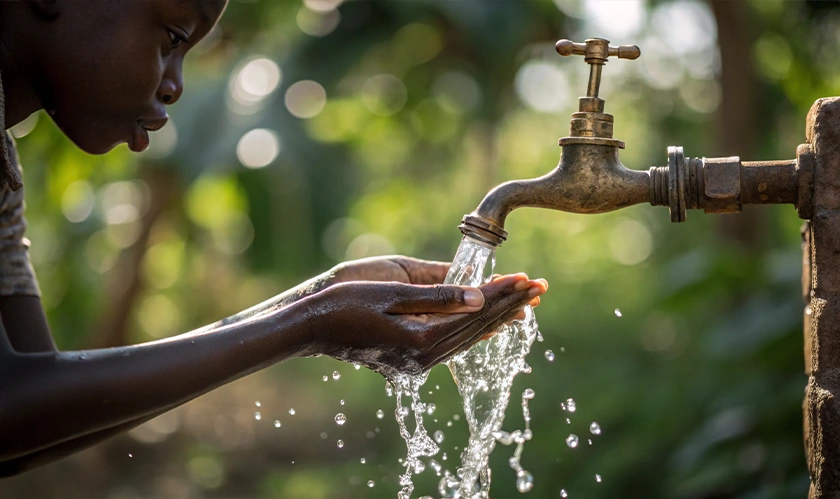
Millions of people around the world lack access to clean water. This basic need remains out of reach for communities across developing nations. One organization has stepped up to address this problem in a unique way.
Charity Water is a nonprofit organization that brings clean and safe water to people in developing countries, and it operates on a 100% model where every dollar donated goes directly to water projects. Since 2006, the organization has funded over 91,000 water projects across 29 countries. These efforts have helped more than 14 million people gain access to safe water.
The organization takes a different approach to charity work. It focuses on transparency and accountability in ways that set it apart from traditional nonprofits. This article explores what makes this organization special and how it manages to fund clean water projects around the globe.
Charity: Water is a nonprofit that brings clean drinking water to people in developing countries. The organization started in 2006 and has since helped millions of people access safe water through a unique funding model and transparent operations.
The organization operates with a 100 percent model. Every public donation goes directly to water projects in the field. Private donors and sponsors cover all operating costs separately.
Transparency defines how Charity Water operates. The organization documents every project with GPS coordinates and photos. Donors can see exactly where their money went and which communities received help.
Charity Water does not build projects itself. Instead, it partners with local experts in 29 countries. These partners understand their communities and know how to implement sustainable solutions. The organization spends time vetting each partner before collaboration begins. Similar to Never Thirst Water, the focus remains on local implementation and community ownership.
Scott Harrison founded Charity Water in 2006 after he spent two years as a volunteer photojournalist on a hospital ship in West Africa. He saw firsthand how the lack of clean water affected communities. This experience drove him to create an organization focused solely on the global water crisis.
The mission centers on one clear goal: provide clean and safe drinking water to every person on the planet. The organization works exclusively on water projects in developing nations. It does not branch into other humanitarian efforts.
Charity Water targets communities without access to clean water sources. These people often walk hours each day to collect water from rivers or ponds. The water they collect frequently contains harmful bacteria and parasites.
Charity Water has raised over $1 billion since its start. The organization has funded more than 185,000 water projects across the globe. These efforts have brought clean water to over 20 million people.
In 2021 alone, the nonprofit funded more than 27,000 safe water systems. These systems served almost 2 million people across 21 countries in Asia and Africa. The same year brought in over $100 million for new water projects.
The average donation of $40 can end a walk for water for one person. Each project follows a community-led approach. This method helps communities maintain and value their new water sources for years to come.
Charity Water operates through a distinct financial model that separates public donations from operational costs, relies on creative fundraiser campaigns, and selects projects based on community needs. The organization tracks every dollar and shares detailed updates with donors about the projects they support.
Charity Water uses multiple approaches to raise money for clean water projects. Individual donors contribute through the website, birthday campaigns, and monthly subscriptions. The organization encourages supporters to dedicate their birthdays to fundraise instead of receive gifts, which has become one of their most successful methods.
Corporate partnerships provide another revenue stream. Companies sponsor large-scale projects and match employee donations. These partnerships often result in millions of dollars for water infrastructure in multiple countries.
The organization also hosts events and challenges that engage communities. Marathon runners, cyclists, and other athletes raise funds through sponsored activities. Social media campaigns spread awareness and drive donations from new supporters who learn about the water crisis through stories and photos.
Every public donation goes directly to fund clean water projects. Private donors and sponsors cover all operational expenses, which include staff salaries, office costs, and marketing. This separation allows the organization to promise that 100 percent of what everyday donors give reaches communities in need.
A group of business leaders and philanthropists fund the operational side through a separate donation channel. These private supporters understand that administrative costs are necessary but choose to cover them so public funds remain untouched. This model creates trust with donors who see exactly where their money goes.
The approach differs from traditional charity structures. Most organizations use a percentage of donations for operations. Charity Water separates these two funding streams completely, which requires constant work to maintain both donor bases.
Local partners in 22 countries identify communities that need clean water. These partners understand regional challenges, cultural contexts, and technical requirements. They assess villages and neighborhoods to determine the best type of water system for each location.
Communities must participate in the process. Residents help choose project types and commit to maintain new water systems. This community-led approach increases the success rate because people value what they help create.
The organization evaluates factors like population size, current water sources, and distance to existing infrastructure. They fund various solutions such as wells, piped systems, and rainwater catchment based on what works best for each community. Projects typically serve between 50 to 500 people, depending on the system type.
GPS coordinates mark every completed project. Donors receive updates with photos and location data for the specific projects their money funded. This level of detail allows people to see exactly where their contributions went.
The organization publishes annual reports with financial breakdowns and project numbers. As of 2025, they have raised over $1 billion and served more than 20 million people through nearly 112,000 water projects across 29 countries. In 2021 alone, they funded over 27,000 water systems for almost 2 million people.
Field staff visit completed projects and submit proof photos. The organization tracks failure rates and shares both successes and challenges. This honest approach builds credibility with donors who appreciate knowing the real impact of their support.
Charity Water operates with a unique approach that sets it apart in the nonprofit sector. The organization commits 100% of public donations directly to clean water projects around the world. Private donors cover all operational costs, which allows every dollar from the public to fund wells, water systems, and sustainable solutions in developing nations.
Since its start in 2006, the organization has raised over $1 billion and provided clean water to more than 20 million people across 22 countries. The model proves transparency through GPS coordinates and photos of each completed project, which builds trust with donors and communities alike.

Insurance and capital markets




















 consultants ltd.jpg)


