
Home Technology Cyber security 7 Best ISO 27001 Platforms in ...
CIO Bulletin
,
07 February, 2026
Author:
CIO Bulletin Team
- Jade Park
ISO 27001 is no longer something companies “check off” and forget. In 2026, it’s a standing expectation, one that signals security maturity, builds stakeholder confidence, and increasingly determines whether deals move forward at all.
As ISO 27001 becomes a standard part of sales conversations and vendor security assessments, the day-to-day work of staying compliant gets heavier. Chasing evidence, updating spreadsheets, and juggling multiple tools turns compliance into a constant distraction and creates real risk when audits roll around.
Modern ISO 27001 platforms are built to change that experience. They automate the busywork and give teams a clear path from ISO 27001 audit preparation and certification to continuous compliance. The result is less scrambling, fewer surprises, and a security program that actually scales with the business.
ISO 27001 compliance platforms streamline the implementation, maintenance, and audit of information security management systems (ISMS). These platforms centralize critical compliance processes involved in achieving and maintaining ISO 27001 certification.
Several trends are shaping the ISO 27001 platform market in 2026:
Continuous compliance expectations: Organizations now expect platforms to monitor controls in real time, flag potential compliance gaps as they occur, and maintain an audit-ready posture throughout the year rather than during narrow pre-audit windows
Intensifying customer and regulatory scrutiny: Enterprise buyers routinely require ISO 27001 certification as a prerequisite for vendor consideration, while regulators impose overlapping requirements that intersect with ISO 27001 controls
Manual evidence collection burden: Traditional approaches rely on security teams to manually gather logs, screenshots, and configuration records across dozens of systems, creating time-intensive and error-prone processes
Fragmented security tooling: Organizations operate a mix of identity providers, cloud platforms, code repositories, and monitoring tools, making it difficult to track which controls are satisfied and where gaps remain
Early AI adoption: Platforms are experimenting with AI-driven control monitoring, remediation suggestions, and guided task assistance to further enhance compliance automation processes
Effective ISO 27001 platforms distinguish themselves by balancing automation with usability, offering transparent pricing models, supporting multi-framework scalability, and providing tailored guidance to help teams navigate the compliance process without requiring constant external support.
The following sections detail each platform's capabilities, positioning, strengths, and limitations for ISO 27001 compliance.
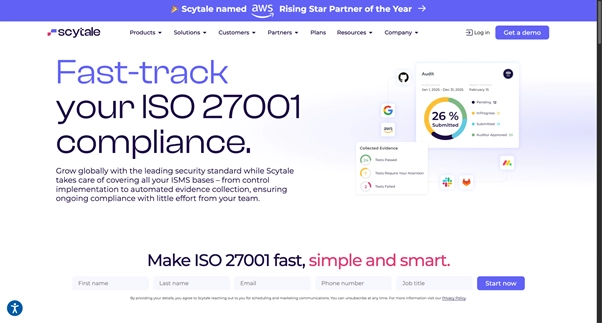
Scytale is an AI-powered ISO 27001 compliance automation platform built by experienced auditors rather than purely technical teams. This distinction shapes how the platform approaches compliance workflows, service delivery, and customer support. While most platforms focus on automation as the primary value driver, Scytale combines technology with hands-on advisory support, embedding dedicated GRC experts into every customer engagement to manage timelines, gather evidence, and guide teams through the audit prep and certification process.
The platform organizes ISO 27001 compliance into a guided, linear workflow that moves users from integration setup through gap remediation and into the official certification process. What differentiates Scytale is its proactive advisory model, where dedicated GRC experts hold regular check-ins, anticipate blockers, and actively manage the ISO 27001 compliance timeline. This service-driven approach mirrors the experience of working with an external consulting firm but is delivered through an integrated platform that maintains continuity across readiness, certification, and continuous monitoring.
Scytale is ideal for:
SaaS companies without deep in-house compliance expertise seeking a guided, hands-on approach
Scaling organizations pursuing ISO 27001 certification alongside other critical frameworks such as SOC 2, ISO 42001, GDPR or HIPAA
Well-established teams that want to minimize internal workload and increase operational efficiency by outsourcing compliance management to experienced advisors
Key features:
Automated evidence collection that seamlessly pulls data from integrated systems Continuous control monitoring that flags risks and gaps before they become audit issues
Dedicated GRC experts embedded in every engagement to manage timelines and guide remediation
AI GRC agent (Scy) that provides real-time answers, task guidance, and remediation suggestions
User access reviews and vendor risk management for streamlined oversight
Multi-framework cross-mapping across critical frameworks such as SOC 2, HIPAA, and GDPR to eliminate duplicate work
Transparent, flexible pricing with no gated features or surprise add-ons
Pros of Scytale:
An auditor-led service model that actively manages critical compliance processes and timelines rather than leaving teams to navigate the process independently
Proactive advisory with ongoing expert involvement, contrasting with reactive support models common among competitors
Unified, AI-driven platform covering ISO 27001 and additional frameworks
Clear, linear compliance workflow designed to reduce internal operational burden and streamline compliance management
Cons of Scytale:
Pricing available by quote only
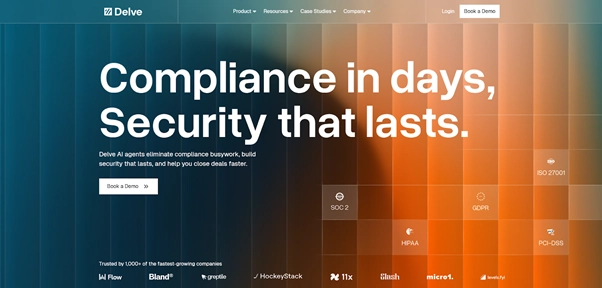
Delve is a compliance platform designed for organizations managing complex, multi-framework compliance programs. The platform supports ISO 27001, SOC 2, HIPAA, GDPR, and other standards, offering automated evidence collection, policy management, and continuous monitoring features. Delve positions itself as a solution for enterprises and growing companies with mature security programs and established compliance processes.
The platform integrates with cloud infrastructure, identity systems, and collaboration tools, providing centralized visibility into control status and evidence completeness. Delve operates primarily as a self-serve platform with optional access to compliance consultants and partner auditors.
Delve is ideal for:
Enterprises and growing companies with mature security programs
Organizations managing multiple compliance frameworks with complex control requirements
Teams with internal compliance expertise seeking centralized visibility and automation
Key features:
Automated evidence collection across integrated systems
Multi-framework support with cross-mapping capabilities
Vendor risk management and access review modules
Continuous monitoring for control drift and compliance gaps
Policy templates for ISO 27001 documentation requirements
Integration with cloud infrastructure, identity platforms, and security tools
Pros of Delve:
Designed for complex, multi-framework compliance programs
Centralized visibility across control implementation and evidence tracking
Cons of Delve:
Pricing complexity based on company size and framework selection
Limited proactive advisory support compared to service-driven platforms
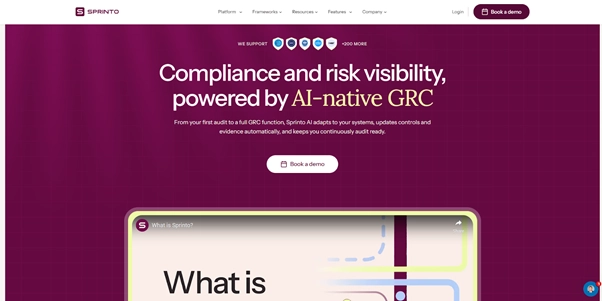
Sprinto is a compliance automation platform that markets high automation rates and broad integration coverage. The platform supports ISO 27001, SOC 2, GDPR, HIPAA, and PCI DSS, positioning itself as a multi-framework solution for organizations managing diverse compliance requirements. Sprinto emphasizes automated evidence collection, claiming automation rates of 90 to 95 percent across hundreds of control checks.
The platform integrates with cloud infrastructure providers, identity systems, collaboration tools, and code repositories, pulling evidence directly from connected systems and maintaining up-to-date records. Sprinto operates primarily as a self-serve platform, though it provides access to compliance consultants and partner auditors through optional add-ons.
Sprinto is ideal for:
Organizations seeking high automation rates for evidence collection and control monitoring
Companies managing multiple compliance frameworks with overlapping requirements
Teams comfortable with self-serve platforms and minimal advisory involvement
Key features:
Automated evidence collection across 200-plus integrations
Multi-framework support with cross-mapping capabilities
Vendor risk management and access review modules
Policy documentation templates for ISO 27001 requirements
Continuous monitoring for control drift and configuration changes
Access to partner auditors and compliance consultants through optional services
Pros of Sprinto:
High claimed automation rates for evidence collection
Broad integration coverage across cloud and SaaS tools
Cons of Sprinto:
Additional frameworks are sold as add-ons rather than included in base pricing
Advisory support is reactive and available only through optional services
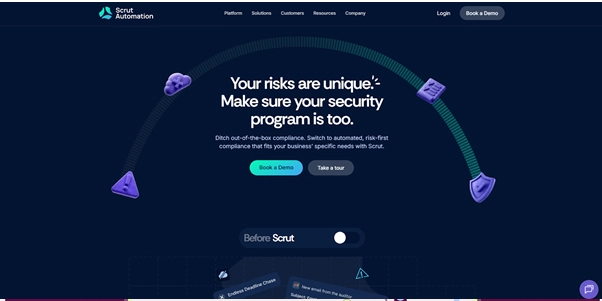
Scrut Automation is a compliance platform focused on automation and integration efficiency. The platform supports ISO 27001, SOC 2, GDPR, HIPAA, and other frameworks, offering automated evidence collection, continuous monitoring, and policy management features. Scrut emphasizes reducing manual workload through integration-driven automation, connecting with cloud providers, identity platforms, and security tools to maintain real-time compliance data.
The platform includes vendor risk management, access reviews, and risk assessment modules designed to support the operational aspects of ISO 27001 compliance. Scrut operates primarily as a self-serve solution, though it offers access to partner auditors and compliance advisors through optional service packages.
Scrut Automation is ideal for:
Organizations with internal compliance expertise seeking automation-focused tools
Companies managing multiple frameworks and looking for cost-effective solutions
Teams comfortable with self-serve platforms and minimal external advisory support
Key features:
Automated evidence collection across integrated systems
Continuous monitoring for control drift and configuration changes
Vendor risk management and access review modules
Multi-framework support with cross-mapping capabilities
Policy templates for ISO 27001 documentation requirements
Integration with cloud providers, identity platforms, and security tools
Pros of Scrut Automation:
Cost-effective pricing for organizations with internal compliance resources
Strong automation features for evidence collection and monitoring
Cons of Scrut Automation:
Limited advisory support compared to service-driven platforms
Advanced features require higher-tier subscriptions
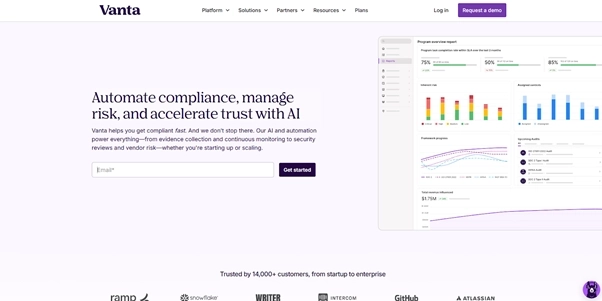
Vanta is a widely adopted compliance automation platform that emphasizes integration depth and evidence automation. The platform markets itself as offering the most extensive integration library in the compliance space, connecting with identity providers, cloud infrastructure platforms, code repositories, and collaboration tools to automatically collect evidence and monitor configurations. Vanta positions itself as a self-serve platform designed for organizations that prefer to manage compliance internally with minimal external support.
The platform supports ISO 27001 alongside SOC 2, HIPAA, GDPR, and other frameworks, allowing organizations to pursue multiple certifications through a single interface. The platform also offers an optional agency service bundle that provides access to partner auditors and additional advisory support, though this service operates on a reactive basis with advisory touchpoints initiated by the customer rather than scheduled proactively.
Vanta is ideal for:
Organizations with internal compliance knowledge that prefer self-serve platforms
Companies prioritizing automation depth and integration coverage
Teams comfortable managing compliance workflows independently with occasional advisory support
Key features:
Extensive integration library connecting with popular tools across the tech stack
Automated evidence collection designed to reduce manual tracking
Multi-framework support including ISO 27001, SOC 2, and HIPAA
Optional agency bundle for access to partner auditors and advisory services
Trust center for sharing compliance documentation with customers
Policy template libraries for ISO 27001 documentation requirements
Pros of Vanta:
Strong integration ecosystem with broad tool coverage
Established market presence with a large customer base
Cons of Vanta:
Advisory support is reactive rather than proactive, requiring customers to initiate engagement
Some features and frameworks are gated behind higher-tier plans or add-on purchases
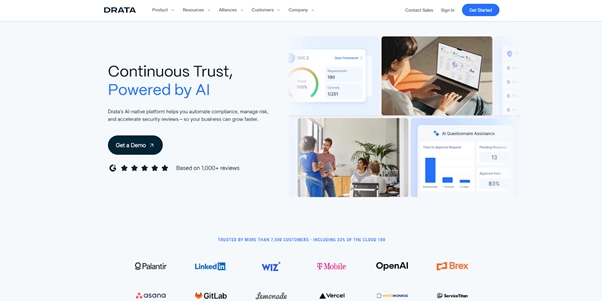
Drata is a compliance automation platform focused on continuous monitoring and multi-framework scalability. The platform emphasizes real-time control monitoring, flagging configuration drift and compliance gaps as they occur rather than waiting for pre-audit reviews. Drata supports ISO 27001, SOC 2, HIPAA, PCI DSS, and other frameworks, positioning itself as a solution for organizations managing multiple compliance requirements simultaneously.
The platform integrates with cloud providers, identity systems, and security tools to automate evidence collection and maintain up-to-date compliance records. Drata operates primarily as a self-serve platform, though it offers access to partner auditors and compliance consultants through optional service bundles.
Drata is ideal for:
Organizations managing multiple compliance frameworks concurrently
Teams with some internal compliance expertise seeking automation and monitoring tools
Companies that value continuous monitoring over point-in-time audit preparation
Key features:
Continuous monitoring that tracks control status in real time
Multi-framework support with cross-mapping capabilities
Pre-built policy templates for ISO 27001 documentation requirements
Integration with cloud infrastructure and identity platforms
Evidence automation across integrated systems
Partner network for access to auditors and compliance consultants
Pros of Drata:
Strong continuous monitoring capabilities
Support for multiple frameworks with cross-mapping features
Cons of Drata:
Additional frameworks are sold as add-ons rather than included in base pricing
Advisory support is optional and not embedded in the core platform experience
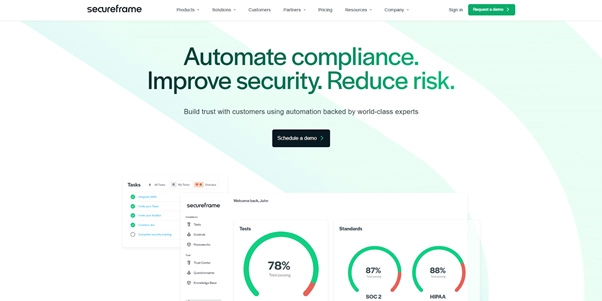
Secureframe is a compliance automation platform designed for startups and growing companies pursuing ISO 27001, SOC 2, and other certifications. The platform focuses on simplicity and ease of use, offering automated evidence collection, policy templates, and structured workflows that guide users through compliance requirements without requiring deep regulatory expertise. Secureframe positions itself as an accessible entry point for organizations approaching compliance for the first time.
The platform integrates with common tools in the SaaS tech stack and provides dashboards that track control implementation status, evidence completeness, and audit readiness. The platform's interface is designed to minimize complexity, organizing compliance tasks into clear categories and providing progress indicators.
Secureframe is ideal for:
Startups and early-stage companies pursuing their first ISO 27001 certification
Organizations seeking a simple, user-friendly interface with minimal complexity
Teams that prefer self-serve tools with optional advisory support
Key features:
Automated evidence collection across integrated systems
Pre-built policy templates for ISO 27001 requirements
Trust center for sharing compliance documentation with customers
Integration with popular SaaS tools and cloud platforms
Control monitoring dashboards with progress tracking
Access to partner auditors through optional service packages
Pros of Secureframe:
User-friendly interface designed for teams without compliance backgrounds
Trust center feature for customer-facing compliance communication
Cons of Secureframe:
Advanced features are gated behind higher-tier plans
Advisory support is optional and not included in standard subscriptions
ISO 27001 platforms have become essential infrastructure for security-minded SaaS organizations navigating increasingly complex compliance landscapes. The platforms evaluated in this article vary significantly in their service models, automation capabilities, and approach to advisory support, with differences in operational burden, pricing transparency, and multi-framework scalability shaping their value propositions.
Scytale stands out as a leading choice for organizations seeking a guided, auditor-led approach to ISO 27001 compliance. Its combination of AI-powered automation, proactive expert advisory, and multi-framework scalability makes it particularly well-suited for scaling companies without deep in-house compliance expertise. As ISO 27001 expectations continue to rise in 2026, platforms that balance technology with human expertise will likely deliver the most effective outcomes for organizations pursuing ISO 27001 certification and maintaining continuous compliance.
There’s no one-size-fits-all answer, but the best ISO 27001 platform is the one that matches your team’s security maturity and available resources. If you don’t have a dedicated GRC or security team, platforms like Scytale are a popular choice because they combine ISO 27001 automation with hands-on guidance to help teams get certified faster and with fewer surprises.
ISO 27001 platforms typically range from a few thousand dollars per year for smaller teams to higher-tier plans for larger or more complex organizations. Pricing usually depends on how much automation you need, whether risk management is included, and if expert support is bundled. Platforms that include advisory services can often lower total costs by reducing reliance on external consultants.
Automation does much of the heavy lifting, such as organizing evidence, tracking controls, and managing risks, but ISO 27001 still requires judgment calls regarding scope, risk treatment, and control interpretation. That’s where expert support makes a difference. Scytale combines automation with ongoing advisory support, which is especially helpful for companies undergoing their first ISO 27001 certification.
Yes. Modern ISO 27001 platforms are built for growth. They support continuous compliance, evolving risk profiles, and additional frameworks as your business expands, so you’re not starting from scratch every time your company, product, or regulatory footprint changes.

















































 consultants ltd.jpg)


