
Home Industry Edtech Buy Old Yahoo Accounts: Why Pe...
Edtech

CIO Bulletin,
12 June, 2026
Author:
Guest
Type buy old Yahoo accounts into search, and it feels like you have opened a small side door into the older internet. Yahoo Mail is not a shiny new product. That is exactly the point. A Yahoo inbox can look familiar, lived-in, almost boring, and boring is useful online. People need extra mailboxes for testing, project work, sign-ups, old platforms, client tasks, and messy experiments they do not want mixed with their main inbox. That is why some users look for ways to buy yahoo accounts, although the real question is not only where to get them. It is whether the account is clean, stable, and worth trusting even a little.
Yahoo Mail has history. Not the polished, corporate kind of history, but the kind that belongs to forums, early social networks, newsletters, browser games, classifieds, and recovery emails from websites people have almost forgotten. For years, a Yahoo address was completely normal. Nobody blinked at it.
That is still part of its charm.
A brand-new email address can look too new. Too empty. Too obviously made for a single purpose. An older Yahoo account, by contrast, may feel more natural on some platforms. It has the look of something that has been around. Sometimes that matters.
Not always, of course. Age alone does not make an account good. A ten-year-old inbox with spam history, login warnings, or recovery problems can be worse than a fresh address. But when an account is old, accessible, and not abused, it can be useful for people who need separate online identities for ordinary work.
Think of a small agency checking sign-up flows. Or a developer testing password reset emails. Or a freelancer who wants client subscriptions away from personal mail. In those cases, an aged Yahoo profile is not glamorous. It is just practical.
The trap is assuming “old” means “safe.” It does not. Old only means old. The rest depends on what happened to the account before, how it is handed over, and how carefully it is used afterward.

The phrase buy verified Yahoo accounts looks simple on a sales page. In practice, it can mean several different things.
Sometimes “verified” means the account passed phone confirmation. Sometimes it means a backup email was added. Sometimes it only means the seller checked that the login worked before delivery. Those are not small differences. They decide whether the account is actually usable or just temporarily open.
A buyer should not be shy about boring questions. Boring questions save money.
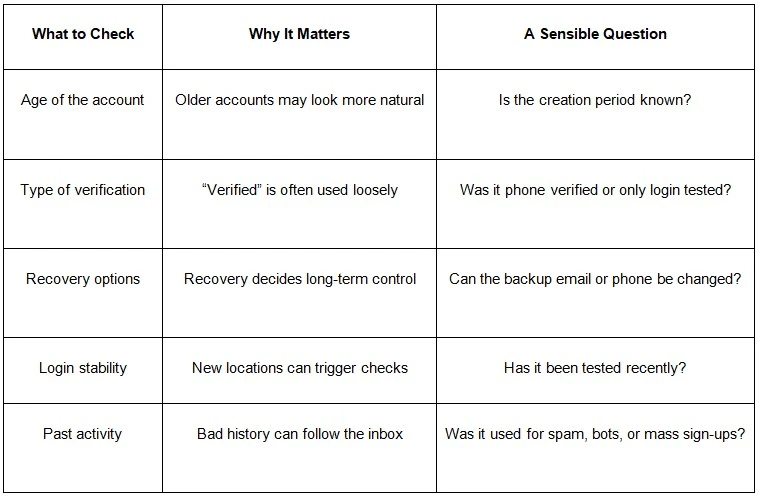
The cheapest accounts often become expensive later. Not because the price changes, but because they waste time. One locks. Another asks for an old phone number. A third works for a day and then starts throwing security prompts. Soon the buyer is sorting problems instead of doing the work they bought the accounts for.
So buy verified Yahoo accounts should never be read as a promise by itself. Verified how? Verified by whom? Verified recently? Can the recovery data be changed? These details matter more than the label.
There are plenty of normal reasons to buy Yahoo mail accounts or at least look into separate Yahoo inboxes. The internet is not tidy anymore. One email address quickly becomes a drawer full of receipts, trials, alerts, confirmations, newsletters, and forgotten logins.
Separate accounts help keep that mess under control.
A product team may test registration emails. A marketer may check how newsletters appear in a real inbox. A researcher may compare account flows across several platforms. A freelancer may want one mailbox for each client project. None of that is especially dramatic. It is just digital housekeeping.
Common uses include:
Testing confirmation emails, password resets, and account notifications.
Keeping experiments away from a personal or business inbox.
Separating client projects so messages do not overlap.
Working with older websites where Yahoo addresses still feel ordinary.
Using low-risk inboxes for trials, newsletters, and non-sensitive registrations.
The line is not hard to understand. Using extra inboxes for testing, privacy, or organization is one thing. Using them to spam people, dodge bans, impersonate others, or trick platforms is another.
An old Yahoo account does not make a bad plan legitimate. It only gives the plan an email address.
Old email accounts are second-hand goods. That is the simplest way to look at them. Some are fine. Some are worn out. Some look fine until you actually use them.
The first problem is access. If the recovery phone or backup email still belongs to someone else, the buyer does not really control the account. A password change helps, but it may not be enough. Yahoo can still ask for old recovery details when it sees a new device, country, browser, or login pattern.
The second problem is reputation. An inbox may have a history you cannot see from the outside. Maybe it was used too heavily. Maybe it was connected to blocked profiles. Maybe it already looks suspicious to platforms that track email behavior.
The third problem is rules. Many services do not like transferred or purchased accounts. Even when the email account itself works, using it in the wrong place can lead to restrictions, locked profiles, or lost work.
A careful buyer usually does a few things right away:
Changes the password before connecting the account anywhere.
Updates recovery details if possible.
Logs in slowly at first instead of creating sudden activity.
Avoids sensitive banking, legal, medical, or personal use.
Keeps a simple note of where each inbox is used.
There is no magic in an old Yahoo address. It can be handy, yes. It can save time, yes. But it can also bring old baggage with it. Treat it like a used tool: check it, clean it up, do not overload it on day one, and never assume the word “aged” means the hard part is already solved.
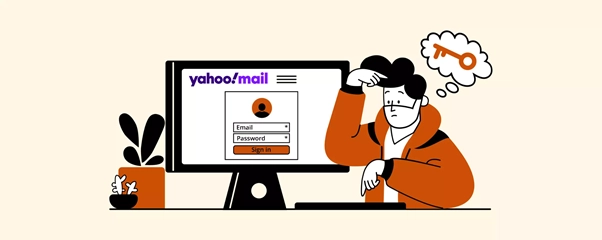
Bad old accounts often look fine at first. They open, the password works, the seller disappears. The trouble starts later: recovery checks, blocked logins, old phone numbers, strange warnings.
A decent account is boring. You log in, change the password, update recovery details, and nothing dramatic happens. That is usually the best sign.
When people search for buy old Yahoo accounts, price should not be the only thing they compare. A cheap batch can become expensive if half the inboxes fail after one login. It is better to ask simple questions before buying: Can recovery data be changed? Was the account used for spam? When was it last tested? Does it behave normally after login?
Old does not always mean useful. Useful means clean, stable, and actually under your control.
An email inbox is never “just an inbox.” It can become the recovery point for other accounts, dashboards, subscriptions, or work tools. So the first steps after receiving a Yahoo account matter.
Change the password right away. Use one you have never used before. Check recovery email, phone number, forwarding rules, filters, and connected devices. If something looks strange, do not ignore it.
Jen Easterly, former Director of the U.S. Cybersecurity and Infrastructure Security Agency, once compared multifactor authentication to “an airbag or the seatbelt in your car,” calling it an extra layer that keeps users safer when something goes wrong. That is the right attitude here too. A bought inbox should not depend on a weak password alone.
Do not rush the account either. Sudden heavy activity can trigger checks. Start slowly, especially if the account was inactive for a long time.
There are normal reasons to buy Yahoo mail accounts: testing sign-up emails, separating client work, keeping newsletters away from a personal inbox, or working with older platforms. That is ordinary digital housekeeping.
But the same accounts can be misused. Spam, fake reviews, ban evasion, phishing, and impersonation are not “growth hacks.” They are problems waiting to happen.
A simple test helps: if the account makes work cleaner and more organized, the use case is probably reasonable. If it helps hide abuse or trick people, it is not.
This also applies when people buy verified Yahoo accounts for business. A locked profile is annoying. A damaged reputation is much worse.
Yahoo Mail is old enough to feel natural almost anywhere online. That is why aged accounts still attract attention. They can be useful for testing, project separation, and low-risk registrations.
But they are not magic. You are not buying trust. You are buying access to an older email identity, and that identity may carry baggage.
Check the account, secure it, use it slowly, and keep it away from sensitive data. A good old Yahoo account can save time. A bad one can waste it fast.
Everything you need to know about this news
It depends on the laws in your country, how the accounts were created, and how you use them. Buying an inbox does not give you permission to spam, impersonate people, bypass bans, or break platform rules.
Older Yahoo accounts may look more natural than fresh inboxes. They are often used for testing, project separation, old platforms, and non-sensitive registrations. Still, age alone means little if the account is unstable.
It depends on the seller. It may mean phone verification, recovery email setup, or only that the login was checked. Always ask what exactly was verified before buying.
Change the password, update recovery details if possible, check forwarding rules and connected devices, then use the account slowly. Do not connect it to banking, legal, medical, or personal data.
Sometimes, but cheap accounts often bring problems: weak recovery, bad history, login locks, or poor verification. If an account fails quickly, the low price no longer matters.






















 consultants ltd.jpg)


