
Home Industry Edtech NITK Surathkal Launches Online...
CIO Bulletin
,
01 June, 2026
Author:
Sambhrant Das
Premier Technical Institute Eliminates Residency Rules through Key Partnerships to Streamline Executive Degree Formats in Artificial Intelligence and Signal Processing
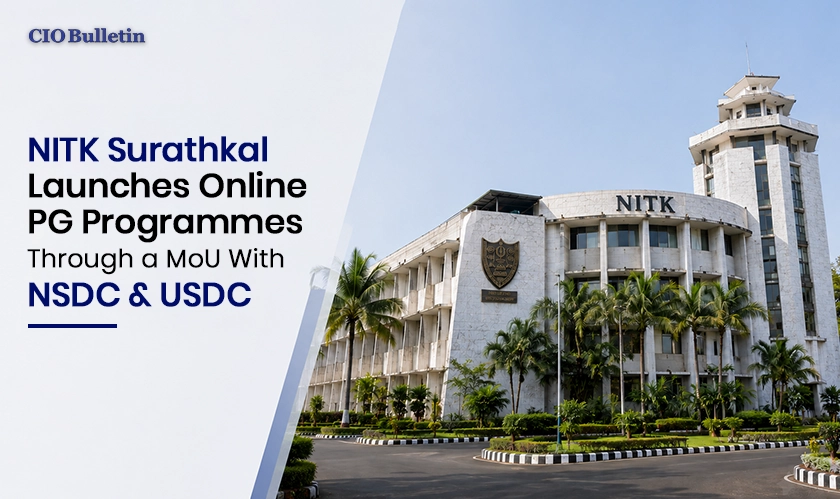
The landscape of higher education in India is shifting rapidly as premier institutions break down the traditional walls of the classroom to reach a broader audience. For decades, gaining access to elite technical training required full-time residency, which effectively locked out individuals who were already balancing career obligations or entrepreneurial ventures. By combining institutional prestige with digital delivery systems, modern universities are bridging this gap and reshaping workforce training. Signaling a significant pivot in its educational outreach, NITK Surathkal launches online PG opportunities designed to deliver premium master’s degrees directly to virtual learners.
The rollout of these flexible learning options follows a strategic collaboration formalized through key agreements at the institute's campus. The academic framework is anchored by a bipartite Memorandum of Understanding signed with the National Skill Development Corporation, alongside a tripartite agreement involving digital platform provider USDC. This structural ecosystem is engineered to support a highly technical, remote learning environment through several key initiatives:
Targeted Curriculum Delivery: Launching an online Master of Technology in Signal Processing and Artificial Intelligence for the upcoming academic year.
Broader Corporate Outreach: Extending advanced academic access to working engineers and tech entrepreneurs who cannot commit to full-time on-campus attendance.
Future Expansion Mapping: Creating distinct academic pipelines to introduce online Master of Business Administration options and specialized Information Technology tracks.
What makes this digital push stand out is its deliberate focus on career professionals who need to upgrade their technical skill sets without taking a multi-year break from the job market. Rather than offering basic certificates, the initiative provides the exact same rigorous curriculum that has long defined the institution's physical classrooms. The administration emphasized that this collaborative approach is meant to spread top-tier technical expertise far beyond regional borders. Commenting on the driving vision behind the new programs, an official release from the institute stated, “The collaboration aims to expand access to high-quality online certification and postgraduate programmes, enabling a wider community of learners to benefit from the Institute's academic expertise.”
Introducing an online focus on Signal Processing and Artificial Intelligence targets a severe talent shortage across the country's booming technology sector. As businesses rush to integrate automated systems and advanced machine learning models into their daily workflows, the demand for qualified engineers has climbed to historic levels. By opening a flexible pipeline to study these complex subjects under the guidance of elite faculty, the institution is directly helping tech corridors stay highly competitive in a fast-changing global market.
The long-term value of this online transition will depend on maintaining a perfect balance between flexible digital delivery and strict academic standards. Proving that an elite engineering school can successfully scale its master's programs into the digital space sets a powerful example for other national institutions looking to expand their reach. CIO Bulletin views this development as a masterful step forward for digital higher education, proving that merging top-tier public academics with modern digital platforms is the most efficient way to build a highly skilled, tech-driven workforce.



















































 consultants ltd.jpg)


