
Home Industry Law ethics and legal services For claiming that Angkor Wat i...
CIO Bulletin
,
04 January, 2024
Author:
CIO Bulletin Team
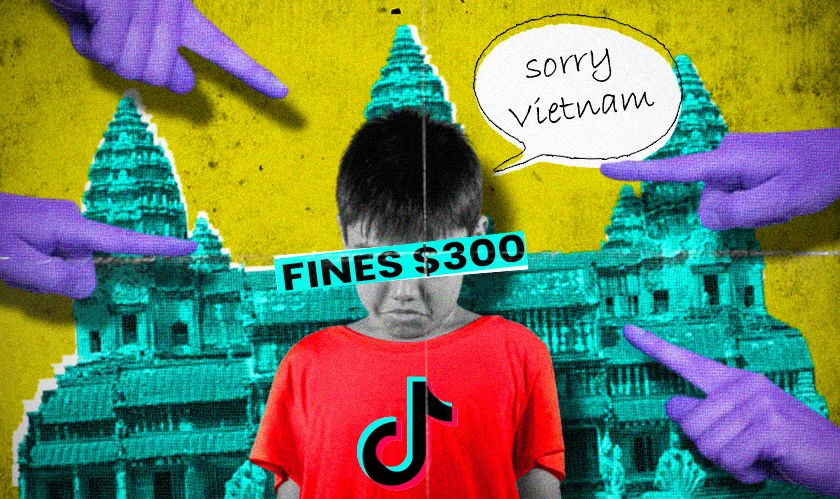
The 90-second TikTok video featured an overlay of the Thai flag over an image of Angkor Wat, and it was sufficient to land its creator a $300 fine and a police meeting.
According to a post on the website of the broadcasting authority of the information ministry on Thursday, Vietnam punished the influencer Hua Quoc Anh for "offending" Cambodia by implying that the ancient temples are part of Thailand.
In Vietnam, a one-party state with strict social media censorship, TikTok is immensely popular. The Angkor Wat case highlights the challenge of understanding Vietnamese legality, as the country's internet censorship typically focuses on delicate domestic matters such as politics or human rights.
Reporters were told by Phil Robertson, deputy director of Human Rights Watch for Asia, that Hanoi ought to protect free speech rather than be concerned about upsetting Phnom Penh, calling this a ludicrous event.
Quoc Anh posted a video, which has since been removed, featuring pictures of Thai royals and the phrase "Hello, Thailand," set against a backdrop of the famous towers of Angkor Wat.
Using three heart-face emojis to express gratitude to his 250,000 followers, he wrote on Facebook that, at the moment, Quoc Anh was experiencing too many emotions in his heart to express in a few lines of text.
Following "many objections from the online community," the broadcasting authority claims that his video "deliberately falsified" information for clickbait.
On its website on Thursday, the information department of Ho Chi Minh City, which organized the meeting, stated that Quoc Anh ought to take the incident—which was demeaning to the national sovereignty and cultures of nearby nations—very seriously.




















































 consultants ltd.jpg)


