
Home Industry Law ethics and legal services Harvey Partners NUS Law in Sin...
Law Ethics And Legal Services
CIO Bulletin,
02 June, 2026
Author:
Sambhrant Das
Southeast Asian Academic Institutional Alliance Embeds Specialized Legal Automation Architecture Directly Into Courtroom Case Simulations And Document Review Workflows
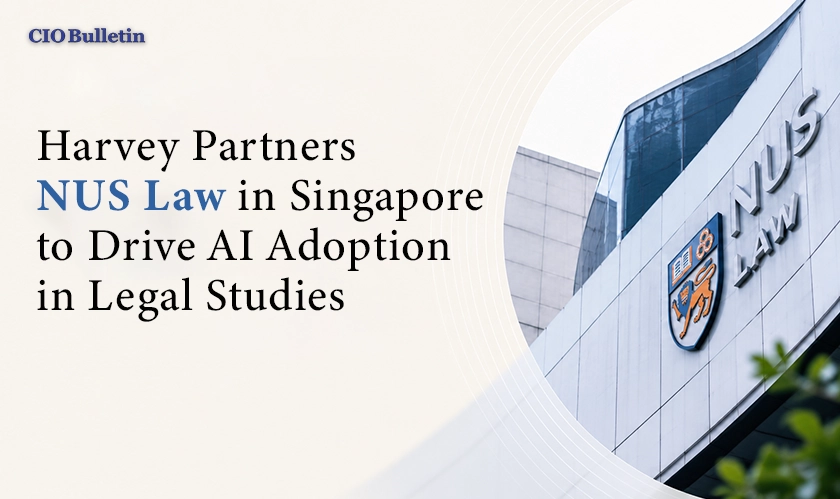
The legal world is making a huge digital jump lately, and law schools are rushing around so the next generation of lawyers can actually know how to work with artificial intelligence on the job. In the intense lanes like corporate law and heavyweight court fights, just sitting there reading through hundreds of pages by hand is starting to feel like a relic. Academic institutions are realizing that only teaching standard legal theory isn't cutting it anymore—students need real, hands-on experience with advanced legal tech. Stepping up to fix this problem in Southeast Asia, the new Harvey partners NUS Law initiative kicks off a major educational team-up in Singapore to build specialized AI right into the university classroom.
This new kind of alliance gives students and professors direct access to advanced legal platforms. So they end up practicing on the very same systems that the biggest law firms already rely on. It’s not only that they read about tech in a dry textbook, but they also use it hands-on to tackle complicated case simulations, basically right away. Bringing this more advanced framework into lecture halls creates major practical upgrades to the curriculum:
Smarter Legal Research: students figure out how to search through massive libraries of past decisions and statutes using plain language. They can pull up what they need in seconds, not hours, and that time change really matters.
Instant Contract Teardowns: the platform allows future attorneys to upload big corporate agreements and immediately spot tricky liabilities, oddball clauses, and compliance warning signs all at once.
Spotting AI Mistakes: The program puts heavy focus on responsible automation. They’re taught to double-check machine results and stop data hallucinations before anything goes to court, kind of like a gatekeeping habit.
Spotting AI Mistakes: The coursework puts a big emphasis on responsible automation, teaching students how to verify machine outputs and stop data hallucinations before anything goes to court.
This move is a lot different from old-school teaching styles that leaned mostly on memorization and manual library digging. By training students to work side-by-side with intelligent software, the university ensures its graduates are ready to deliver real value to top employers the moment they step out of the graduation stage. Highlighting the big vision behind this tech push, the school’s leadership team shared, “Our collaboration is designed to equip our law students with the crucial digital competencies they need to thrive and innovate in a rapidly changing global legal sector.”
This educational push is a massive deal for the legal market in Singapore, which acts as a major international hub for corporate battles and global trade. Giving local students total mastery over advanced generative platforms means they can handle massive corporate workloads with a level of speed that used to require a whole army of paralegals. This leveling of the playing field ensures that independent lawyers and boutique firms can comfortably go toe-to-toe with massive global legal conglomerates.
The long-term success of this academic program will likely become a blueprint for how universities worldwide update professional degrees for the modern era. Accepting that autonomous software is a permanent partner in white-collar careers is the first real step toward building a highly adaptable workforce. CIO Bulletin views this development as a profound turning point for professional education, proving that merging elite academic theory with specialized AI tools is no longer just an experimental option, but a strict baseline requirement for securing corporate relevance.












 consultants ltd.jpg)


