
Home Industry Law ethics and legal services How Truck Accident Cases in St...
CIO Bulletin
,
30 January, 2026
Author:
CIO Bulletin Team
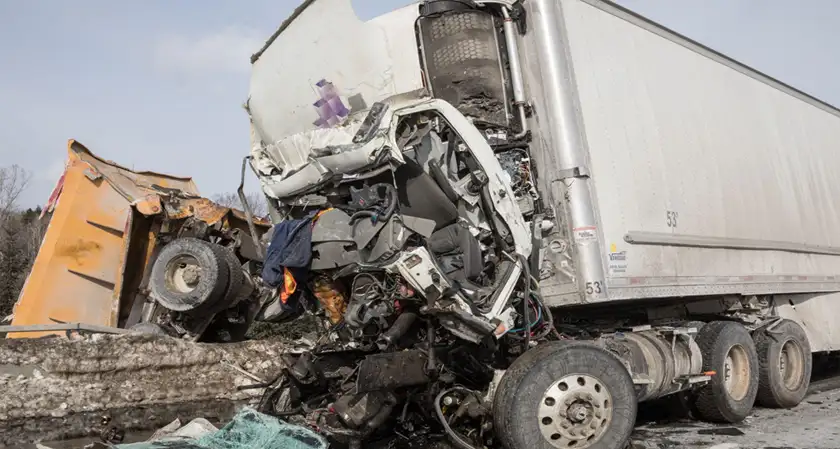
A serious truck accident often looks like a momentary failure — a missed stop, a delayed reaction, a single mistake behind the wheel. In St. Louis, MO, however, truck accident cases frequently show that what happens on the road is rarely just about one moment. When these crashes are examined through legal investigation, they often point to deeper, systemic failures within commercial trucking operations.
This is why legal analysis matters in this region. When reviewing these cases, a truck accident attorney in St. Louis, MO, is rarely focused only on the seconds before impact, but also on what happened long before the collision occurred. The real questions tend to reach much further back — into company policies, safety practices, and operational decisions that shaped conditions long before the truck entered local roadways.
St. Louis plays a key role in regional and interstate freight movement. Commercial trucks routinely move through the area to support manufacturing, distribution, and cross-state logistics. With that volume comes increased exposure to risk, particularly when safety standards are compromised.
Unlike ordinary car accidents, commercial truck crashes occur within highly structured systems. Drivers operate under company schedules, within fleets maintained by third parties, and under federal and state regulations designed to prevent fatigue and mechanical failure. When something goes wrong on St. Louis roads, responsibility often extends beyond the driver alone.
Truck accident cases in the area regularly reveal that systemic negligence develops through routine business decisions — how drivers are screened, how delivery schedules are enforced, and how safety policies are followed or ignored.
Systemic negligence rarely appears overnight. It develops gradually through shortcuts that become normalized across operations. In trucking cases connected to St. Louis, some recurring contributors include rushed hiring, insufficient training, and delivery timelines that leave little room for rest or inspection.
When drivers are pressured to meet aggressive deadlines through regional corridors, fatigue becomes more likely. When training is shortened to reduce costs, safety protocols may not be fully understood or followed. Over time, these decisions increase risk — not only for truck drivers, but for everyone sharing St. Louis roadways.
Federal trucking regulations exist to protect public safety, including hours-of-service limits, maintenance requirements, and logging rules. When trucking companies operating in and around St. Louis fail to meet these standards, it often reflects broader operational issues rather than isolated mistakes.
Truck accident litigation frequently relies on these regulations as benchmarks. Patterns of violations — repeated logbook discrepancies, delayed maintenance, or ignored inspection requirements — can reveal how systemic negligence becomes embedded within daily operations.
One of the most revealing aspects of truck accident cases is the documentation left behind. Maintenance logs, electronic logging data, dispatch records, and internal communications often provide clearer insight than eyewitness accounts alone.
In St. Louis truck accident investigations, these records may show whether a vehicle remained in service despite known mechanical issues, whether a driver exceeded legal driving hours, or whether company practices encouraged unsafe behavior. Often, it is this paper trail — not the crash scene itself — that exposes where responsibility truly lies.
Commercial trucking rarely involves a single responsible party. Maintenance providers, freight brokers, logistics companies, and fleet operators may all influence how safety risks are managed. When responsibilities are divided, accountability can become blurred.
Truck accident cases connected to St. Louis frequently uncover how multiple parties contributed to unsafe conditions through coordination failures or cost-driven decisions. Identifying this shared responsibility is critical when assessing how systemic negligence develops within the industry.
Uncovering systemic negligence requires more than surface-level investigation. These cases demand careful review of compliance histories, internal policies, and operational records. That depth of analysis is what allows a Truck accident attorney in St. Louis, MO, to move beyond assumptions and identify the structural failures that led to a crash.
This approach is not about assigning blame quickly. It is about understanding how commercial systems function under pressure — and where they break down.
For those injured in truck accidents in St. Louis, identifying systemic negligence can significantly affect how a case is evaluated. It can clarify liability, strengthen claims, and provide context for why the crash occurred in the first place.
Beyond individual cases, these findings can influence broader safety practices. When systemic failures are exposed, trucking companies are often forced to reassess training, oversight, and compliance — changes that may reduce future harm on local and regional roads.
Truck accident cases in St. Louis are rarely just about what happened at the moment of impact. They are about the systems that shaped that moment — the policies, pressures, and operational decisions that made the accident possible.
By examining these deeper layers, truck accident litigation serves a broader purpose. It brings accountability to commercial transport operations and sheds light on systemic negligence that might otherwise remain hidden. In doing so, these cases help improve safety not only for those directly involved but for everyone traveling St. Louis roads.



















































 consultants ltd.jpg)


