
Home Industry Luxury travel and tourism How is Recent Rise of Middle E...
CIO Bulletin
,
18 July, 2026
Author:
Sambhrant Das
Saudi Arabia and Oman partner to attract wealthy travelers seeking secluded high end stays
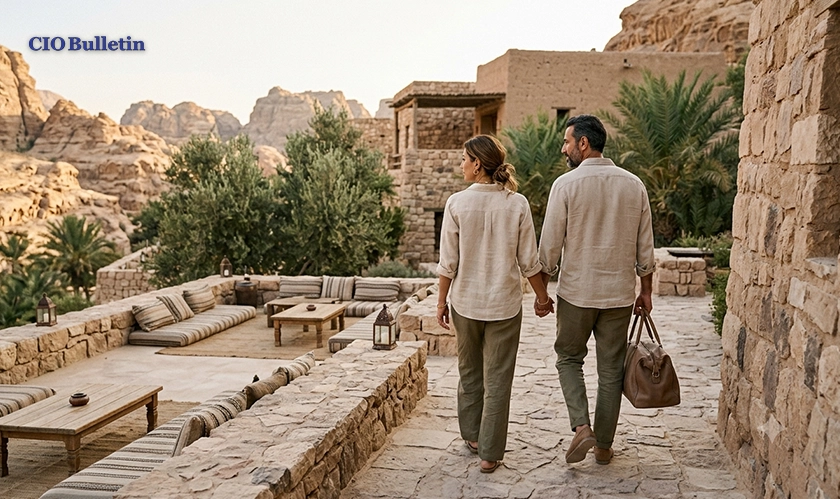
The elite vacation market is going through a massive, unexpected shift as the world's wealthiest vacationers trade packed city hubs for total isolation. This cultural evolution has triggered a sudden boom in Middle East quiet luxury travel, shifting mainstream attention away from dazzling neon horizons toward raw, dramatic terrain. Wealthy globetrotters are actively looking for spaces that focus on deep architectural restraint, minimal environmental impact, and real local connections over massive commercial displays.
To capture this lucrative market, the Sultanate of Oman and the Kingdom of Saudi Arabia have collaborated through a major cross-border tourism initiative. The joint rollout is mainly about building premium low-density infrastructure across sensitive, still unexplored geographical areas by:
Modern high-net-worth travelers increasingly treat pure silence, slow exploration, and deep historical authenticity as the real signs of personal wealth. Thus, by leaning into those quieter preferences, the bilateral alliance is quietly pulling luxury market share away from older, more hyper-commercialized Gulf hotspots.
A regional tourism director noted, "True luxury is no longer about being seen; it is about finding spaces that offer profound silence and connection to heritage."
However, pulling off a high-end, minimalist travel model demands intense structural self-control and incredibly strict ecological zoning laws. Limiting total guest volumes while drastically elevating the standard of highly customized, tailor-made hospitality protects delicate desert and mountain systems from the heavy toll of mass tourism. This low-volume, high-yield revenue framework guarantees long-term economic growth while keeping the region's stunning, ancient landscapes completely pristine.
Ultimately, this forward-thinking cross-border collaboration becomes a significant marker for how high-end global hospitality is operating at the moment. Moving completely away from manufactured spectacles toward deep environmental stewardship helps future-proof the regional travel sector against rapidly changing global consumer tastes. CIO Bulletin views this development as a highly sophisticated market adaptation that will fundamentally rewrite the rules of elite destination marketing and sustainable luxury infrastructure investment across the region.
Everything you need to know about this news
Affluent international visitors are choosing concealed, culturally grounded, and environmentally responsible hidden retreats instead of the crowded, flashy urban projects that dominate hyper-commercialized hubs.
The two countries have launched coordinated premium marketing efforts, joint cross-border itineraries, and simplified multi-destination travel visa structures meant to attract high-spending luxury leisure tourists.
Growth is focused on highly sensitive natural settings, including Oman’s rugged Jabal Akhdar mountain zone and the historic rocky desert stretches of AlUla in Saudi Arabia.
The operating framework rests on a low-volume, high-yield economic model. It aims to produce exceptional profit margins per guest while also avoiding the adverse environmental impact that results from mass market crowds.
Each infrastructure project is required by law to use low-impact architectural approaches, integrate renewable power networks, and actively safeguard native plant life, wildlife, and local indigenous cultural inheritances.











































 consultants ltd.jpg)


Comments