
Leadership does not always arrive with noise or spectacle. Sometimes it shows up with persistence, courage, and the willingness to say what others avoid. Women leaders who drive lasting change often do so by challenging deeply rooted systems, asking uncomfortable questions, and refusing to accept surface level solutions. Their impact is not measured only by titles or revenue, but by how many doors they open and how many voices they bring into the room. In the technology industry, where progress has long outpaced inclusion, this kind of leadership has become essential. Project Include stands as a powerful reflection of that shift, guided by a woman who believes fairness in tech is not optional, it is fundamental.
A Leader Who Turns Advocacy into Action
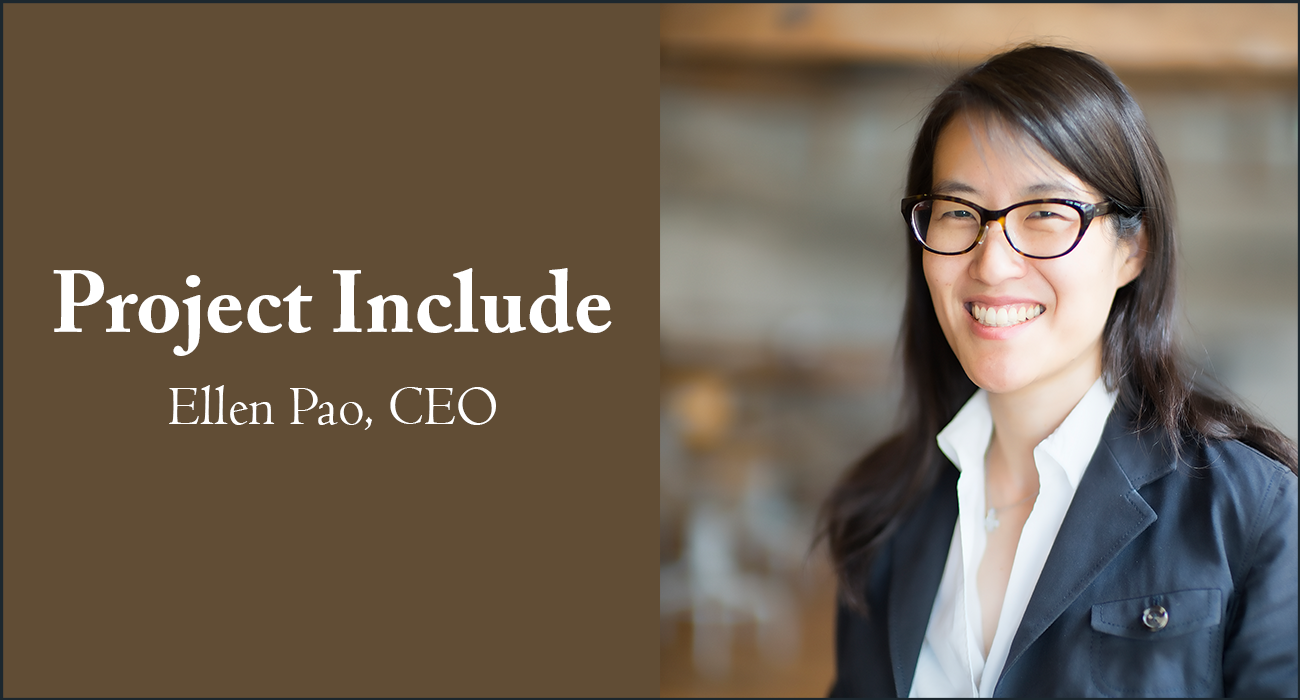
Project Include is led by Ellen Pao, Chief Executive Officer, whose leadership has consistently focused on accountability, transparency, and long term cultural change. Known for her clear voice and unwavering stance on equity, Ellen Pao brings both lived experience and strategic insight to the role. Her work centers on one simple but transformative idea: everyone deserves a fair chance to succeed in technology.
Under her leadership, Project Include has grown into a trusted nonprofit voice that combines data, advocacy, and practical frameworks to help companies move beyond performative diversity efforts. Ellen Pao’s approach is direct yet constructive. She understands that meaningful change requires honesty, patience, and commitment from the top, especially from CEOs who shape culture through everyday decisions.
The Purpose behind Project Include
Project Include was created to address a truth many in tech quietly acknowledge but rarely confront fully. Despite years of research showing the financial and performance benefits of racial, ethnic, and gender diversity, the industry remains deeply unequal. Bias continues to influence who is educated, hired, promoted, paid, and funded. Representation across leadership teams remains strikingly low, particularly for people of color and those who belong to multiple underrepresented groups.
Rather than offering quick fixes, Project Include exists to help companies understand the depth of the problem and respond responsibly. The organization focuses on early to mid-stage tech startups, where leadership choices can shape culture before harmful patterns become permanent. By working closely with founders, executives, employees, and investors, Project Include aims to influence not just individual companies, but the broader expectations of the tech ecosystem.
Inclusion as a Core Business Responsibility
At the heart of Project Include’s work is a belief that inclusion must be designed into the fabric of a company. Inclusion is not limited to gender alone. It extends to race, ethnicity, age, disability, parenthood, sexual orientation, immigration status, and work arrangements. Companies that attempt to improve one group while excluding others often create new inequities in the process.
Project Include encourages leaders to think beyond narrow definitions of diversity and to recognize how overlapping identities can compound disadvantage. By focusing on inclusion for everyone, companies create environments that are more resilient, innovative, and equitable over time. This approach also helps organizations avoid the long term damage caused by insider outsider dynamics that push talent away rather than helping it thrive.
Moving Beyond One Time Initiatives
One of the strongest messages Project Include delivers is that systemic problems cannot be solved with isolated actions. One off training sessions, symbolic statements, or short lived programs often do more harm than good. They create the illusion of progress without changing underlying behavior or decision making.
Project Include promotes a comprehensive approach that touches every part of a company, including culture, operations, hiring, promotion, compensation, and leadership accountability. This requires sustained effort and clear ownership. CEOs play a critical role in this process. Without their active involvement and long term commitment, diversity and inclusion initiatives rarely succeed. The organization’s work reinforces that real change is not fast or easy, but it is possible with focus and integrity.
Accountability through Data and Measurement
Good intentions alone are not enough to drive progress. Project Include places strong emphasis on accountability, supported by data and benchmarks. Companies are encouraged to measure outcomes, listen to employee experiences, and track progress honestly. Comprehensive surveys and transparent reporting help leaders understand where gaps exist and where improvement is needed.
This data driven approach shifts conversations away from defensiveness and toward problem solving. It allows organizations to see diversity and inclusion not as abstract ideals, but as measurable elements of business health. Accountability also signals seriousness. When leaders are willing to evaluate their own performance, trust begins to grow across teams.
Empowering CEOs Employees and the Ecosystem
Project Include recognizes that cultural change cannot rest on one person alone. While CEOs must lead, employees also need tools to advocate for inclusion within their organizations. The nonprofit provides frameworks and resources that help diversity and people operations leaders influence decision makers, even when leadership has not yet made inclusion a priority.
Beyond companies, Project Include calls on venture capital firms and universities to use their influence to accelerate progress. These institutions shape who gets funded, hired, and promoted. By engaging the broader ecosystem, the organization aims to create pressure and support for change at every level of the industry.
A Vision for Lasting Change in Tech
Project Include does not offer a checklist or a universal solution. Instead, it provides guidance rooted in decades of experience building, advising, and leading technology companies. Its recommendations are designed to be adapted, recognizing that each organization faces unique challenges and constraints.
Under Ellen Pao’s leadership, Project Include has become more than an advocacy group. It is a trusted partner for leaders who are ready to confront uncomfortable truths and commit to long term improvement. The organization’s work reminds the tech industry that fairness is not a side initiative. It is a leadership responsibility.
As women leaders continue to shape the future of business and technology, Project Include stands as a testament to what principled leadership can achieve. By insisting on inclusion, comprehensiveness, and accountability, the organization is helping redefine success in tech, not just by who builds the future, but by who is invited to be part of it.

















































 consultants ltd.jpg)


