
In a globalized business environment, the gap between corporate strategy and local execution is often a chasm of cultural misunderstanding, regulatory nuance, and market misalignment. This is particularly acute for Western companies expanding into APAC or Asian firms scaling in North America and Europe. A leadership hire that looks flawless on paper can falter without an intrinsic understanding of local business etiquette, labor dynamics, or unspoken organizational hierarchies. Traditional executive search, focused primarily on credentials and experience, often misses these critical contextual dimensions, leading to costly mismatches and failed expansions.
HRCap, founded in 2000, has built its reputation by operating within this complex intersection of culture and commerce. The firm, which calls itself the world's largest Asian American executive search and HR consulting firm, has long served as a critical bridge. Its foundational expertise lies not just in identifying talent, but in evaluating a candidate's capacity to operate effectively across cultural and generational divides. This deep specialization in cross-border and cross-cultural placement has provided a defensible niche, enabling the firm to grow into a partner for Fortune 500 companies, private equity firms, and global SMBs navigating these precise challenges.
The company is now undergoing a strategic evolution it terms "HRCap 2.0." Under new CEO Stella H. Kim, the firm is expanding its identity from a premier search consultancy to a "Global HR Intelligence Partner." This shift represents an ambition to systematize its hard-won cultural and operational insights into a scalable, technology-augmented service model. The goal is to move beyond reactive recruitment and provide clients with a proactive, data-informed layer of contextual intelligence covering market entry, localization strategy, leadership alignment, and organizational design to de-risk global growth initiatives from the outset.
The Intelligence-Led Service Portfolio
HRCap’s business model is transitioning from a reliance on high-value, project-based executive search fees to a more diversified suite of recurring advisory services. While confidential retained search for C-suite and critical hires remains a lucrative core, the firm is layering on strategic HR consulting in organizational design, compensation strategy, and succession planning. This "Total HR Solutions" approach allows HRCap to engage with clients at multiple touchpoints in their growth cycle. A client may first engage the firm for a market-entry talent assessment, then retain it for leadership hiring, and finally contract for ongoing compensation benchmarking. This creates a multi-stream revenue engine that is more resilient than pure search, increasing client lifetime value and providing a steadier income flow.
Localization as a Commercial Engine
The company’s proprietary STAR Localization Model is more than a service; it is a commercial framework that justifies premium consulting fees. For a European company entering the Korean market or an American firm building a team in Vietnam, HRCap’s ability to provide "contextual intelligence" translates into a concrete risk mitigation service. The firm can command fees not just for filling roles, but for advising on the entire operational blueprint from legal entity setup and local labor compliance to cultural integration programs for expatriate leaders. This positions HRCap not as a vendor, but as a strategic partner in the client’s capital-intensive expansion plans, allowing it to participate in the value created by successful market entry.
The Data and Technology Flywheel
A key pillar of the HRCap 2.0 vision is the investment in AI-powered contextual intelligence platforms. With a database of over 10 million candidate profiles and a history of reviewing 50 million resumes, the firm possesses a vast proprietary dataset on cross-border career trajectories and skill adjacencies. The strategic challenge and opportunity is to mine this data to generate predictive insights on talent availability, compensation trends, and leadership success factors in specific regional markets. By productizing this intelligence, HRCap can create new software-as-a-service (SaaS) or insight-as-a-service revenue lines, monetizing its data asset beyond traditional consulting hours and moving up the value chain from execution to foresight.
Generational Transition and Brand Evolution
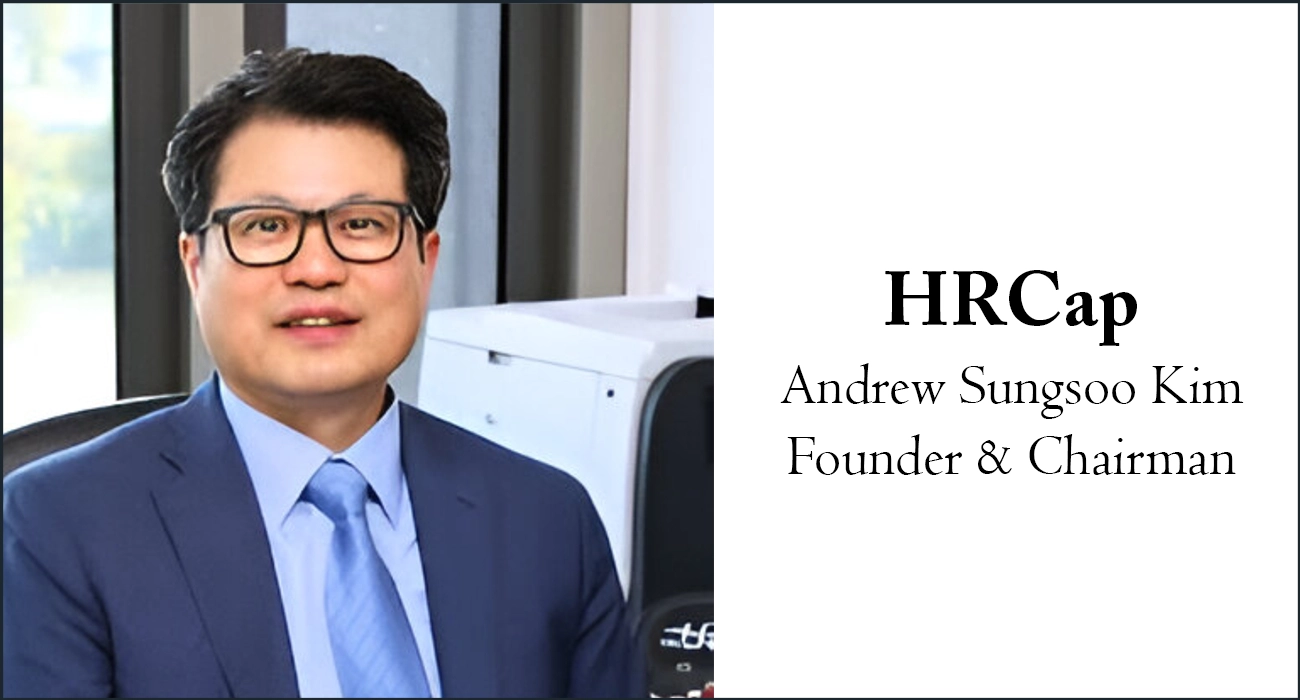
The 2026 leadership transition from Founder Andrew Sungsoo Kim to CEO Stella H. Kim is itself a strategic commercial asset. It embodies the cross-generational fluency the firm sells. Founder Kim’s deep roots in traditional Korean chaebol culture and extensive government networks provide unparalleled access and credibility in APAC markets. CEO Kim’s Princeton and Columbia education, Forbes Council membership, and corporate strategy background at IBM resonate with Western multinationals and tech startups. This dual leadership narrative allows HRCap to authentically present itself as a bridge between established and emerging business cultures, a narrative that is increasingly valuable as global business becomes more interconnected and complex.
The future of global business will be won by organizations that can synthesize global strategy with local nuance. As companies face pressure to operate simultaneously at scale and with cultural precision, partners who can provide more than just candidates who can offer the intelligence system to navigate complexity will become indispensable. HRCap’s evolution from a cultural bridge to an intelligence platform is a calculated bet on this future. Its success hinges on its ability to codify the implicit, relationship-based knowledge of its first 25 years into the explicit, scalable systems of its next chapter, proving that in a world of AI-driven automation, the highest value may lie in contextually aware, human-guided intelligence.
Andrew Sungsoo Kim, Founder & Chairman












































 consultants ltd.jpg)


