
Home Industry Media and entertainment Bad Bunny’s Super Bowl Halft...
Media And Entertainment
CIO Bulletin, 10 February, 2026 Author: CIO Bulletin Team
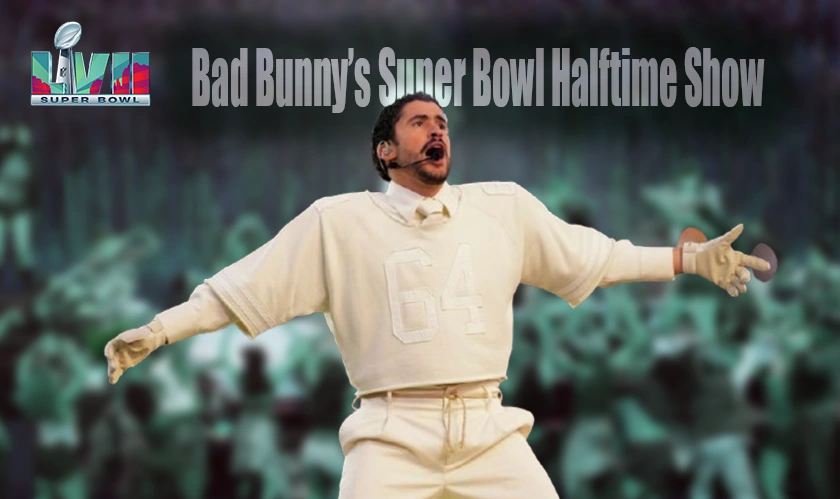
When Bad Bunny stepped onto the Super Bowl LX stage, the moment felt bigger than entertainment. It wasn’t loud for the sake of noise or flashy for easy applause. It was layered, intentional, and deeply rooted in identity. Bad Bunny’s Super Bowl Halftime performance turned the Apple Music halftime slot into a living story, one told through rhythm, movement, and cultural symbols that spoke even when no words were translated. This wasn’t a show designed to please everyone. It was designed to be honest. And that honesty is exactly why it landed.
A Stage That Spoke Before the Music Began
Bad Bunny didn’t open with fireworks or a dramatic monologue. He emerged from towering sugar cane stalks, surrounded by dancers cutting them down. To some viewers, it looked like a tropical aesthetic choice. To others, it carried the weight of history.
Sugar cane is deeply tied to Puerto Rico’s past colonization, forced labor, and economic control by outside powers. By placing it at the center of the opening visuals, the performance quietly acknowledged centuries of struggle without ever stopping the music.
That balance mattered. The show didn’t lecture. It trusted the audience to feel first and understand later. This approach defined the entire Super Bowl LX halftime show, where spectacle and substance moved together instead of competing.
Choosing Culture over Crossover
Many expected Bad Bunny to lean into global pop hits or English-language tracks. Instead, most of the setlist came from Debí Tirar Más Fotos, his 2025 album that dives deep into Puerto Rican sounds like plena, bomba, and salsa.
At a time when artists often adjust themselves to fit the stage, Bad Bunny did the opposite. He brought the stage to Puerto Rico.
Songs carried regional rhythms
Dancers reflected street-level joy, not choreographed perfection
Visuals showed everyday life, domino games, piragua stands, painted nails
This wasn’t nostalgia. It was presence.
The Apple Music Super Bowl Halftime Show became a celebration of living culture, not a polished export.
Dance as Storytelling
The dancers weren’t background filler. They were narrators. Each section of the show carried a different emotional tone:
High-energy reggaeton moments radiated freedom and confidence
Salsa segments slowed things down, adding grace and warmth
Group choreography emphasized community over individual spotlight
When “Yo Perreo Sola” hit, the message was clear without explanation. Independence. Joy. Ownership of space.
This kind of storytelling through movement made the Bad Bunny performance accessible even to viewers unfamiliar with the language.
Celebrity Cameos That Felt Earned
Big halftime shows often rely on surprise appearances to boost excitement. Here, guest moments felt natural rather than promotional.
Familiar faces like Pedro Pascal, Cardi B, Karol G, and Jessica Alba appeared not as distractions, but as participants. They weren’t selling anything. They were enjoying the moment.
The standout surprise came when Lady Gaga joined for a salsa-infused version of her song before dancing alongside Bad Bunny. It was playful, respectful, and telling.
Instead of adapting himself for the mainstream, Bad Bunny invited the mainstream into his world. That choice reinforced the quiet confidence running through Bad Bunny’s Super Bowl Halftime show.
A Powerful Moment without Drama
One of the most emotional scenes came when Bad Bunny handed his Grammy to a young Latino boy on stage. No speech followed. No explanation was needed. The gesture landed because it wasn’t framed as a statement. It was a moment of recognition of possibility.
Later, during “El Apagón,” dancers dressed as utility workers climbed power poles, sparks flying as they struggled to restore electricity. The imagery referenced Puerto Rico’s ongoing power issues, but again, without anger or accusation. The message wasn’t blame. It was resilience. That restraint kept the performance meaningful without turning it controversial.
Why This Show Connected So Widely
Not everyone watching understood Spanish. Not everyone caught the historical references. Still, millions stayed engaged. Emotion Travels Faster Than Translation
The success of the Super Bowl LX halftime show came down to three things:
Clarity of purpose – The show knew what it wanted to say
Trust in the audience – It didn’t over explain
Joy as a throughline – Even heavy themes were carried lightly
That’s why the performance worked across cultures and age groups. It wasn’t about teaching. It was about sharing.
The Final Message That Said It All
As the show closed, a simple line appeared on the screen:
“The only thing more powerful than hate is love.”
No shouting. No follow-up. Just a quiet ending to a loud, joyful, layered performance. It summed up the night perfectly.
What This Moment Means for Music and Culture
This halftime show didn’t just entertain. It reset expectations. Bad Bunny proved that artists don’t have to dilute their identity to succeed globally. Authenticity, when done with care and confidence, travels far.
The performance highlighted the growing power of Latin music representation on major platforms, not as a trend, but as a permanent presence. And it reminded the world that culture doesn’t need translation when it’s expressed with honesty.
FAQs
Why was Bad Bunny’s Super Bowl Halftime performance considered meaningful?
Because it blended entertainment with cultural history, using music and visuals to tell a deeper story without speeches or explanations.
Did you need to understand Spanish to enjoy the show?
No. The emotions, dance, and visuals made the performance engaging regardless of language.
What album did most of the songs come from?
Many tracks were from Debí Tirar Más Fotos, an album rooted in Puerto Rican musical traditions.
Were the political themes intentional?
The themes focused more on lived experience and resilience rather than direct political messaging, keeping the tone neutral and inclusive.
How did this performance impact Latin music visibility?
It reinforced Latin music as a global force that doesn’t need to adapt itself to fit mainstream stages.

















 consultants ltd.jpg)


