
Home Platforms Others Nations Commence Summit to Bra...
Others
CIO Bulletin,
07 May, 2026
Author:
Sambhrant Das
Philippine hosted asean summit focuses on building regional resilience and policy synchronization to mitigate the impact of global energy shocks and supply chain disruptions
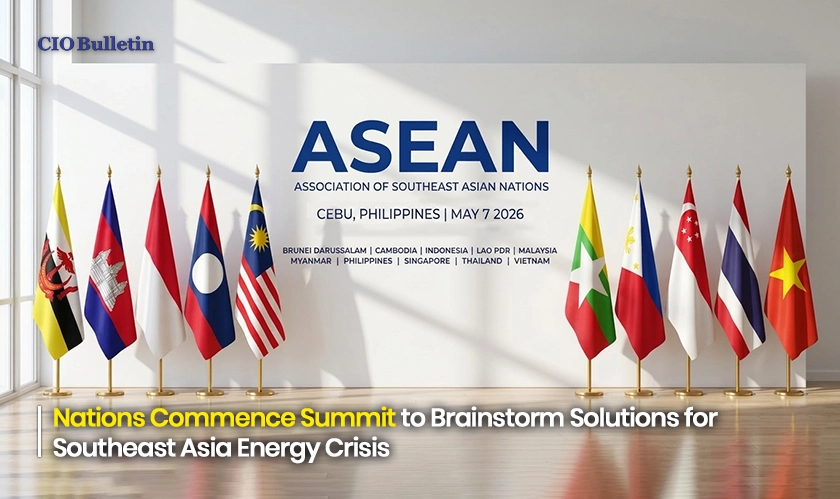
The Philippines hosted the regional ASEAN meetings on May 7 to address the Southeast Asia energy crisis, regional conflicts, and additional issues. The summit gains importance because the Middle East crisis creates major challenges for countries that rely on imported fuel supplies. The leaders and ministers of 11 nations comprising the ASEAN bloc will meet on two days to discuss concerns of energy and food supply security, with Southeast Asia counting among the regions most vulnerable to the aftermath of the West Asia conflict.
The Philippine foreign affairs secretary, Theresa Lazaro, stated that the ASEAN organization requires improved crisis coordination capabilities, together with enhanced institutional readiness during crisis situations. The Philippines will lead as chair by developing a regional response to conflicts while addressing ASEAN border disputes and the Myanmar civil war. The historical pattern of ASEAN countries struggling to coordinate crisis response efforts requires special attention because the organization has created pacts in meetings instead of delivering strategic plans and specific commitments.
Furthermore, the energy supply shock provides an opportunity for ASEAN nations to speak in a united voice since the issue concerns them all. According to the working draft of a statement, they are expected to pass a resolution urging the US and Iran to conduct good-faith negotiations for the cessation of hostilities. The two countries should maintain their international law obligations and permit free passage through the Strait of Hormuz, which serves as the main area of contention for five of the world’s oil and gas transit routes. ASEAN has a strong desire to maintain continuous access to critical products, which include food supplies, agricultural materials, and pharmaceutical medicines.
The summit’s goal is to conclude proceedings with a joint declaration that emphasizes synchronizing national energy policies for a coordinated policy framework across the bloc’s members. Leaders are expected to channelize their efforts towards establishing a regional energy data hub, which would monitor supply levels and price fluctuations in real-time. This is intended to increase members’ bargaining power in global energy markets while ensuring that smaller member states are not burdened by supply shortages. It must be noted that for these policies to succeed, diverse economies ranging from oil producers to net importers must align their regulatory standards and technical requirements for the common benefit of all. CIO Bulletin views the current summit as an invaluable opportunity for ASEAN to achieve deeper regional integration while furthering long-term self-sufficiency goals.





















 consultants ltd.jpg)


