
Home Platforms Others IMD issues Heat Wave Alert for...
CIO Bulletin
,
27 April, 2026
Author:
Sambhrant Das
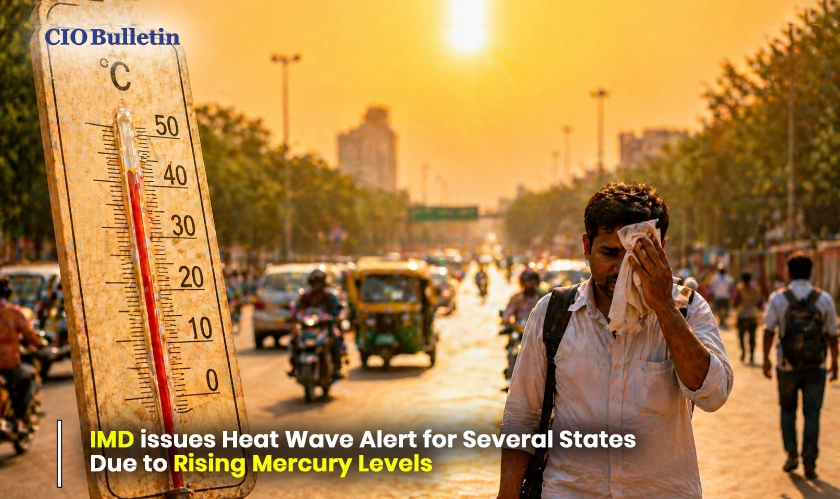
The IMD has issued a heat wave warning for North and Central India as temperatures soar to 47.4°C in Banda, urging immediate safety measures for vulnerable groups.
The Indian Meteorological Department (IMD) issued a heat wave warning for certain northwest and central Indian regions on April 27, which will remain in effect until three days later when temperatures return to normal levels. According to the IMD, Himachal Pradesh will experience extremely high temperatures on April 27, from the beginning to the end of the day. The weather will match the conditions found in Jammu and Kashmir, Punjab, Haryana, Chandigarh, Delhi, Uttar Pradesh, Rajasthan, west Madhya Pradesh, Vidarbha, Bihar, and Gujarat. East Madhya Pradesh and Chhattisgarh will continue to experience heat wave conditions from April 27 through April 28.
Furthermore, the weather in Tamil Nadu and Puducherry and Karaikal will remain hot and humid until April 30, with the weather conditions in Kerala and Mahe resembling this on April 27. Western Madhya Pradesh, Haryana and Chandigarh will witness warmer nighttime temperatures on April 27 while Chandigarh will have similar temperatures from April 27 to April 28. The IMD reported that the majority of the country recorded daytime temperatures ranging from 40 °C to 45 °C, except for northeast India, the west coast, southern peninsular India, and the Western Himalayan region. Banda in Uttar Pradesh recorded the country’s maximum temperature of 47.4°C.
The weather department reported that maximum temperatures in Himachal Pradesh and Punjab and Haryana and Chandigarh and Delhi and south-west Rajasthan exceeded normal levels by 5.1°C. Jammu and Kashmir temperatures ranged from 3°C to 1.6°C below the normal temperature while the rest of the country showed different temperature patterns. CIO Bulletin views this announcement by the IMD as highlighting the urgent need for the whole country, and the affected regions in particular, to initiate relief measures for the vulnerable populations, including the elderly and those engaged in informal labor on a war footing.




















































 consultants ltd.jpg)


