
Home Industry Supply chain management Singapore New Zealand Supply C...
CIO Bulletin
,
04 May, 2026
Author:
Sambhrant Das
Singapore and New Zealand forge a historic partnership to safeguard essential supply chains and pioneer a new model for multilateral cooperation in a changing world
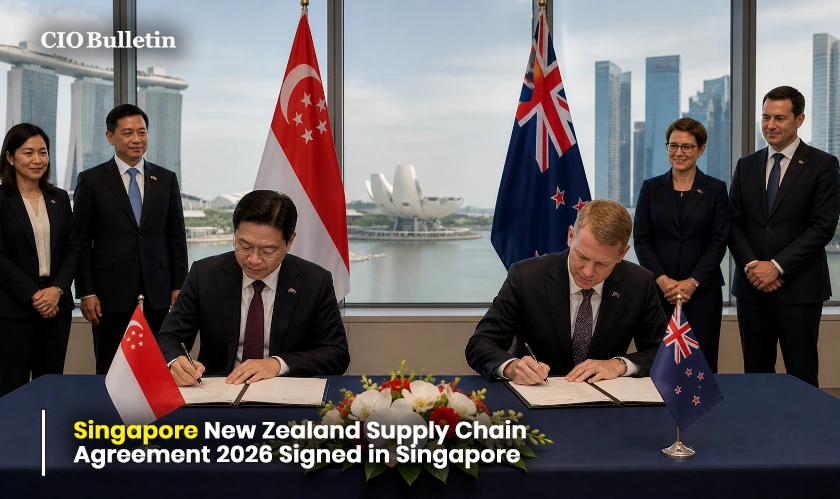
On May 4, the Singapore New Zealand supply chain agreement 2026 was signed to keep the two countries’ supply chains open during crises, allowing the movement of essential supplies such as food, fuel, healthcare products, and chemical and construction materials. This agreement is envisioned as a model for other countries to follow while creating a network of trusted partners. Christopher Luxon, the Prime Minister of New Zealand, established the agreement with Singaporean Prime Minister Lawrence Wong during his visit to Singapore.
Furthermore, the agreement between the two parties started in October 2025 when Wong visited New Zealand to sign the Agreement on Trade in Essential Supplies before the Middle East conflict began. Wong expressed his belief that other countries within the region would adopt their foreign policy standards because he demonstrated how the earlier partnership between Brunei, Chile, New Zealand, and Singapore expanded to create the Comprehensive and Progressive Agreement for Trans-Pacific Partnership trade deal.
Moreover, Luxon showed his agreement with Wong's statement while he expressed his desire that the New Zealand-Singapore agreement framework would attract interest from countries that share similar perspectives about the geopolitical transformation from a multilateral world to a multipolar power-driven system. According to him, “The agreement that we've just signed today, as a world first, is actually a good example of how we can model out and remake the case for multilateralism in the way we want to as well." CIO Bulletin views the signing of this agreement as a counterforce against attempts to alter the open, rules-based international system and a vindication of how relatively “small” countries can work with clarity, purpose, and trust to shape outcomes and benefit their citizens by bringing benefits to them.









































 consultants ltd.jpg)


