
Home Services & Solutions Smart infrastructure Can Transit Oriented Engineeri...
CIO Bulletin
,
17 June, 2026
Author:
Sambhrant Das
Subsurface transit networks leverage dense consumer traffic to finance critical municipal upgrades and build automated transit models without public subsidies
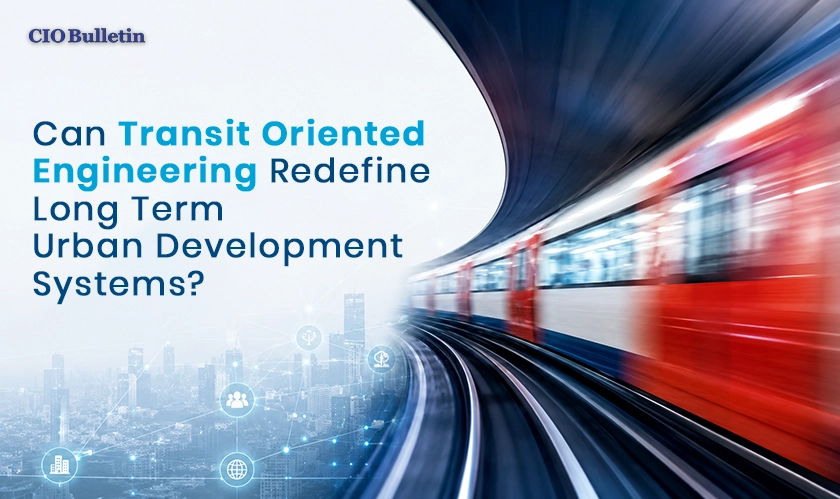
The operational paradigm governing dense metropolitan centers is undergoing a systematic transformation as modern infrastructure groups move beyond simple passenger transport toward integrated asset management. Transit operator Tokyo Metro Co., Ltd. is actively expanding its corporate footprint by leveraging dense passenger volumes to anchor high-value projects of urban development. By constructing retail environments and residential ecosystems directly adjacent to key transport hubs, the enterprise creates self-sustaining financial models that do not rely heavily on public subsidies. This vertically integrated strategy turns underground nodes into focal points of economic growth, establishing an innovative blueprint for modern municipal expansion worldwide.
The corporate viability of subterranean network expansion remains tightly bound to regional population layout metrics, which differ significantly from Western transit frameworks. High local congestion allows specific metropolitan organizations to run profitable networks while financing secondary infrastructure upgrades.
Subsidies Removal: High consumer traffic density allows lines to run profitably without requiring constant cash infusions from government agencies.
Commercial Integration: The strategic monetization of restricted station spaces through government-approved retail partnerships offsets heavy maintenance costs.
Infrastructure Safeguards: Capital allocations fund comprehensive upgrades, including advanced seismic countermeasures and automated flood protection mechanisms.
"Japan has been practicing this approach for more than one hundred years." - Akihiro Kosaka, President of Tokyo Metro Co., Ltd.
The long-term development of regional transport systems is becoming a foundational element in the deployment of global smart cities. Modern infrastructure requires a delicate balance between automated technical layers and specialized human oversight to ensure total system safety. By embedding digital communications networks and modern signaling assets directly into traditional transit frameworks, operators can monitor passenger flow trends and adjust train frequencies in real time. This technical optimization creates an elastic, highly responsive environment capable of minimizing daily municipal gridlock.
As emerging global regions experience unprecedented population spikes, the demand for sophisticated transit management expertise is rising dramatically across international corridors. Established transit corporations are leveraging their deep operational experience to advise foreign municipal bodies on system deployment.
Local Management Ties: Joint ventures establish specialized instruction routines for indigenous drivers and on-site terminal workers.
Automated Error Reductions: Technical partnerships introduce automated diagnostic tools to minimize human operational mistakes.
Scalable Ticket Platforms: The deployment of unified contactless fare systems facilitates smooth transit for international business travelers.
The long-term survival of mega-city environments depends on how efficiently their transit networks adapt to structural population drops and extreme weather volatility. Transitioning passive transport lines into multi-functional, climate-resilient assets is turning into an absolute operational requirement for developers attempting to preserve city safety. Re-engineering municipal spaces to accommodate fluid, highly efficient mobility solutions ensures that economic centers retain their long-term competitive advantages. CIO Bulletin views this development as a highly progressive corporate milestone that could redefine workplace ecosystems across legacy industries.


















































 consultants ltd.jpg)


