
Home Services & Solutions Risk analytics UNESCO Convenes Workshop to Re...
CIO Bulletin
,
11 May, 2026
Author:
Sambhrant Das
UNESCO and global stakeholders finalize a nationwide assessment to strengthen pakistan’s flood preparedness and transform scientific forecasts into early action
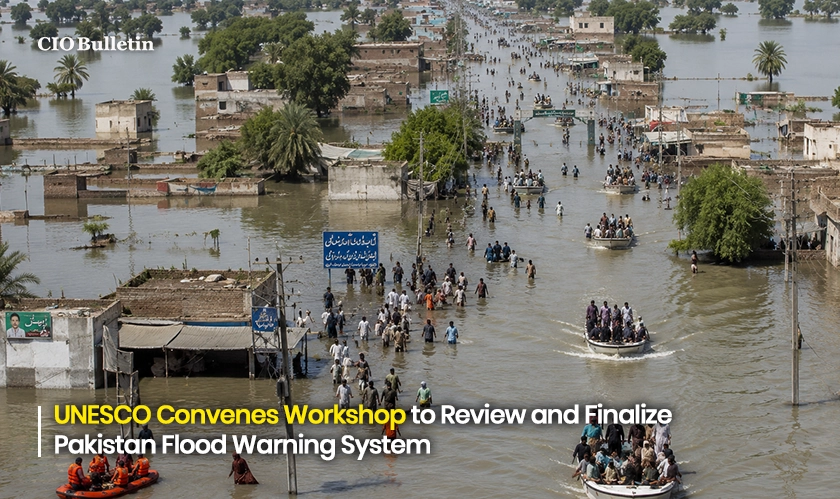
UNESCO recently reviewed and finalized the findings of the Comprehensive Review of Pakistan’s Flood Early Warning System (FEWS) in a Validation Workshop convened in Islamabad. The Pakistan Flood Warning System is a nationwide assessment of how coordinated, effective, and responsive the flood early warning mechanisms are around Pakistan. Thirty-seven representatives from federal and provincial government departments, technical agencies, universities, and partners for development, and United Nations bodies that work on disaster risk reduction and climate resilience, attended the workshop held online. Importantly, this meeting is the result of a several-month-long consultative process, which put together evidence from consultations across the country and technical checks.
Furthermore, the assessment comprehensively reviews the full early warning chain, including:
risk knowledge
hazard monitoring
forecasting
sending warning alerts, and
early action
It also points out both progress and ongoing problems in last-mile communication and in turning forecasts into timely, coordinated action during flood events, like the 2025 monsoon season. During the workshop, participants reviewed the main findings of the assessment, which covered problems with combining data, working across agencies, making warnings local, and involving communities. The delegates talked about steps to strengthen each phase of the early warning cycle, risk analysis, monitoring, and forecasting, and how to share alerts together with preparedness and response measures. Overall, improving system-wide efficiency and impact was unanimously emphasized.
Moreover, developing a people-centered and impact-based early warning approach was highlighted as needing to be the Government’s priority. Additionally, improved institutional interoperability and fostering stronger linkages between scientific forecasting and decision-making at both the national and local levels were to be next on the priority list. Integrating indigenous knowledge systems, engaging local leadership structures, and increasing the role of sectoral actors in being prepared and responding to events were the other steps to be undertaken by the Government.
Accordingly, making sure that the final FEWS assessment is firmly grounded in operational realities and reflects the priority of all key stakeholders is the primary objective of UNESCO’s validation process. Pakistan’s efforts to strengthen anticipatory action, reduce risk of disasters, and become climate resilient in the long term are expected to receive a fillip from these thoughtful recommendations. CIO Bulletin views this conference as contributing directly to Pakistan’s efforts to become more resilient against climate-induced disasters, with UNESCO reaffirming its commitment to support the country through a multitude of targeted interventions.




















































 consultants ltd.jpg)


