
Home Industry Banking and finance Bank of Baroda Launches UPI Bi...
Banking And Finance
CIO Bulletin,
29 May, 2026
Author:
Gayathri Sr
The public sector banking giant eliminates traditional PIN hassles by introducing fingerprint scans, facial recognition, and IoT-driven smart transactions.
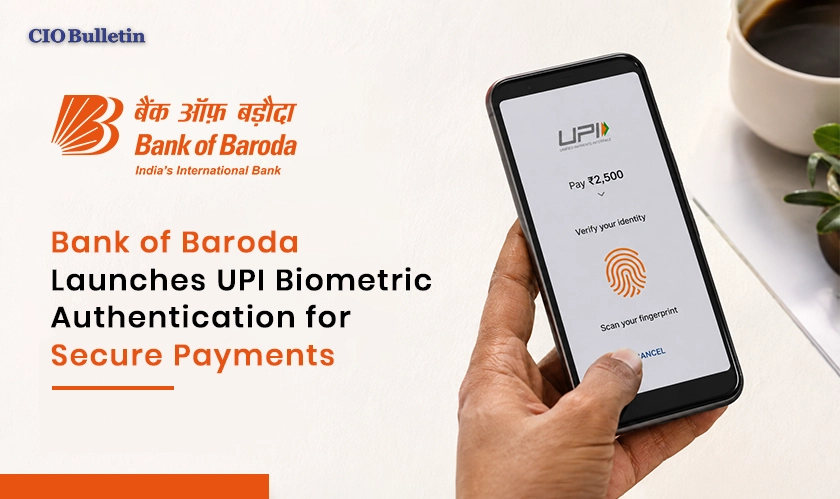
Imagine walking into a store, scanning a QR code, and completing your transaction with just a quick glance at your phone or a touch of your finger. The days of anxiously typing in a four- or six-digit PIN while trying to shield your screen from curious eyes are officially drawing to a close. In a massive leap forward for digital banking, Bank of Baroda has rolled out a game-changing feature that introduces UPI biometric authentication for everyday transactions and account management.
According to a detailed operational brief analyzed by CIO Bulletin, the major Indian financial institution has integrated advanced fingerprint and face ID recognition directly into its digital payment ecosystem. This means customers can now authorize single UPI transactions of up to ₹5,000 entirely through the secure biometric data already registered on their smartphones. Furthermore, the days of navigating complex procedures or answering security questions just to reset a forgotten passcode are gone; users can now set or reset their UPI PINs seamlessly using secure facial authentication.
The tech upgrade doesn't stop at smartphones. The bank is simultaneously pushing the boundaries of modern convenience by embedding its financial services directly into the Internet of Things (IoT).
Smart Vehicles: Drivers can link their vehicles to execute automated fuel or toll payments without pulling out a wallet.
Connected Appliances: Smart home devices can handle automated reorders and quick purchases independently.
Delegated Authority: Users can securely assign strict, pre-defined spending limits to secondary users or smart devices.
This visionary approach relies on a strategic "Delegated Payments" framework. In a recent statement regarding the rollout, a Bank of Baroda representative highlighted the security and flexibility of the new framework:
“IoT-based payments allow a user to delegate payment authority to a secondary user or device to execute transactions within pre-defined limits.”
By combining cutting-edge biometric security with connected device ecosystem capabilities, the institution is fundamentally shifting how everyday consumers interact with their money. It is a bold preview of a frictionless future where financial security and ultimate convenience coexist perfectly.

















 consultants ltd.jpg)


