
Home Technology Science and technology Plants Share Stress Signals th...
CIO Bulletin,
15 January, 2026
Author:
CIO Bulletin Team
New science discoveries show how plants can signal to neighbors the dangers of becoming stressed to enhance the collective resilience.
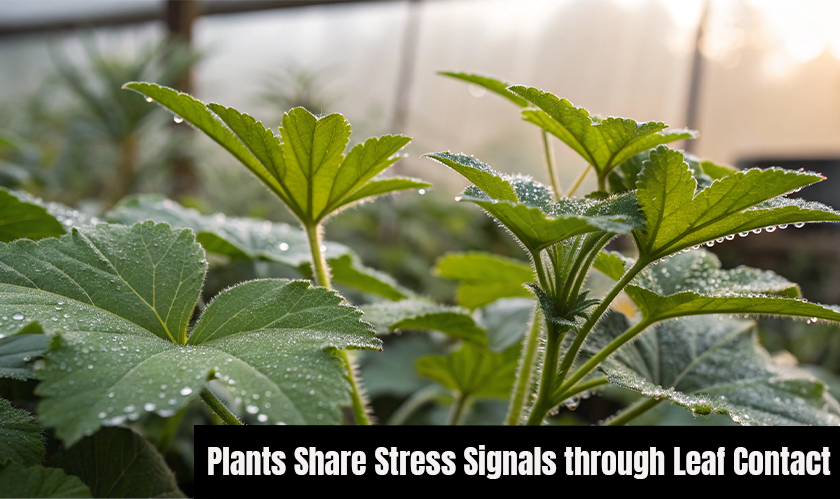
According to New Science studies, plants that grow close to one another are able to share stress messages by touching the leaves to enable others to overcome environmental pressure and thus become more vigilant to other challenges. The paper brings to light an unused area of research related to the use of plant communication with potential agricultural and climate change adaptation applications.
The single-subject science-centered research was under the direction of plant biologist Ron Mittler at the University of Missouri and it sampled thale cress in dense or single groups. Plants in touch with each other during high levels of light experienced significantly less stress and cellular damage compared to isolated plants. Mittler suggests that contact with leaves serves as an early warning mechanism that conditions the neighboring plants to respond to an impending stress.
In addition to root networks underground and airborne chemical cues, the present study of the science indicates that direct contact between leaves allows the plants to exchange electric and chemical signals between them. An hour after coming into language, plants triggered over 2,000 genes associated with stress-related responses to light, temperature changes, floods, and physical injury.
Subsequent experiments have shown that hydrogen peroxide has a pivotal role in this mechanism, and it is a signal that is transduced among the plants to propel resilience. Scientists claim that it is the first hard evidence that the use of hydrogen peroxide as a plant-to-plant communication signal is real.
Researchers feel that this knowledge about science may lead to the understanding as to why crops tend to perform well when planted in a mixed layer and may aid scientists in formulating a mixed plant system more adapted to endure climate-related stresses that include heat and flooding.




















 consultants ltd.jpg)


