
Home Industry Supply chain management How Route Optimization Improve...
CIO Bulletin
,
12 March, 2026
Author:
CIO Bulletin Team
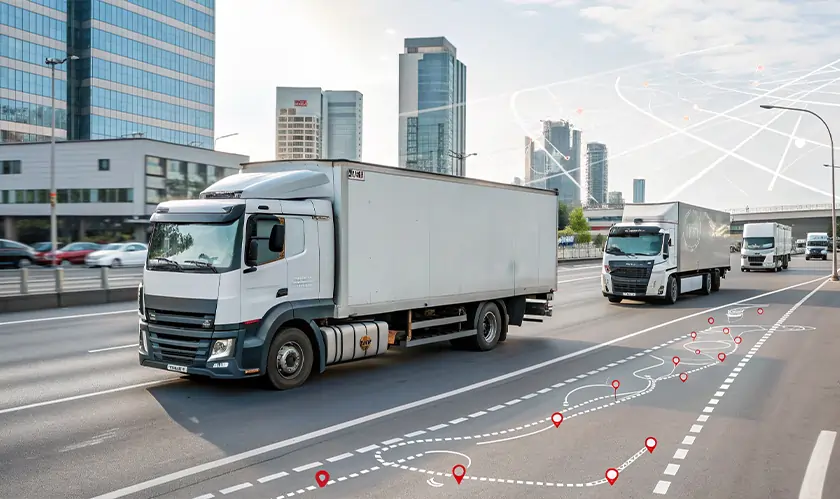
Delivery operations depend heavily on route planning efficiency. As businesses expand their logistics networks, poorly planned delivery routes can increase fuel consumption, extend delivery times, and reduce fleet productivity. Route optimization addresses these challenges by using algorithms and data analysis to determine the most efficient sequence of stops for drivers. By minimizing travel distance, avoiding congestion, and balancing workloads, optimized routes improve delivery performance while reducing operational costs.
Modern logistics operations increasingly rely on advanced route planning systems to manage high delivery volumes and maintain consistent service quality.
Route optimization refers to the process of calculating the most efficient delivery paths for vehicles while considering multiple operational variables. Unlike simple GPS navigation, which focuses only on the shortest path between two points, route optimization systems evaluate entire delivery schedules and determine the best order of stops.
The process incorporates variables such as:
Solutions such as best route optimization software use advanced algorithms to analyze these variables and generate efficient routes for entire delivery fleets.
By analyzing complex data sets, route optimization systems help logistics teams identify routes that minimize travel time while ensuring that all delivery requirements are satisfied.
Fuel costs represent a significant portion of delivery fleet operating expenses. Inefficient routes increase fuel consumption through unnecessary mileage, frequent stops, and prolonged idling in traffic.
Route optimization improves fuel efficiency by:
For example, when delivery stops are arranged in logical geographic sequences, vehicles can move smoothly between nearby locations rather than crossing the same areas multiple times.
Lower fuel consumption also reduces vehicle wear, decreasing long-term maintenance costs for fleet operators.
Customers increasingly expect accurate delivery windows and reliable service schedules. Route optimization helps businesses meet these expectations by calculating routes that align with delivery time constraints.
Many delivery operations involve time-sensitive requirements such as:
Optimization algorithms can prioritize deliveries with strict time windows while arranging other stops around those constraints.
By sequencing deliveries carefully, drivers avoid late arrivals and reduce the likelihood of missed deliveries.
Accurate scheduling also allows dispatch teams to provide customers with realistic delivery estimates, improving overall service transparency.
Delivery fleets represent a major operational investment. When routes are poorly planned, vehicles may spend large portions of the day traveling inefficiently rather than completing deliveries.
Route optimization increases productivity by maximizing the number of deliveries completed within each shift.
Key productivity improvements include:
Balanced route assignments ensure that no single driver becomes overloaded while others complete fewer deliveries.
In many cases, improved route planning allows companies to complete the same number of deliveries using fewer vehicles or drivers.
Drivers benefit from optimized routes because they reduce stress and simplify navigation during busy delivery schedules.
Optimized routing systems provide:
By minimizing unnecessary driving and avoiding congested routes, drivers can maintain more predictable schedules.
Safety also improves when drivers spend less time rushing between deliveries or navigating unfamiliar routes under time pressure.
Some advanced route optimization platforms integrate with telematics systems to monitor driving behavior and improve overall fleet safety.
Delivery operations rarely follow perfectly predictable schedules. Traffic accidents, weather disruptions, or unexpected customer requests can require immediate adjustments to planned routes.
Modern route optimization systems can dynamically recalculate routes when new variables appear.
Examples of real-time adjustments include:
These dynamic adjustments help dispatch teams maintain efficiency even when operational conditions change.
Without automated route recalculation tools, manual route adjustments can consume significant administrative time and may still produce inefficient outcomes.
Route optimization platforms also generate valuable operational data that can be used to improve logistics performance over time.
Fleet managers can analyze metrics such as:
This data allows companies to identify recurring inefficiencies and refine delivery strategies.
For example, if certain neighborhoods consistently cause delays due to traffic congestion, route planners can adjust schedules or delivery windows accordingly.
Data-driven insights support continuous improvement across delivery operations.
As businesses grow, delivery networks become more complex. Expanding service areas, increasing order volumes, and adding new drivers create logistical challenges that manual route planning cannot easily manage.
Route optimization systems support scalability by automatically generating efficient delivery plans regardless of network size.
Businesses operating large delivery fleets benefit from:
Scalable route planning systems allow companies to expand delivery services without sacrificing efficiency.
Route optimization plays a critical role in improving delivery efficiency across modern logistics operations. By reducing travel distance, lowering fuel consumption, balancing driver workloads, and adapting to real-time conditions, optimized routes help businesses deliver products faster and more reliably. As delivery volumes continue to increase, advanced route planning technologies provide the operational structure necessary for scalable and efficient distribution networks.


















































 consultants ltd.jpg)


