
Home Industry Supply chain management ONGC Offshore Operations to Be...
CIO Bulletin,
21 May, 2026
Author:
Sambhrant Das
Bundling a Fifty Ship Armada and Key Port Hubs Into a Consolidated Supply Chain Model to Eliminate Multi-Vendor Downtime at Major Deep Sea Fields
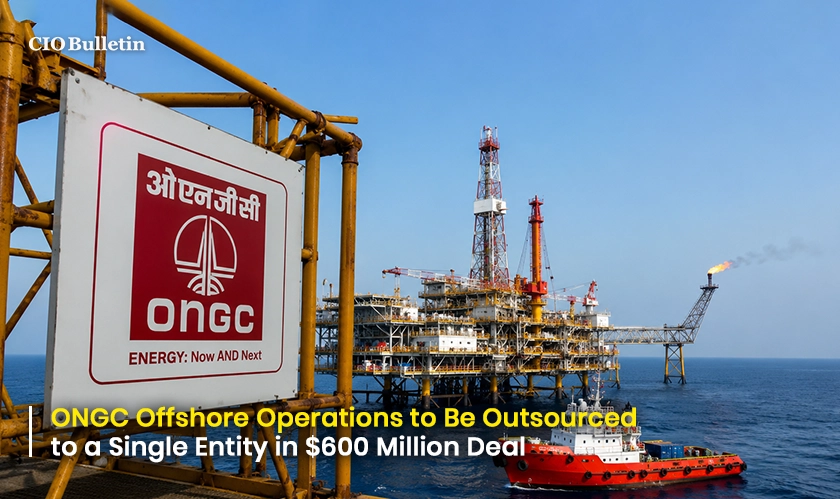
India's leading state-owned energy explorer is pulling off a massive operational overhaul by entirely restructuring its multi-million dollar maritime logistics network. In a bold departure from its traditional practice of handling dozens of separate vendors, the Oil and Natural Gas Corporation Ltd plans to bundle its entire ONGC offshore operations under a single mega-entity. This big anticipated transition is set to ride a massive $600 million yearly spend, and the big, primary target is upgrading the main infrastructure that’s supporting India’s key deep-sea hydrocarbon extraction zones.
Under the existing setup, is the plan treated like a strategic pivot, not just a procurement exercise. The leadership notes that the current arrangements around operations are too intricate to be managed internally, at least for these parts. Thus, they are aiming for a smoother approach with tighter execution.
Key logistics scope includes:
A Heavy Marine Fleet: Running a sprawling mix of 50+ vessels, with 27 offshore support ships, 9 platform supply units, and 21 anchor-handling tugs.
Broad Onshore Hubs: Managing wide supply bases across important regional shipping hubs, especially around the Nhava Sheva and Pipavav ports.
Massive Material Movement: Handling monthly movement on the order of 14,000 metric tonnes of deck cargo, alongside 22,000 metric tonnes of bulk supplies.
The massive scope of work under this upcoming partnership spans across some of India's most critical offshore assets, including the famous Mumbai High and Neelam-Heera complexes. The “winner” single-source vendor is expected to cover end-to-end logistics across 68 distinct offshore locations, spread as far as 180 kilometers out in the ocean. The remit includes moving, safely and continuously, essential equipment, fuel, and manpower to and from 35 drilling rigs plus 18 production platforms, while avoiding a single minute of operational downtime.
By floating a formal Expression of Interest, the corporation is paving the way for a long-term contract, likely lasting between three and five years, to attract tier-one international bidders. While the company will explicitly retain control over hiring core oil drilling rigs, the external vendor will completely handle the underlying supply chain mechanics. CIO Bulletin views this development as a major turning point for public sector efficiency, demonstrating how major industrial giants are increasingly outsourcing complex non-core logistics to maximize capital deployment and guarantee national energy security.





















 consultants ltd.jpg)


