
Home Industry Travel and hospitality Why Flashing Lights Cause So M...
CIO Bulletin
,
20 January, 2026
Author:
CIO Bulletin Team
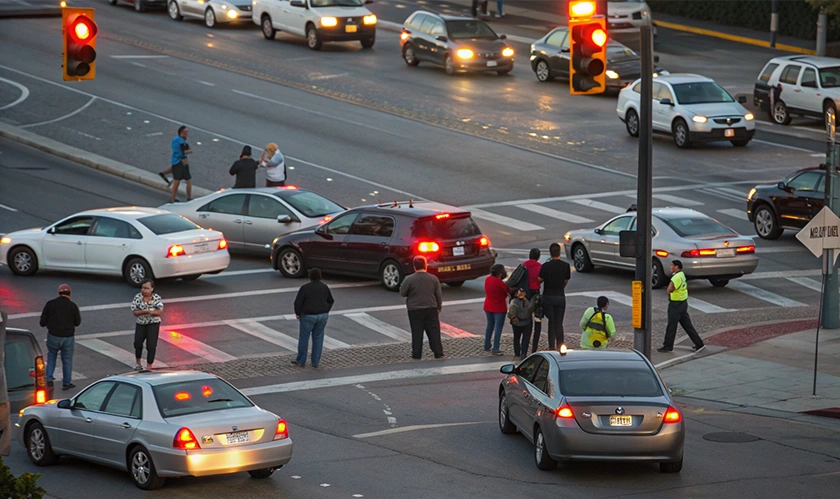
Navigating an intersection usually feels like a choreographed dance where everyone knows their steps. We rely on the steady rhythm of red and green to tell us when to move and when to wait. It is a system built on total predictability.
Things fall apart the moment that rhythm breaks and is replaced by a blinking light. Suddenly, the clear instructions vanish and the burden of judgment shifts back to the individual driver. This creates a vacuum of certainty that often leads to dangerous hesitation.
Most motorists struggle to interpret these changes in real time when they are tired or rushed. The lack of a clear stop often results in people taking risks they would never normally consider. Many accidents occur because drivers simply misread the specific flashing traffic signals.
A flashing red light is the equivalent of a stop sign and requires a complete pause before moving forward. You must yield to any traffic already in the intersection and only proceed when the path is entirely clear. It is a strict and very serious rule.
Flashing yellow lights tell a different story and usually indicate that you should proceed with extreme caution while maintaining your right of way. You are not required to stop, but you must be ready for someone else to make a sudden and very wrong move.
The problem is that many people see a yellow light and assume it means the same thing as a red one. They slam on their brakes when they should keep moving, which confuses the drivers behind them. These mixed signals create a recipe for rear end collisions.
Motorists often project their own logic onto the people around them, which is a dangerous way to navigate a busy street. If you see a flashing red light, you might assume the cross traffic has the same requirement. This is often not the case at all.
One side of the intersection might have a yellow light while the other has red, creating a massive imbalance in expectations. The person with the yellow light will keep moving while the person with the red light might pull out too soon. It is a disaster.
This overconfidence is a major reason why these intersections are so hazardous for even the most experienced drivers. People rely on habit rather than the actual lights in front of them. When habit fails, the results are seen in the shattered glass on the pavement today.
Urban planners use these specific patterns to manage traffic flow during times when full light cycles are not necessary. They are common in rural areas or late at night when the volume of cars is too low to justify long waiting periods. This efficiency helps.
They are also used as a fallback during power outages or mechanical failures to keep things moving. While this prevents a total gridlock, it relies heavily on the hope that every person behind the wheel remembers their basic training. It is a risky way to manage a city.
Some intersections are designed to stay in this mode permanently to warn of a hidden crossroad or a dangerous curve ahead. These static warnings are easy to ignore once a driver becomes too familiar with the route. Familiarity leads to a dangerous drop in focus.
The most common result of this confusion is a high energy side impact collision at the center of the crossroad. One driver thinks they have the right of way while the other assumes everyone else is stopping. This mismatch in logic is deadly for everyone.
Because these lights often appear in areas with higher speed limits, the force of the crash is usually much greater than a typical city fender bender. There is very little time to brake once the error is realized. The metal folds before the brain can even react.
These incidents often involve multiple vehicles as the initial crash pushes cars into other lanes of travel. The chaos spreads quickly across the entire intersection, making it a nightmare for first responders to manage. One small misunderstanding creates a massive and very tragic chain reaction.
Clarity is the foundation of road safety, but blinking lights introduce a level of ambiguity that many people cannot handle. It is a reminder that even the best systems have weak points that rely on human judgment. We must always be prepared for the unexpected.
Improving your own safety starts with treating every blinking light as a high risk situation that requires your full attention. Never assume that the other driver knows what the pattern means or that they will stop for you. Staying alert is the only real defense.
The road is a shared space where communication is often nonverbal and very fast. When the signals get fuzzy, the risk of a tragedy spikes for everyone nearby. Taking an extra second to look twice is always worth the effort to save a life.




















































 consultants ltd.jpg)


