
Home Industry CBD Best CBD Pouch Brands Compared...
CIO Bulletin
,
04 August, 2026
Author:
Guest
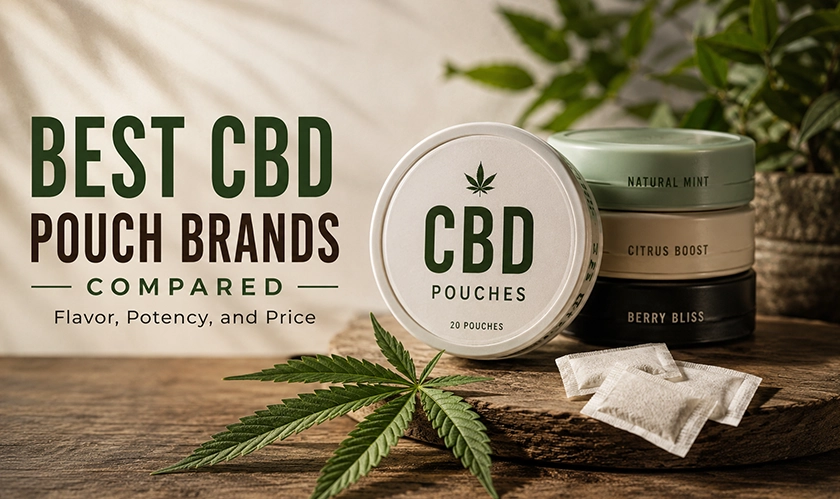
Shopping for Cannadips pouches and similar products can feel paralyzing thanks to how much the CBD pouch market has exploded over the past few years. Dozens of brands now fight for shelf space, each one promising the purest extract, the boldest flavor, and the fairest price. But pouches aren't built equal, and what separates a mediocre product from a genuinely good one comes down to three things: how much CBD they actually deliver, whether those flavors hold up past the first few minutes, and whether the cost-per-pouch makes sense for everyday use. This guide cuts through what actually differentiates the best CBD pouch brands, so you don't burn money on trial and error. You'll notice the right factors make themselves obvious pretty quickly once you know what to look for, and that's exactly what's below.
Flavor, potency, and price don't exist in isolation; the best CBD pouch brands understand how all three interact. Cannadips pouches stand out as one of the few products in this space that treats flavor as a functional part of the experience rather than a marketing hook, their natural terpene-forward profiles hold up well past the first five minutes under the lip. That matters because cheaper brands routinely front-load flavor with artificial sweeteners that fade fast, leaving a flat, medicinal aftertaste in their wake. Potency works the same way. A pouch labeled at 25 mg of CBD sounds strong on paper, but the extract type (full-spectrum vs. isolate), the carrier material, and how the pouch actually releases CBD all shape what you feel. Price adds another layer of complexity. A $15 tin with ten pouches at 25 mg each costs less upfront than a $22 tin at the same count, but if the cheaper version absorbs at half the rate, the economics flip entirely. Smart shoppers look at cost-per-effective-dose, not the sticker price alone; cannadips pouches deliver consistent absorption across their entire 30-minute dissolution window, so you're getting the full dose rather than a spike-and-crash that wastes product halfway through.
Potency numbers on CBD pouch packaging can mislead you if you don't know what you're looking at. The milligram count on the label reflects total CBD per pouch, but that number doesn't tell the whole story. Full-spectrum extracts carry minor cannabinoids and trace terpenes that may contribute to the overall effect, while broad-spectrum products strip out THC but keep other cannabinoids intact. Isolate-based pouches use pure CBD with nothing else alongside it. Most budget brands default to isolate because it's cheaper to produce, and they can still advertise high milligram counts without the cost of a full-spectrum extract. Many users find they need a higher isolate dose to match the effect they'd get from a lower-dose full-spectrum product. So a 30 mg isolate pouch isn't automatically better than a 15 mg full-spectrum one. The trick is to check the certificate of analysis (COA) attached to any product, verify the cannabinoid profile, and match your choice to your actual goals, not just the biggest number printed on the front of the tin.
A brand's flavor lineup reveals more about its quality standards than most shoppers realize. Companies that invest in high-quality hemp extract tend to treat flavoring with the same care, because cheap flavorings can interact poorly with the extract and muddy the taste. Strong brands usually offer a small, well-developed flavor range rather than a long list of forgettable ones. Natural mint, citrus, and berry profiles are the most common starting points, and they're also the easiest to evaluate. Artificial flavors tend to smell sharp and synthetic straight out of the tin; natural terpene-based flavors smell clean, slightly botanical. Pay attention to how long flavor lasts during use, a thirty-minute session should carry some taste throughout. Products that go completely flat within five to ten minutes either use low-grade flavoring or aren't packing enough into each pouch. And if a brand offers ten exotic flavors but no COA, that's a red flag regardless of how slick the packaging looks.
Price is what most shoppers notice first, but it shouldn't drive the decision on its own. The best CBD pouch brands give you a clear picture of what you're paying for, because transparent labeling and third-party testing actually cost money, and that investment typically shows up in consistency, safety, and real effectiveness. A brand that skips independent lab testing can undercut competitors on price, but there's no way of knowing whether the CBD content matches the label or whether the product's free of pesticides and heavy metals. In the US, hemp-derived CBD products aren't subject to the same mandatory testing requirements as pharmaceuticals, which means quality standards vary wildly across the market. Some brands test every batch, publish results on their website, and use clean carrier materials like food-grade cellulose. Others cut every corner available and rely on attractive packaging to close the sale. Honestly, spotting the difference takes about five minutes of research per brand and saves a lot of disappointment down the line.
Third-party testing is the single clearest indicator that a CBD pouch brand takes quality seriously. An independent lab has no financial stake in the brand's results; its findings are unbiased. The COA from that lab should confirm the exact CBD content per pouch, identify the cannabinoid profile, and show results for contaminants, pesticides, heavy metals, residual solvents, and microbial matter. Brands that make those COAs easy to find, whether by printing a QR code on the packaging or posting them directly on their website, are far more trustworthy than those who claim they test but bury the results. Ingredient transparency goes beyond the CBD extract itself. The pouch material, flavorings, and any additional compounds like MCT oil or botanical terpenes should all appear on the label. Some brands add melatonin or other active ingredients without prominently disclosing it, worth watching for if you're using CBD at specific times of day or alongside other supplements.
The best CBD pouch brands for regular users aren't always the cheapest per tin. They're the cheapest per effective dose, and that calculation takes a bit of simple math. Take the total price of a tin, divide by the number of pouches, then divide again by the milligrams per pouch to get a cost-per-milligram figure. A tin of 20 pouches at $20 with 15 mg each costs $0.067 per milligram. A tin of 15 pouches at $18 with 25 mg each costs $0.048 per milligram. The second option delivers more CBD at a lower cost per milligram, even though the first tin is cheaper at checkout. Full-spectrum products often carry a higher cost-per-milligram than isolate because the extraction process is more involved, but for many users, the quality of effect justifies that gap. Subscription programs and bulk buying can cut costs meaningfully. Several brands offer 15 to 20 percent discounts on recurring orders, which adds up quickly if you use pouches daily. But always check whether a discount applies to the first order only or continues with each renewal.
Comparing CBD pouch brands on flavor, potency, and price means looking past the label and into what the product actually delivers. Potency is determined by extract type and COA-verified content, not just the milligram figure on the front. Flavor quality signals a brand's broader commitment to its ingredients, and price only makes sense weighed against cost-per-effective-dose. The best CBD pouch brands are the ones offering transparent testing, natural ingredients, and consistent results at a value that holds up to real math. Pull a COA, run the cost-per-milligram calculation, and check what the flavor profile actually contains. Those three steps will point you toward the products worth your money and away from the ones that just look good in a tin.


















































 consultants ltd.jpg)


Comments