
Home Industry Clean energy Lesotho Clean Energy Access In...
CIO Bulletin,
01 June, 2026
Author:
Sambhrant Das
Fifty Million Dollar Credit Line Deploys Off Grid Solar Kits and Pay As You Go Packages to Erase Sub Saharan Energy Poverty and Vitalize Highlands Commerce
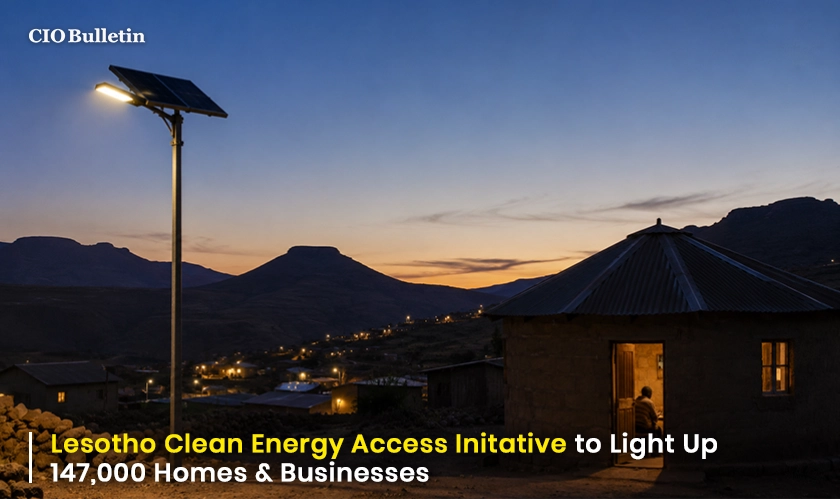
Imagine a place where your whole day stops when the sun goes down and the lights flick off, with everyone having to pretend tomorrow is basically the same as yesterday. For thousands of families across Southern Africa, this is not a one-off problem; it’s been the way it goes for generations. Their village sits up in the mountains where the older power lines cannot reach. And that makes life rough, especially for kids who need to study, or for small shops that try to keep going, because they’re cut off from the modern grid in a very literal sense. To solve this issue, now there’s a big new push, the Lesotho clean energy access initiative, coming in to bring independent, sustainable solar power straight into these hard-to-reach mountain communities. It’s not just about installing panels; it’s about giving people a way forward that doesn’t vanish the moment evening arrives.
This huge infrastructure push depends on a blend of smart grid expansions plus flexible, independent solar setups so electricity actually arrives where people need it most. Rather than waiting on massive, slow-moving construction efforts to cut through rocky peaks and awkward terrain, teams are using a more nimble strategy to connect the energy gap from several directions at once, in a workaround that is built to last:
Suburban Grid Push: Extending existing lines into growing towns near cities so families can connect to the main network, even as those places expand.
Off-Grid Solar Kits: Setting up independent solar panels alongside smart Pay-As-You-Go packages for remote villages where poles and wires are a no-go because of difficult ground conditions.
Modernizing Cooking Tools: Helping communities move away from open wood fires, and shift toward cleaner, safer household options, because everyday survival should not entail dealing with smoke in close vicinity.
This project takes a direct aim at a harsh, unfair reality: while city neighborhoods usually have no trouble turning on the lights, more than half of the country's rural families are left relying on dirty, expensive kerosene. This stark divide keeps rural communities stuck in place, but these new renewable networks offer a fast track to a better quality of life. Pointing out how much a simple light switch can change a family's future, Minister of Finance and Development Planning Retselisitsoe Matlanyane noted, “Expanding access to reliable and sustainable electricity is critical to reducing energy poverty, improving household productivity, supporting micro, small, and medium enterprises growth, and strengthening essential social services.”
With reliable electricity reaching around 147,000 residents and nearby shops, the rural economy gets a real chance to breathe. Small tailoring workshops, local grocery stalls, and even health clinics can finally turn away from loud diesel generators, switching to quieter, steadier power. And there’s another benefit people feel fast: when families no longer have to spend so much time hauling heavy firewood, women and younger girls gain time back. That means they can finish school, or start their own small businesses, instead of carrying the constant weight of the day, all over again.
The real success of this green energy push won't just be measured by the number of solar panels installed, but by making sure they actually keep working for the long haul. By training local technicians in their own communities and cutting through regulatory red tape, the region is creating a self-sustaining system that will last for decades. CIO Bulletin views this development as a profound leap forward for sub-Saharan public infrastructure, proving that combining grid modernization with targeted off-grid solar deployments is the most effective way to eliminate energy poverty and unlock rural economic potential.











.webp)





 consultants ltd.jpg)


