
Home Technology Database management Why the Tech World Is Racing t...
CIO Bulletin
,
15 July, 2026
Author:
Gayathri Sr
Global Enterprises Abandon Scattered Tech Stacks as a Single Connection Pool Cracks the Code on Agent Memory.
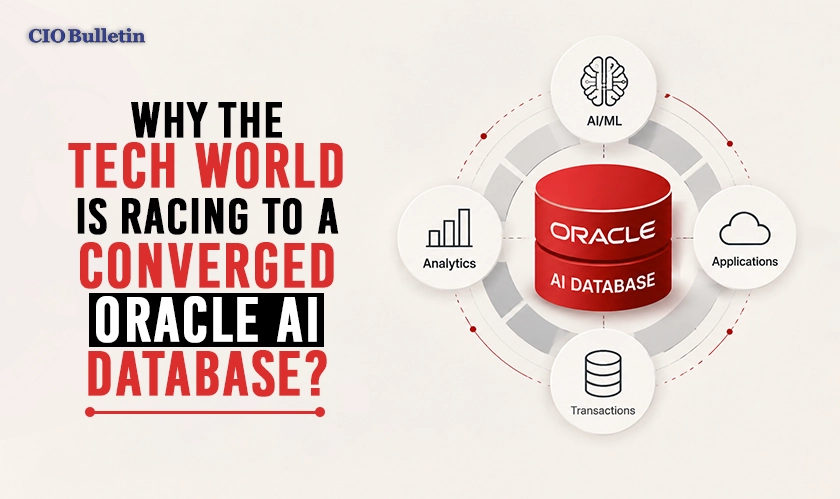
The AI development race just hit a massive architectural wall, forcing a radical shift away from the fragmented infrastructures that routinely break down in production. For months, engineers have tolerated a messy reality: storing vectors in one service, chat histories in another, and semantic caches in a third. However, this fragile balancing act is officially over. A powerful suite of new open-source integrations has successfully consolidated the entire LangChain and LangGraph ecosystem behind a single Oracle AI Database instance. As reported by tech analysts at CIO Bulletin, this milestone release collapses the traditional, scattered AI stack into a single connection pool, effectively solving the latency, consistency, and security headaches that plague modern enterprise deployments.
Building a brilliant AI assistant on a local laptop is easy; shipping it to a highly regulated enterprise environment is where most projects crumble. By integrating advanced memory primitives directly into the database engine, developers no longer have to manage multiple SDKs or risk data synchronization failures. The upgraded architecture introduces automated semantic response caching and durable session memory that automatically handles thousands of concurrent users.
“Memory is becoming the defining layer of the agent stack. The work Oracle is doing to integrate Oracle AI Database on OCI with LangChain gives developers a real path to building memory-first agents,” stated Harrison Chase, Co-Founder and CEO of LangChain.
What makes this development a true game-changer is its complete flexibility. Organizations can easily run stateful workflows using their choice of frontier models, whether Claude, OpenAI, or OCI Generative AI, while keeping their foundational intelligence layer secure. According to structural breakdowns published by CIO Bulletin, the framework's native graph checkpointing ensures long-running corporate tasks can pause for human approval or survive sudden application restarts without losing a single line of progress. By placing vector similarity, relational data, and long-term agent memory under a unified governance and backup system, the enterprise tech sector finally has a seamless path from raw prototype to production.
Everything you need to know about this news
No, the entire setup runs perfectly against a local Docker container using the free database version, allowing developers to build locally before changing their connection string for production.
Developers will need version 23ai or later, as this is where native vector capabilities and specialized AI data types reside to handle complex agent interactions.
Yes, the system features a model-agnostic factory harness, letting you swap out cognitive engines like Claude or self-hosted models while keeping your data substrate unchanged.
Instead of siloing information across disconnected services, a unified engine holds vectors, chat histories, and transactional data together, eliminating cross-service latency and backup synchronization bugs.
CIO Bulletin delivers comprehensive technical reporting and strategic analysis, guiding modern enterprises as they transition away from fragmented infrastructure toward high-performance, unified data ecosystems.


















































 consultants ltd.jpg)


Comments