
Home Industry Food and beverage The Strange Physics of Trucks ...
CIO Bulletin
,
19 October, 2026
Author:
CIO Bulletin Team
Every truck on the highway might look like it plays by the same rules, but the freight inside can change everything. A load of logs, a trailer full of coal, and a refrigerated box packed with frozen food each behave in their own surprising ways.
Cargo shape, weight, and movement influence how a truck accelerates, brakes, turns, and handles bad weather. Some loads sit low and stay put, while others shift, sway, or pile weight into small areas that stress the vehicle in unexpected ways.
Those differences matter for drivers, trucking companies, and everyone sharing the road. Knowing why certain freight requires special equipment and handling helps explain why some trucks demand extra caution and why their crashes can be especially complicated. The details are surprisingly interesting.
Shape plays a huge role. Long, round, or irregular cargo is harder to stack and secure than neat boxes on pallets. Gaps between items give freight room to move, and movement is often where trouble begins. Tight, uniform loads tend to be far more forgiving.
Density matters too. Heavy materials concentrated in a small space can overload axles and raise stress on tires, brakes, and suspension. Lighter but bulky freight can catch wind or raise the center of gravity, affecting stability in different ways.
Securement requirements vary by cargo type, and getting them wrong can have serious consequences. Many accidents that involve specialized trucks trace back to loads that shifted, broke loose, or were distributed in ways the vehicle wasn't built to handle safely.
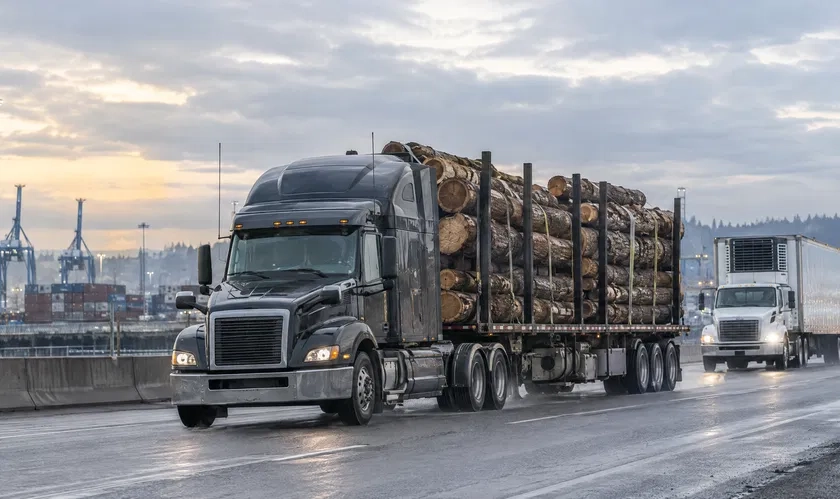
Logs are long, heavy, and naturally round, which makes them prone to rolling and sliding. Bark can be slick, and logs of different sizes don't nest neatly together, leaving gaps that let the load settle and loosen during travel.
Federal rules include specific securement standards for log loads, including requirements for stakes, bunks, and tiedowns depending on the type of trailer and how the logs are arranged. Getting those details right is not optional. Vehicle configurations vary widely, from short-log trucks to long-log trailers.
When timber isn't restrained properly, the results can be devastating. Logs that roll off a trailer can crush vehicles, block highways, or strike oncoming traffic. Even a slight shift during a turn can destabilize the truck and lead to a rollover.
Bulk materials like coal, gravel, and sand are heavy and concentrated. Dump trucks and bulk trailers carry enormous weight in a compact space, putting significant stress on axles, brakes, and tires with every mile traveled. Every bump and brake application tests that equipment.
Load distribution is critical. If material piles unevenly, one side or end of the truck can carry far more weight than intended. Loose material can also settle or shift during travel, especially on rough roads or sharp turns.
Overloading is a persistent concern with bulk hauls. Extra weight can lengthen stopping distances and increase rollover risk. Loose material falling from uncovered or overfilled trailers can also strike vehicles behind, creating hazards for drivers who never saw it coming.
Refrigerated trailers carry cooling units and insulation that add weight before any freight is loaded. Temperature-sensitive cargo often needs to be packed tightly with airflow in mind, which can affect how weight is distributed throughout the trailer.
Some refrigerated loads create unusual handling problems. Hanging meat, for example, can swing during turns, shifting weight from side to side and affecting stability in ways drivers must anticipate. Liquids and dense frozen goods add their own challenges.
Operational demands complicate things further. Perishable freight often runs on tight delivery windows, creating pressure to keep moving. Equipment problems with the refrigeration unit can also distract drivers or force unplanned stops along busy routes. Fatigue from long hauls can compound those pressures.
Not all truckloads behave the same way. Timber, coal, and refrigerated freight each present distinct engineering challenges, from rolling logs to concentrated bulk weight to swinging loads inside a cold trailer. Each one asks something different of the driver and the equipment.
Different freight types require different equipment, handling procedures, and inspections. Proper securement, careful loading, and attention to weight distribution help reduce the risks that come with each kind of cargo. Skipping any of those steps raises the odds of trouble.
The cargo determines far more than what arrives at the destination. It shapes how a truck handles every mile of the trip, which is why careful preparation and strict safety practices are essential for keeping roadways safe.





















































 consultants ltd.jpg)


Comments