
Home Industry Healthcare What a Personal Injury Attorne...
Healthcare
CIO Bulletin,
25 May, 2026
Author:
CIO Bulletin Team
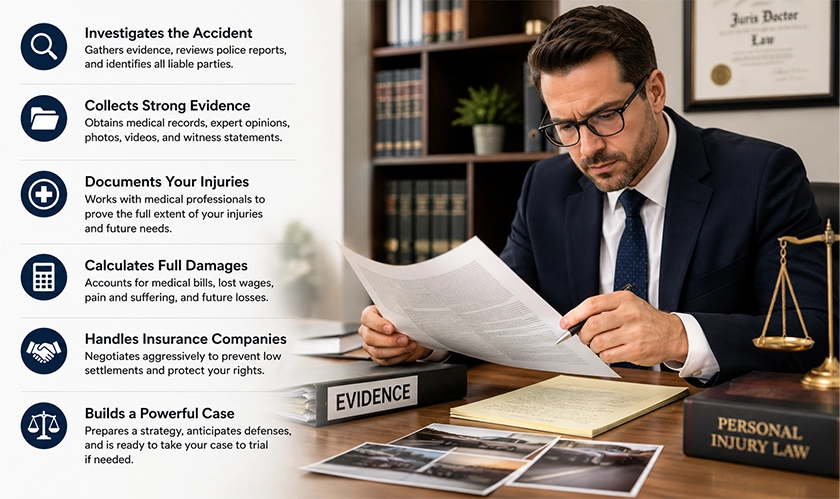
A personal injury claim depends on facts that stay consistent from the first report through final resolution. Attorneys help build that stability early, when pain, stress, and missing records can weaken a case. Their work reaches well past forms and deadlines. They examine fault, secure proof, measure financial and physical loss, and respond to insurer pressure with a disciplined record. That steady approach can make a disputed claim far more persuasive.
Early review often decides whether a claim begins with order or confusion. During those first days, a St. Louis personal injury attorney may compare incident reports, emergency records, photographs, witness statements, and insurance language. That first pass can reveal disputed facts, missing documents, or timing issues. Strong cases usually start with a clean chronology, because early gaps may later weaken settlement talks or courtroom presentation.
Liability requires more than suspicion. Attorneys must show where reasonable care broke down and how that lapse produced measurable harm. Police reports can help, yet they rarely answer every contested point. Counsel may examine roadway markings, maintenance files, safety policies, property conditions, product instructions, or treatment conduct. Each detail helps frame causation. When the parties share blame, lawyers also work to limit the unfair fault assigned to the injured person.
Evidence can disappear quickly after an accident, especially digital footage or business records. Lawyers move fast to send preservation notices, request surveillance video, gather phone data, and secure repair documentation. Medical imaging, billing statements, and employer records also need prompt collection. A dependable file tracks source, date, and custody history. That organization matters because insurers often attack gaps, delays, or unclear handling when they want to discount a claim.
Valuing harm requires precision, not guesswork. Attorneys connect each loss to a document, timeline, or professional opinion. Medical expenses, lost income, reduced work capacity, rehabilitation costs, and property damage form the economic portion. Pain, sleep disruption, mobility limits, and emotional strain also need support. Lawyers often use treatment history and payroll records to show scale. Clear valuation helps prevent a rushed offer from shaping the entire case.
Medical records show far more than a diagnosis. They reveal symptom timing, care consistency, functional decline, and whether the reported pain aligns with the event history. Attorneys review prior conditions, medication lists, therapy gaps, imaging results, and physician impressions for issues an insurer may raise. If a chart note creates confusion, counsel may seek clarification. Better documentation can counter claims that symptoms came from degeneration, illness, or an unrelated incident.
Witnesses add depth when their accounts remain detailed and stable over time. Lawyers identify people who saw the event, observed visible injury, or noticed changes in walking, lifting, sleep, or routine function. Early statements usually carry greater weight than recollections taken long after the fact. Some cases also need expert testimony on crash mechanics, occupational loss, or future care. That evidence gives context that records alone cannot fully provide.
Insurance carriers often test every weak point in a claim file. Attorneys answer with organized records, concise timelines, and focused demand materials that tie injury to documented loss. They also guard against risky recorded statements, overly broad medical releases, and efforts to shift responsibility. Settlement discussions tend to change when the defense sees real trial preparation. Lowball offers lose force once the case shows discipline, factual support, and readiness.
A valid claim can still fail if timing or procedure gets mishandled. Lawyers track notice requirements, filing limits, venue rules, and pleading standards so they do not lose a strong case on a technical error. In Missouri and Illinois, deadlines may differ by setting and claim type. Careful drafting matters as well. Weak allegations can narrow recovery, limit evidence issues, or invite dismissal before meaningful fact development begins.
Many injury matters resolve before trial, yet serious preparation often improves settlement value. Attorneys organize exhibits, prepare testimony, draft motions, and test damages themes well before a hearing date. That work signals commitment backed by proof. Defense counsel usually prices risk in concrete terms. A claim becomes stronger when lawyers can clearly explain each major point, from fault through future care, to a judge or jury.
Client conduct after an injury can affect how decision-makers view a case. Attorneys often advise people to attend appointments, follow treatment plans, keep receipts, avoid harmful social posts, and report new symptoms promptly. Those habits support credibility. Consistency across medical notes, employment records, and daily limitations helps present an accurate picture of loss. Thoughtful guidance does not change facts. It helps protect them from avoidable attacks.
A personal injury attorney strengthens a claim by turning scattered facts into a coherent, well-supported account of harm. That process starts early and continues through settlement talks or trial preparation. Better evidence, careful valuation, sound procedure, and credible presentation all improve the position. Claims rarely gain strength by chance. They become more convincing when counsel protects the record, addresses weak spots, and presents the case with calm, sustained precision.





















 consultants ltd.jpg)


