
Home Industry Luxury travel and tourism How to Book a Private Plane fo...

CIO Bulletin, 20 November, 2026
Author:
CIO Bulletin Team
If you’ve been asked to arrange a private flight for a business trip and have never booked one before, the process is simpler than it looks, but it comes with its own vocabulary and a few costs that aren’t obvious upfront. By the end of this guide, you’ll know when flying private makes sense, how to request and compare quotes, how to check a provider and what to expect on the day.
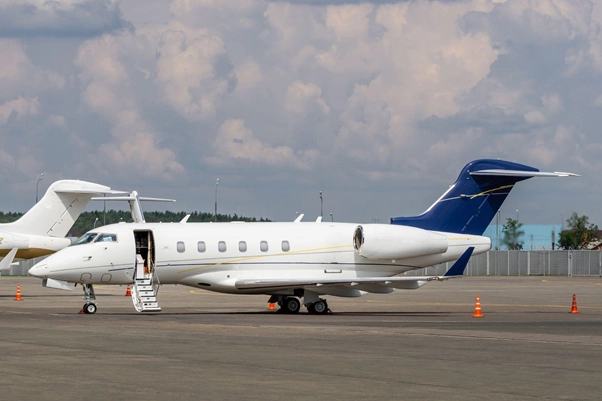
When your schedule is tight, a private flight can work best, fitting a board meeting in Charlotte, a site visit in Columbus and dinner back in Chicago all in one day. It can be more time-efficient because the aircraft departs on your timetable and waits until the work is done. Teams of four to eight can prepare together in the cabin, and many regional towns with few scheduled routes have airports that private aircraft can use. For a solo traveler on a nonstop route between two major hubs, a scheduled flight usually does the job well.
There are three common ways to buy private flight time, and they differ mainly in upfront commitment.
|
Option |
How it works |
Upfront commitment |
|
On-demand charter |
Pay per trip, quoted for a specific route and aircraft |
None |
|
Jet card |
Prepay a balance or block of hours at agreed rates |
Prepaid funds |
|
Membership |
Pay an annual fee for access to member rates or aircraft |
Yearly fee plus flights |
For a first trip, an on-demand charter is the practical choice because it carries no commitment. A trusted air charter service will gather quotes from several operators, explain the aircraft and airports behind each one and handle the booking once you approve. Cards and memberships are worth revisiting once your company flies often enough to forecast its hours.
The more detail a quote request includes, the more accurate the quote. Before contacting a provider, confirm:
Passenger numbers, including anyone who may join late
Dates and the times that matter, such as when the first meeting starts
Departure and arrival airports, with an alternative or two
Luggage, especially equipment cases or sample kits
One-way or return, and whether the aircraft should wait
Catering, Wi-Fi or other requests on board
Wi-Fi varies between aircraft, so ask for it by name if the team plans to work in the air.
Turboprops seat around six to nine and are most cost-efficient on trips of 600 to 1,000 miles.
Light jets usually seat four to eight and fly up to about 1,500 miles.
Midsize jets seat around seven to nine and cover roughly 2,450 miles, enough for New York to Los Angeles.
Super-midsize jets seat eight to ten and fly roughly 3,500 to 4,500 miles, enough for nonstop coast-to-coast trips.
Heavy jets seat ten or more and can fly about 7,000 miles, which means it can cross the Atlantic or the US and back nonstop.
Bigger isn't always better value. A heavy jet on a 300-mile hop costs more per hour than the trip needs, while a light jet carrying three people can often use a smaller airport closer to the meeting.
The companies you’ll deal with fall into two groups: operators, which own or manage aircraft and hold the certificate to fly them commercially, and brokers, which arrange flights with operators on your behalf and compare options across many of them.
In the US, on-demand charter requires an FAA Part 135 certificate, and the agency's air charter guidelines advise checking an operator's legitimacy before you fly. Earlier this year, when the FAA briefly took its public list of Part 135 operators offline to correct data errors, the National Air Transportation Association advised flyers to request a copy of the air carrier certificate and confirmation that the aircraft is authorized for charter. That remains a sensible step now the list is back online.
Independent audit programs such as ARGUS, Wyvern and IS-BAO assess operators' standards beyond the regulatory minimum. Before booking, ask which company will operate the flight, which audit ratings it holds, whether you can see its certificate and insurance, and whether the price includes all fees and taxes.
Charter is priced per aircraft. The largest element is the hourly rate multiplied by flight time, and positioning legs may be added if the aircraft is based elsewhere. Landing and handling fees, crew hotels on overnight trips and winter de-icing can appear as separate lines. Most domestic charter flights also carry a 7.5% federal excise tax and, in 2026, $5.30 per passenger for each flight segment, according to the FAA's 2026 rates.
Empty legs are one-way flights on aircraft that would otherwise fly empty to their next job. They’re sold at a discount, but the original booking fixes the time and route, so they suit travelers who can work around them. To compare quotes like for like, check each uses the same aircraft category and airports and shows every fee, tax and waiting cost.

The charter agreement should name the operator, aircraft, schedule and total price. You’d usually have to pay the invoice in full before departure, and cancellation terms vary by operator, so check how charges change as the date approaches. They’ll need all passenger names and ID details ahead of the flight, and international trips need passport details early so the operator can file the passenger manifest with US Customs and Border Protection.
Private flights usually leave from a dedicated terminal, known as an FBO. Arriving 15 to 30 minutes before departure is typically enough. Staff or crew check ID, and passports on international flights, and the crew loads the luggage. At the other end, a car can meet the aircraft and take the team straight to the meeting.

Book early around major trade shows and sporting events.
Stay flexible on airports, since a smaller field may sit closer to your destination.
Share the agenda before take-off so the cabin works as a meeting room.
Plan the return leg early, even if timing is provisional.
Send passenger names and ID details as soon as they’re confirmed.
Ask for ground support on both ends to be arranged with the flight.
Booking a first charter comes down to a few decisions made in order: whether the trip suits private flying, which aircraft fits the group and route, which provider to book through and whether the quote covers every cost. Once you’ve worked through them, the next booking takes a fraction of the time.
Everything you need to know about this news
A week or more is comfortable, earlier around peak events, though shorter notice is often possible.
Sometimes you can, but this depends on crew duty limits and aircraft availability.
Often, yes. Many operators accept them, and international trips need paperwork such as a microchip and current rabies vaccination.
Luggage limits depend on hold size and the aircraft's weight limits, so declare oversized items when you book.





















































 consultants ltd.jpg)


Comments