
Home Industry Metals and mining Congo Designates Lithium Strat...
CIO Bulletin
,
01 June, 2026
Author:
Sambhrant Das
Tripling Royalty Rates to Ten Percent Signals Growing Wave of Resource Nationalism Across Central African Mining Hubs Fueling the Electric Vehicle Supply Chain
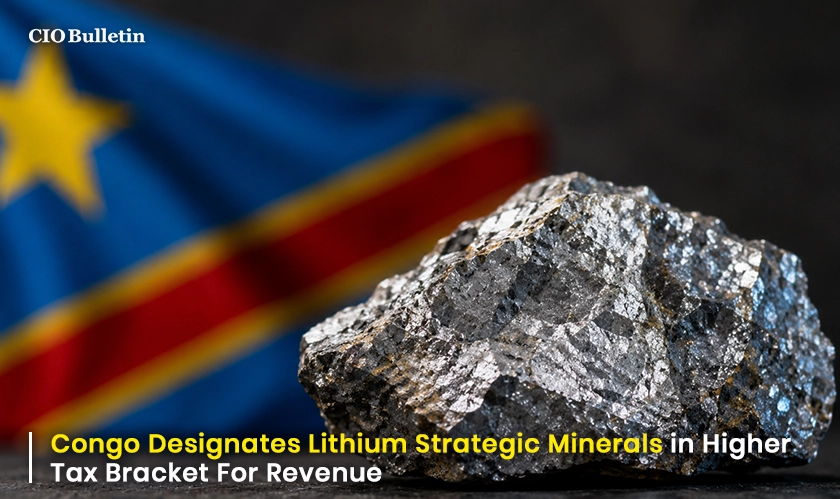
The race for global battery supplies has taken a monumental shift as one of Africa’s largest mining hubs moves to maximize public revenue from the green energy transition. For resource-rich nations, balancing foreign investment with domestic economic preservation requires aggressive regulatory adaptations. When global demand for battery-grade materials surges, standard mining frameworks must be updated to prevent the unchecked siphoning of national wealth. Targeting the core components of the electric vehicle boom, the Democratic Republic of Congo has officially adjusted its fiscal policies, designating Congo lithium strategic minerals to place them into a significantly higher tax bracket.
The regulatory overhaul significantly increases the financial obligations of international mining syndicates operating across the central African territory. Under the newly signed government decree, the extraction of critical battery minerals will face stricter state oversight and heightened export duties. This policy restructuring aims to capture a larger share of global supply chain profits through several specific regulatory mechanisms:
Elevated Royalty Rates: Mining royalties for newly designated critical resources will instantly triple, jumping from a standard 3.5 percent up to a premium 10 percent rate.
Broader Cobalt Protections: The strict 10 percent strategic tax tier will also continue to apply to cobalt, coltan, and germanium extractions.
Domestic Processing Mandates: The updated framework introduces legislative incentives designed to pressure foreign corporations into building regional refining plants rather than exporting raw ore.
This fiscal pivot comes as international automotive brands scramble to secure long-term access to battery materials outside of traditional processing channels. By tightening its grip on these underground assets, the government aims to generate the necessary capital to fund domestic infrastructure and public services. Mining sector representatives have acknowledged that while the higher tariffs will squeeze corporate profit margins, the global necessity for these resources leaves suppliers with very few alternative options. Confirming the state's intent to secure fair value for its subterranean wealth, a senior government representative stated, “Lithium has become a strategic mineral. Its royalty rate increases from 3.5% to 10%.”
That sudden tax hike points to a wider trend of resource nationalism across sub-Saharan Africa, where many governments are witnessing raw wealth exiting their ports but not contributing to domestic prosperity. For years, foreign mining conglomerates have been hauling out huge fortunes while local communities end up with the environmental aftereffects. This policy intends to redraw the playbook, telling international markets that access to clean energy materials will come with a higher cost attached.
How this new tax reshuffling plays out over time will hinge on whether the government can enforce those higher premium royalty rates without scaring off future prospecting investments. According to CIO Bulletin, if the government does it right, the extra cash might become a practical framework, a sort of working model, for other developing countries trying to use their natural assets efficiently as the world keeps moving away from fossil fuels.












.webp)


































 consultants ltd.jpg)


