
Home Industry Nanotechnology Can Tehran’s Pharmaceutical ...
CIO Bulletin,
12 June, 2026
Author:
Sambhrant Das
By utilizing a solar-activated nanotech catalyst, Iranian researchers have unlocked a low-energy solution to eliminate toxic prescription drug chemical traces from industrial runoff.
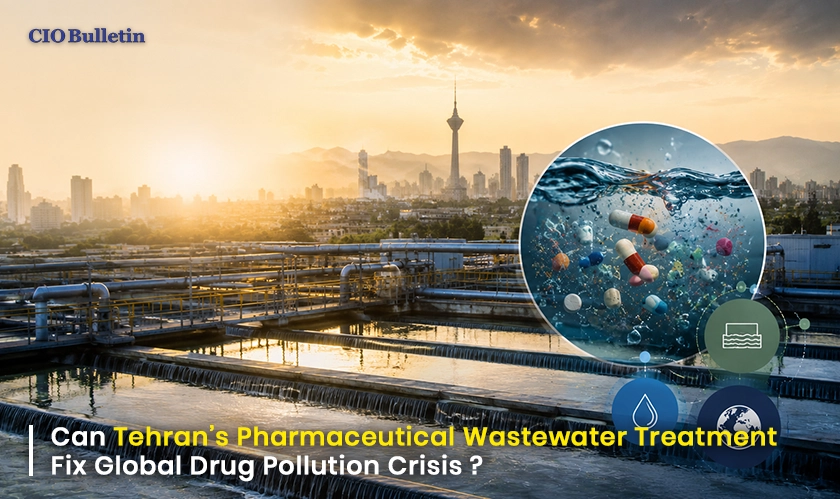
A research group out of the University of Tehran just created a smart microscopic material to neutralize heavy drug residues left inside commercial drain water. The discovery offers a much-needed upgrade for baseline pharmaceutical wastewater treatment methods, which usually fail to wipe out modern synthetic medicines. By pairing basic chemistry with advanced material design, the academic team built a specialized compound that reacts to standard ambient light by breaking down tough chemical bonds. This prevents active medication traces from escaping into standard city water networks and local food crops.
The underlying engineering relies on a tiny dual-action framework that fuses basic zinc oxide with custom-engineered nanomaterials. This structure avoids the biggest issue plaguing old-school cleaning setups, which always require heavy energy outputs from specialized ultraviolet lamps to trigger any cleaning action.
Wiping Out Antibiotics: Early laboratory tests show the new catalyst destroys more than 92.5 percent of stubborn tetracycline traces in less than two hours.
Capturing Everyday Light: The custom design shifts how electrical charges move, allowing the powder to absorb standard indoor lighting or regular afternoon sunshine.
Zero Waste Reuse: Instead of tossing the filter out after a single shift, plant operators can pull the composite particles out and use them again and again.
Modern water utilities are losing the fight against tiny invisible pollutants that traditional charcoal filters simply miss. When manufacturing centers and medical clinics leak leftover antibiotics into local creeks, it throws off the entire natural balance of local aquatic life. Even worse, leaving low doses of medication floating out in the wild gives dangerous bacteria a chance to evolve into drug-resistant superbugs. This new nanoscale setup completely dismantles the molecular spine of those tough compounds, turning toxic manufacturing waste into completely harmless elements before it leaves the property line.
Moving a brilliant idea from a small university lab bench into massive corporate factories requires a serious look at real-world running costs. Older chemical oxidation methods eat up massive amounts of electricity and need constant parts replacement, making them a tough sell for factory budget supervisors. Because this newly designed material handles multiple treatment rounds without wearing out, it slashes the monthly supply costs of managing a hazardous waste operation.
"The nanocomposite is capable of breaking down complex antibiotic molecules into less harmful substances, helping to minimize environmental risks associated with pharmaceutical waste."
As environmental agencies globally pass stricter laws regarding trace chemical runoff, commercial factories must adapt their filtration methods to avoid massive fines. Just straining out large visible chunks of garbage is no longer enough to meet modern safety compliance rules in a hyper-regulated marketplace. Putting light-activated cleaning setups directly inside factory drain lines allows operations to stay fully legal without slowing down daily shipping targets. CIO Bulletin views this development as a game-changing milestone for eco-friendly industrial infrastructure, proving that targeted molecular engineering is the fastest path to resolving systemic global pollution issues.


















 consultants ltd.jpg)


