
Home Industry Nanotechnology Will Iran-INN Nanotechnology C...
CIO Bulletin
,
29 September, 2026
Author:
Sambhrant Das
nanotechnology cooperation expands through joint research and tech transfers as iran vice presidency and inn partner to scale production of advanced materials and industrial nanoproducts
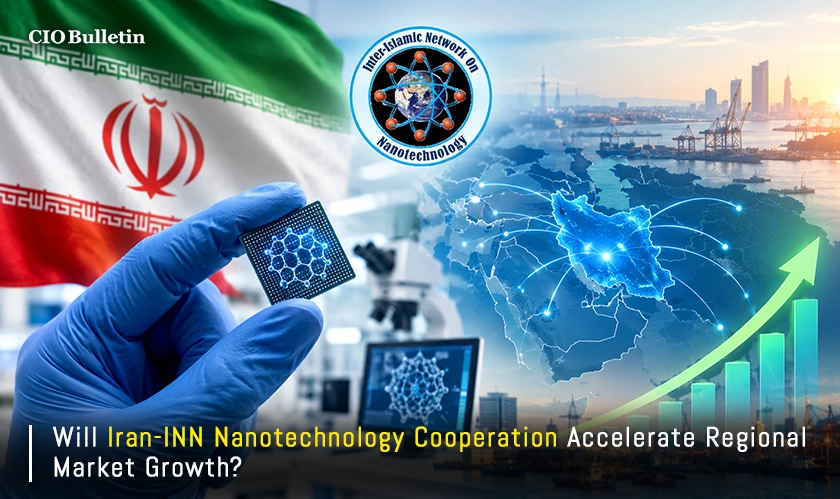
The Iranian Vice Presidency for Science, Technology and the Knowledge-Based Economy has entered into a partnership with the Inter-Islamic Network on Nanotechnology to greatly enhance bilateral nanotechnology cooperation. This strategic agreement sets out a framework for executing cross-border research projects, for standardizing commercial products, and for transferring advanced materials technologies among the Islamic member states. The coalition intends to turn basic nanoscale discoveries into practical industrial solutions for important economic sectors by combining its institutional resources with those of academic centers.
Focus Areas for Joint Research and Commercialization
The bilateral initiative directs specialized technical resources toward immediate commercial and industrial priorities:
Industrial Supply Support: Expanding the capacity for producing advanced nanoscale materials used in the heavy machinery and manufacturing industries.
Improvements in the Energy Sector: Elevating the energy sector by making advanced catalysts, materials for oil refining, and devices for renewable energy storage.
Biomedical and Healthcare Uses: Accelerating the creation of drug delivery methods and special formulations of nanomedicine.
Strengthening Regional Standardization and Market Access
A major aspect of the partnership is the creation of common regulatory standards in order to facilitate the cross-border commercialization of products.
"Expanding international scientific collaborations allows knowledge-based enterprises to increase their production based on strict global quality standards," the representatives stressed at the official signing ceremony.
The organizations involved work towards reducing administrative hurdles through establishing unified testing protocols and recognition practices among themselves, enabling innovative businesses to access new world markets more easily.
Key Execution Milestones and Organizational Objectives
To ensure consistent project delivery, the institutional alliance outlines clear operational benchmarks across the research lifecycle:
Shared R&D Infrastructure: Offering member researchers open access to specialized laboratory networks and characterization facilities.
Standardization Alignment: Aligning with standardization guidelines to simplify the process of obtaining approval for cross-border exports.
Commercial Acceleration: Accelerating commercial activity by promoting joint ventures between firms based on knowledge in order to increase local manufacturing capacity.
Elevating Regional High-Tech Manufacturing Standards
By promoting structured multilateral research partnerships, developing countries are able to reduce their reliance on external industrial supply chains. CIO Bulletin sees this as a major advancement towards building up high-tech industrial capacity and encouraging resilient and sustainable economic growth among the member countries.
News Source: Tehran Times, https://www.tehrantimes.com/
Everything you need to know about this news
The partnership is concentrating on expanding its joint research projects, bringing about standardization of nanoscale products, and speeding up the process of commercializing advanced materials throughout the Islamic member states.
The main sectors that are being targeted include components for industrial manufacturing supplies, those used in the energy and oil refining industries, the chemical processing sector, and applications in the pharmaceutical field.
The initiative brings together the quality control standards and testing methods so that products will meet international regulatory standards when it comes to cross-border trade.
The INN serves as a multilateral coordinator, establishing connections between research institutions, facilitating the movement of scientists, and promoting the establishment of common science infrastructure among its member countries.
It provides technology companies with greater access to specialized laboratory equipment, opportunities for forming joint ventures, and simplified regulatory routes if they want to enter international markets.


















































 consultants ltd.jpg)


Comments