
Home Industry Nanotechnology Can Iqbal Choudhary’s Nanome...
CIO Bulletin
,
27 October, 2026
Author:
Sambhrant Das
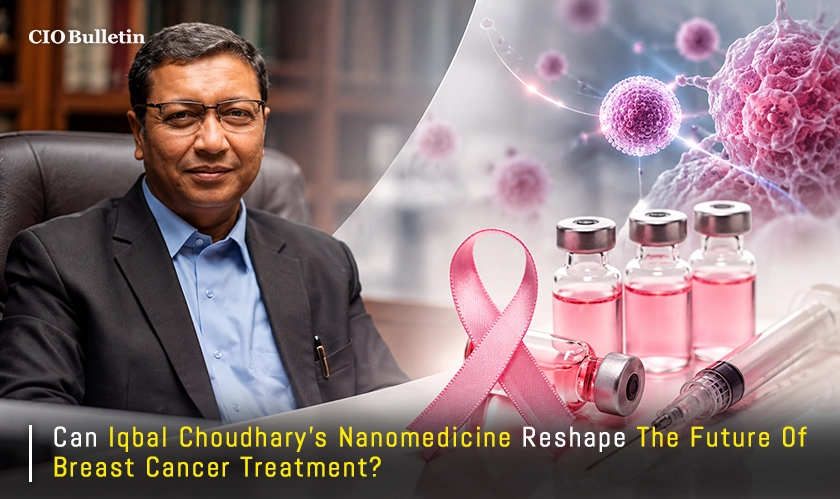
Pakistani Mustafa Prize laureate Professor Muhammad Iqbal Choudhary leverages cutting-edge nanotechnology to revolutionize breast cancer treatment, developing targeted nanocarrier systems that overcome drug resistance and minimize chemotherapy side effects.
Pakistani medicinal chemist and 2021 Mustafa Prize winner Prof. Muhammad Iqbal Choudhary is reportedly working on the application of nanomedicine to improve current breast cancer treatment protocols. Researchers at the International Centre for Chemical and Biological Sciences (ICCBS), University of Karachi, are developing targeted nanocarrier systems designed to reduce systemic toxicity and overcome the problem of multi-drug resistance in cancer cells. The approach involves the use of biocompatible nanocarriers to encapsulate the therapeutic agents, thereby reducing the severe side effects that are so often seen with conventional chemotherapy.
Strategic Breakthroughs in Biodegradable Targeted Drug Delivery
Integrating biodegradable polymers with cell membrane coatings provides novel routes to traverse the human biological barriers. The approach enables increased accumulation of the therapeutic at the target tumor site and allows it to evade the immune system.
The use of PLGA polymers together with TPGS inhibits drug export mechanisms in tumorous cells.
The use of platelet membranes on nanoparticles allows these particles to circulate for longer periods of time in the blood and also accumulate in cancers.
The application of active receptor targets aggressive cancerous growth, such as triple-negative tumors, without any receptors.
Research Leadership Contextualizes Complex Disease Dynamics
Reflecting on the intricate challenges surrounding oncological drug design, Professor Muhammad Iqbal Choudhary remarked: “Cancers are very difficult, complex, and diverse diseases.”
He went on to point out that conventional systemic chemotherapy tends to damage healthy tissue as much as the malignant tissue, which is why there is such a pressing need in the field for smart nanoparticle delivery systems that will release the active pharmaceutical agent only within the cancer microenvironment.
Overcoming Manufacturing Challenges in Nanocarrier Production
Despite the promising preclinical data which showed improved cellular uptake, there are significant bioengineering challenges in scaling up the use of cellular membrane-coated nanoparticles. Getting consistent membrane coverage as you go through large-scale production is going to require very rigorous quality control prior to any move into human clinical trials.
Standardization of membrane coating uniformity across commercial manufacturing pipelines.
Complex regulatory validation requirements for multi-component bio-hybrid therapeutic delivery systems.
Transforming Modern Targeted Medical Science
The combination of molecular biology, nanomedicine, and organic chemistry can result in a new, safer way to create stents for the treatment of even those types of cancers that were incurable before. By improving drug delivery technology, it is possible to increase the efficiency of drugs as well as deactivate their toxicity. According to CIO Bulletin, this is a significant step forward in the field of precision nanomedicine and targeted oncology.
News Source: Tehran Times, https://www.tehrantimes.com/
Everything you need to know about this news
Professor Muhammad Iqbal Choudhary (2021 Mustafa Prize winner, Head of ICCBS, University of Karachi) is the leader of the research team.
Nanoparticles use polymer carriers (PLGA and TPGS) to inhibit the molecular pumps that cancer cells use to pump the chemo drugs out.
Platelet coating is a way of making nanoparticles resemble cellular components so that they can avoid destruction by the immune system and penetrate tumours.
Since triple-negative breast cancer lacks conventional hormone receptors, nanoparticles serve as an alternative means of transport for drug delivery directly to the affected cells.
The major obstacles lie in the mass production of the standardized membrane-coated nanoparticles followed by the certification process.

















































 consultants ltd.jpg)


Comments