
Home Industry Oil and gas India LNG Imports Will Not Mat...
Oil And Gas
CIO Bulletin,
12 May, 2026
Author:
Sambhrant Das
India navigates a complex energy landscape by declining sanctioned russian gas offers to maintain diplomatic balance with the united states amid global shortages
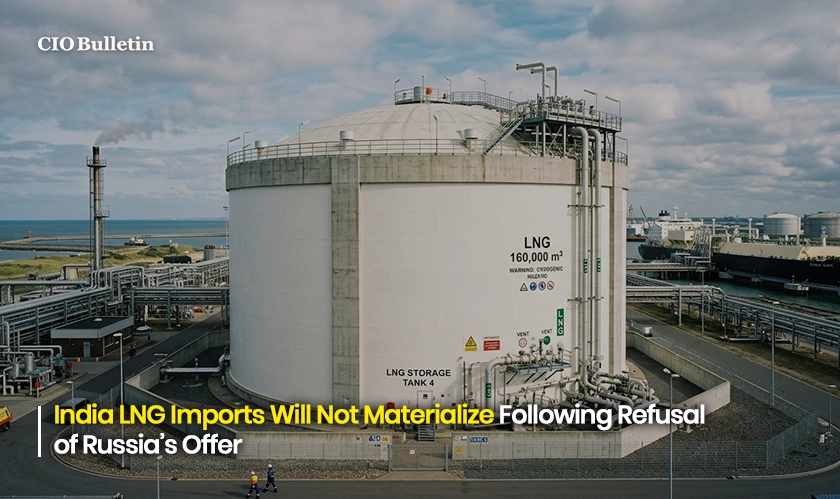
On May 11, India reportedly declined Russia’s offer to sell it liquefied natural gas, despite a global shortage driven by ongoing tensions in the Middle East. With US sanctions applying to the purchase of Russian crude oil products, India’s LNG imports being barred has left a tanker bound for the country stranded amid ongoing talks with the US over the nature of permitted cargoes. As the world’s third-largest oil importer and consumer, India is attempting to balance its need to secure energy supplies with its relations with the US. Significantly, Russia is dealing with the fact that US-sanctioned LNG cargoes are harder to disguise and pose a greater compliance risk, a problem compounded by its limited ability to export LNG to new markets.
India conveyed its decision not to buy sanctioned LNG to Russia’s Deputy Energy Minister, Pavel Sorokin, during his visit to New Delhi on April 30. During the meeting, Sorokin interacted with several Indian officials, including Petroleum and Natural Gas Minister Hardeep Singh Puri. This was their second meeting in the last two months, and Sorokin is scheduled to return in June for the third round of talks.
Interestingly, India has continued to buy Russian crude as usual during the conflict period, with a temporary waiver granted by the US on sanctioning countries that were affected by the resulting energy crisis assisting Indian policymakers. The US-Israeli war on Iran, which began on February 28, has made the energy market largely volatile, characterized by prices of two essential commodities sharply rising:
Oil, and
Brent crude
However, the US waiver has since expired, and countries are once again at risk of being sanctioned if found buying Russian crude oil products.
US sanctions apply to Russia’s other export plant, Arctic LNG 2, as well. After Russia continued its war on Ukraine, additional sanctions were imposed by the US on the country’s LNG plants. Notably, LNG shipments differ from crude oil cargoes in that while the latter can be hidden through ship-to-ship transfers at sea, the former are difficult to conceal from satellite-based tracking systems. India has expressed willingness to buy authorized Russian LNG; however, most of these volumes are committed to Europe. Russia’s losses are partially offset by China, which remains a major buyer of both sanctioned and unsanctioned Russian LNG. Meanwhile, Russia is seeking to diversify its exports to India by supplying the following apart from securing long-term LNG supply deals:
Potash
Phosphorus, and
Urea
India was satisfying half of its gas consumption through imports, around 60% of which had come through the waterway before the Iran conflict induced shipping disruption in the Strait of Hormuz. According to CIO Bulletin, this refusal to buy sanctioned LNG, coupled with Indian Prime Minister Modi’s appeal to citizens to adopt austerity measures comprising reduced petrol and diesel usage, will help ameliorate the shocks of the current crisis while becoming a sustainable national model if the war were to continue.








.webp)









 consultants ltd.jpg)


