
Home Industry Oil and gas Israel Oil Pipeline Proposed b...
Oil And Gas
CIO Bulletin,
20 May, 2026
Author:
Sambhrant Das
Netanyahu Pitches an Overland Transit Network Running West to Mediterranean Ports Following Joint Air Strikes on Strategic Military Supply Chains
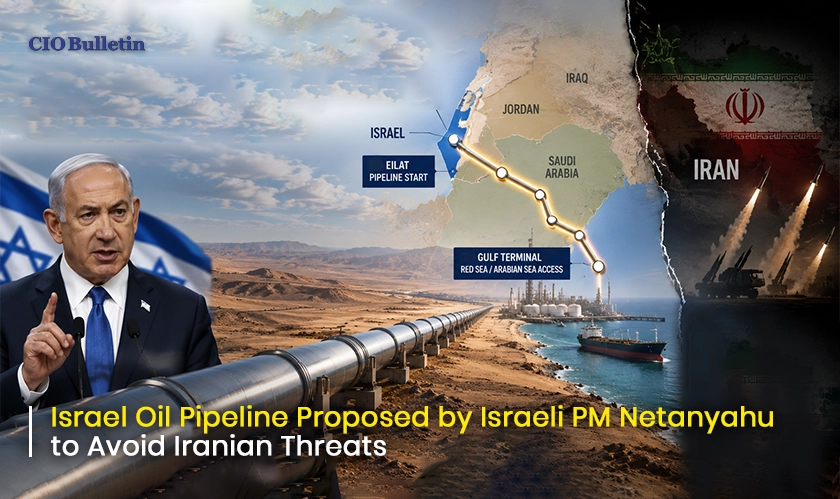
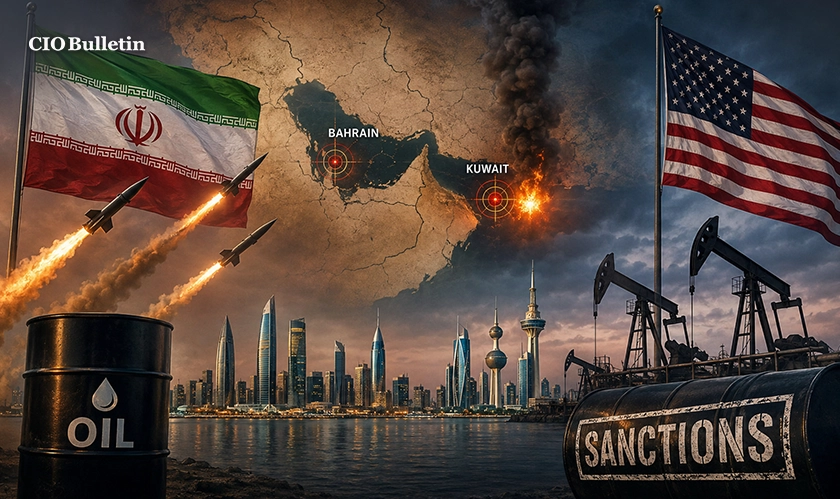
Israeli Prime Minister Benjamin Netanyahu, in a recent press conference, stated that a fierce, 20-day joint air blitz with the US military left Iran unable to enrich uranium or also to build ballistic missiles. Addressing a crowd of reporters in Jerusalem, he emphasized that the whole operation effected a complete ruin of several key manufacturing centers, signifying a huge shift in the balance of power in the Middle East. Tucked inside this big security update, Netanyahu also laid out a bold energy vision, pitching a future Israel oil pipeline and gas network that would cut straight through the Arabian Peninsula to the Mediterranean to bypass dangerous sea lanes.
While the prime minister didn't hand over top-secret intelligence maps or hard physical proof to back up his claims about uranium, he made it clear that the latest airstrikes didn't just target weapon piles—they went after the machines that build them. The allied strategy focused entirely on breaking the supply chains, keeping the country's military factories running. According to military reports, the operation seriously crippled:
The Parts Factories: Special industrial facilities built to manufacture the high-tech components needed for nuclear research and long-range missile shells.
Drone Manufacturing Centers: Busy assembly plants used to build and ship unmanned aircraft to allied militant groups across the region.
Hidden Launch Sites: Heavy-duty military bases and deep underground bunkers scattered across the country.
The fallout from the recent fighting is visible in global shipping turning upside down, particularly with some parts of the Persian Gulf becoming too dangerous for commercial vessels to navigate safely. Netanyahu argued that the only real long-term remedy for world energy security is to stop depending on risky waterways, like the Strait of Hormuz or the Bab al-Mandab Strait. His approach is to lay down a massive overland pipeline web running west through friendly Arab states, straight into Israeli ports, and that would completely change how crude oil moves to Western buyers.
Even with the intense bombing campaign, global security experts are still split down the middle on whether the government in Tehran is actually about to fall apart. The Israeli leadership noted that while deep cracks are starting to show in the regime, any final political change is up to the local citizens, taking advantage of a weakened leadership. Netanyahu made it clear that the allied air forces have no plans to slow down and will keep up the pressure until these weapons programs are permanently turned to ash.
The joint military push shows a deeply connected bond between Washington and Jerusalem, which leaders are framing as a united front against common enemies. Shrugging off critics who argued the alliance was one-sided, the prime minister praised the close strategic teamwork shared with the American president. Pointing directly to the shared goals of the ongoing air campaign, Netanyahu stated, “What we're destroying now are the factories that produce the components to make these missiles and to make the nuclear weapons that they're trying to produce.” CIO Bulletin views this development as a highly volatile turning point for global energy markets, showing how deep military actions are forcing world leaders to aggressively rethink land-based shipping infrastructure to safeguard international trade.

















 consultants ltd.jpg)


